Vodafone and AST SpaceMobile have taken a significant step toward integrating satellite and terrestrial networks by activating a new satellite gateway in Málaga, Spain. The announcement, made on November 22, 2026, confirms that field testing is already underway in nearby Granada, marking a key milestone in the companies' ongoing collaboration to connect standard smartphones directly to low Earth orbit (LEO) satellites.
The newly activated gateway is part of a research initiative focused on enabling seamless communication between ordinary mobile devices and satellites, eliminating the need for specialized hardware. The facility will be used to test satellite-to-phone broadband services and the ability to switch networks automatically in emergency situations, a capability that could prove critical for public safety and disaster response.
Gateway and Field Operations
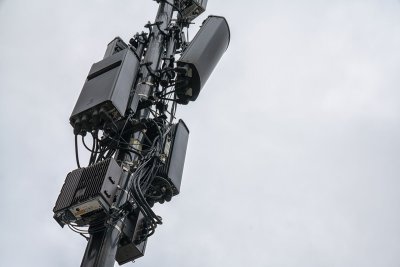
According to Vodafone's announcement, the gateway is located in Málaga, while field activities are being conducted in Granada. The system uses a 0.9-meter dish operating in the authorized 700 MHz band, which is well-suited for penetrating buildings and providing wide-area coverage. An automated installation, developed in partnership with the University of Granada, will record video, data, and call logs as they are exchanged across the satellite, gateway, and terrestrial network, providing valuable data on performance and reliability.
Expanding an Existing Laboratory
The Málaga gateway builds on a laboratory that was opened on October 2, 2025, at the University of Málaga's telecommunications engineering school. That facility was established to improve connections between 4G/5G networks and LEO satellites, with research priorities including software validation, coverage optimization, interference mitigation, and hybrid network management tools. At the time, Vodafone indicated that the lab would combine network equipment with emulators to test hardware, software, and chips, and an initial project with Meta aimed to enhance WhatsApp voice and video calls across terrestrial and satellite connections. These were stated research objectives, not published performance results.
The University of Málaga's February 2025 project announcement had already outlined plans for a gateway to connect partners' services to AST SpaceMobile's BlueBird satellites before commercial introduction, and also described the involvement of university researchers and students. The new activation therefore represents a progression of an existing integration program, moving from concept to live testing.
Testing Emergency Switching
One of the key objectives of the testing is to assess the ability of devices to switch to satellite communication when terrestrial networks are unavailable. Vodafone plans to disable terrestrial networks in controlled tests, prompting equipment to reselect a satellite channel. This capability could be vital for emergency communications, as well as for applications involving robots, vehicles, and drones that may operate in remote or disaster-affected areas.
The announcement does not include specific measurements of throughput, switching delay, or availability, nor does it provide a retail launch date. However, the live environment will allow engineers to observe how devices and applications behave as the available network changes, which is essential for refining the technology.
Market Implications
For network operators, the ability to provide seamless satellite-to-phone connectivity could open new revenue streams and enhance service coverage, particularly in rural and underserved areas. It also has implications for emergency services, logistics, and the growing market for connected devices. AST SpaceMobile (ASTS) is a key player in this space, and its partnership with Vodafone (VOD) is closely watched by investors. The successful activation of this gateway brings the commercial deployment of satellite-to-smartphone services one step closer, though significant technical and regulatory hurdles remain.
As testing progresses, the next useful evidence will be continuity measurements during network transitions: whether a call survives, how long an interruption lasts, and how equipment behaves when ground coverage returns. The Málaga gateway provides a controlled environment to answer these questions, and the results will be critical in determining the timeline for broader rollout.