Redmond, Washington-based RBC Signals has announced a $10 million growth investment led by Washington Harbour Partners, a move aimed at scaling its satellite data connectivity operations. The funding, disclosed on November 19, will support the company's expansion into government services and the commercialization of new communications and monitoring technologies.
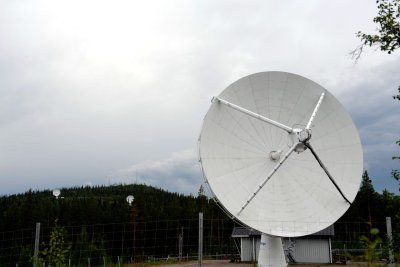
The investment underscores the growing demand for flexible satellite ground infrastructure. RBC Signals operates a ground-station-as-a-service model, connecting satellite operators to a network of company-owned and partner antennas. This approach allows customers to access communications capacity without the heavy capital expenditure of building their own ground networks.
Technology Focus Areas
According to the company's announcement, the new capital will be directed toward several key technology areas: optical ground communications, intersatellite links, space domain awareness, and spectrum monitoring. While the announcement outlines these priorities, it does not specify how the $10 million will be allocated among them or provide a timeline for when each capability will reach the market.
The investment arrives amid a broader push to enhance satellite connectivity options. RBC Signals' existing partnership with Blue Origin highlights the practical applications of its ground station network. In August, Blue Origin announced that its first three Quartz ground stations had been installed and tested in Bermuda, New Zealand, and Australia, with RBC Signals serving as a partner for site surveys, antenna procurement, deployment, and hosting.
Optical Communications Development
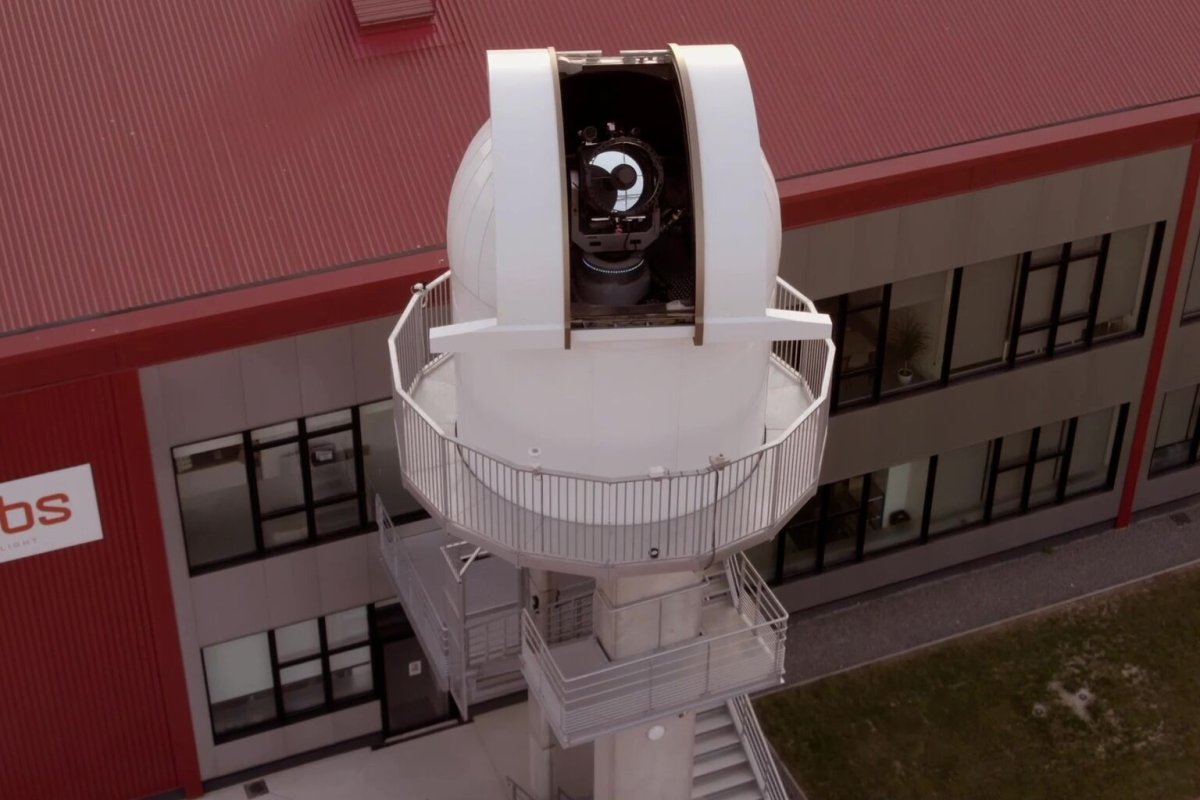
A significant portion of the company's forward-looking strategy involves optical ground stations. In September, RBC Signals signed a memorandum of understanding with Cailabs, a French optical ground station supplier, to explore deploying and operating optical downlink stations across its network. The collaboration aims to provide commercial access to optical downlink capacity, which offers higher data rates than traditional radio frequency links.
The agreement with Cailabs includes assessing potential sites based on weather, connectivity, security, and infrastructure requirements. Since cloud cover can disrupt optical links, having geographically dispersed stations would allow missions to switch to alternative locations when conditions are unfavorable. However, the MoU is exploratory in nature, and no firm launch dates or pricing for a combined service have been announced.
Market Implications
The investment reflects a broader trend in the satellite industry toward more flexible and scalable ground infrastructure. As the number of satellites in low Earth orbit continues to grow, operators are seeking cost-effective ways to manage data downlinks. RBC Signals' model addresses this need by providing shared access to ground stations, reducing the barrier to entry for smaller operators and enabling faster deployment of new services.
Government services represent a particularly promising avenue for growth. With increasing focus on space domain awareness and spectrum monitoring, the company is well-positioned to serve defense and intelligence agencies that require robust and secure satellite communications. The new funding will help RBC Signals develop these capabilities and potentially win additional government contracts.
Investors will be watching for more details on how the funding is deployed and when new services become available. The company's ability to execute on its technology roadmap and convert its partnerships into commercial offerings will be key metrics for evaluating the success of this investment round.
Overall, the $10 million injection provides RBC Signals with the resources to pursue ambitious expansion plans, but the lack of specific timelines and allocation details leaves some uncertainty. Market participants will likely monitor the company's progress in bringing optical and intersatellite link services to market over the coming quarters.