Kongsberg Satellite Services (KSAT) has unveiled plans to construct a 20-metre-class antenna adjacent to the European Space Agency's (ESA) Cebreros ground station in Spain. The announcement, made on November 17, outlines a collaborative effort involving ESA and Spain's Instituto Nacional de Técnica Aeroespacial (INTA). This facility is intended to serve as the European component of KSAT's emerging lunar communications network, complementing sites in Arizona and Western Australia.
The planned antenna will leverage existing ESA and INTA infrastructure and operational expertise. While the partnership details are clear, KSAT has not disclosed a commissioning date, contract value, or guaranteed data rates for the new facility. This ambiguity leaves room for speculation about the project's timeline and commercial viability, though the strategic importance of a European node in lunar communications is evident.
Global Lunar Network Takes Shape
In a construction update issued on September 2, KSAT detailed its broader vision: three 20-metre antennas designed to provide near-continuous coverage of lunar missions. These antennas will support spacecraft telemetry, tracking, command, and high-rate data transmission over X-band and Ka-band frequencies, facilitating operations from transit through lunar orbit and surface activities.
The September update also confirmed that the first reflector for the Australian site had been mounted on its tower, with CPI Vertex Antennentechnik named as the antenna supplier. The November announcement adds specificity to the Spanish location and institutional backing, but it does not confirm that all three sites are operational or ready for service.
Comparing with ESA's Existing Dish
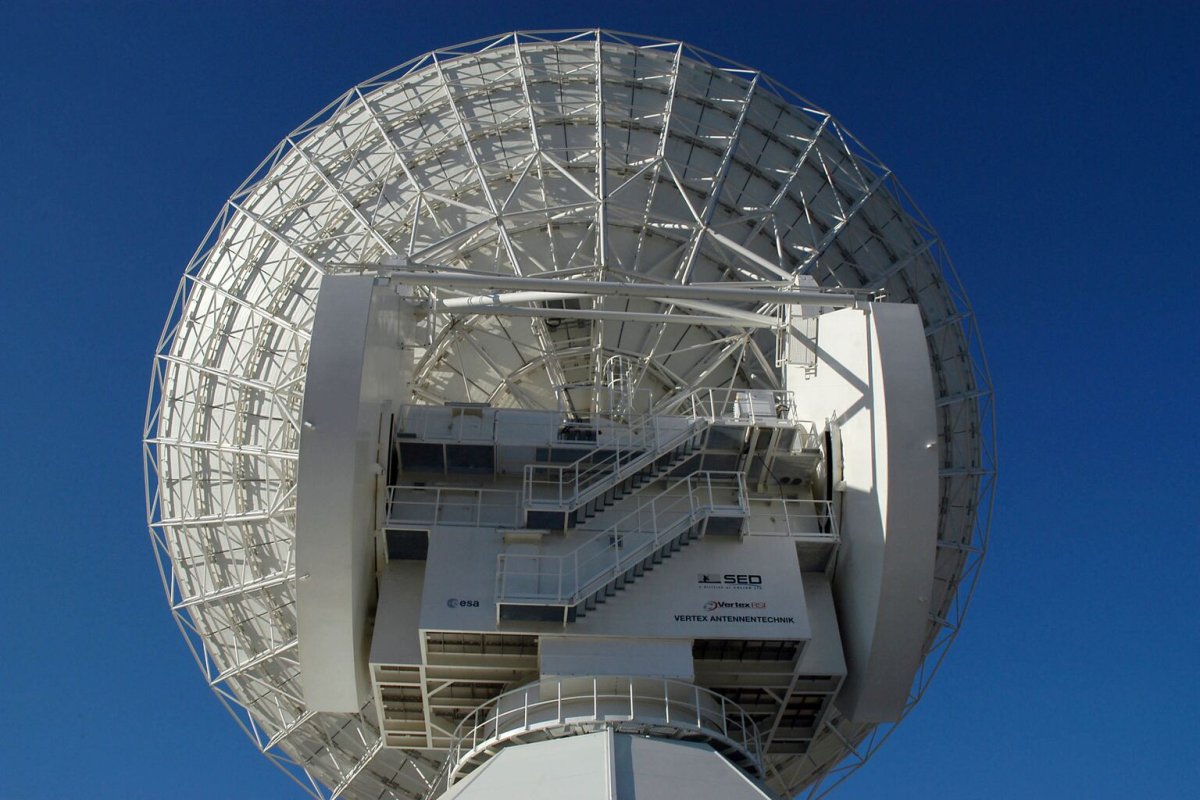
ESA's Cebreros station currently features a 35-metre deep-space antenna, located approximately 77 kilometres west of Madrid. This facility provides tracking, telemetry, command, and radio measurement services. The proposed KSAT antenna would introduce commercial lunar communications capacity in close proximity, though dish diameter alone does not determine comparative data rates or capabilities.
According to ESA's station profile, the existing dish operates with X-band transmit and X-, K-, and Ka-band receive capabilities. KSAT's planned 20-metre antenna is designed for X-band and Ka-band operations, with a focus on telemetry, tracking, commands, and data relay. The coexistence of these facilities could enhance the region's overall space communications infrastructure.
Commercial Expansion and Institutional Support
ESA has indicated that the collaboration would add commercial capabilities to its Estrack augmented network. This partnership reflects a growing trend of public-private cooperation in space communications, as demand for lunar data relay services increases with upcoming missions from various space agencies and commercial entities.
While the announcement lacks specific technical performance metrics or financial terms, it signals KSAT's commitment to establishing a robust lunar communications backbone. The selection of Spain as the European hub aligns with the country's active role in space exploration and its existing relationship with ESA.
Market Implications and Outlook
For investors tracking the space economy, this development underscores the expanding market for deep-space communication services. As lunar exploration accelerates, companies like KSAT are positioning themselves to capture a share of the growing demand for reliable data links. The involvement of ESA and INTA adds credibility and potential for future government contracts.
However, the lack of a timeline and financial details means that the project's immediate impact on KSAT's revenue is uncertain. The company's ability to execute on its global network strategy will be a key factor to watch, particularly as competitors in the space communications sector also ramp up their capabilities.
Industry analysts will likely monitor progress at all three sites, with the Australian installation serving as a benchmark for construction progress. The eventual commissioning of the Spanish antenna will be a significant milestone for European lunar communications, potentially opening new opportunities for scientific and commercial missions.