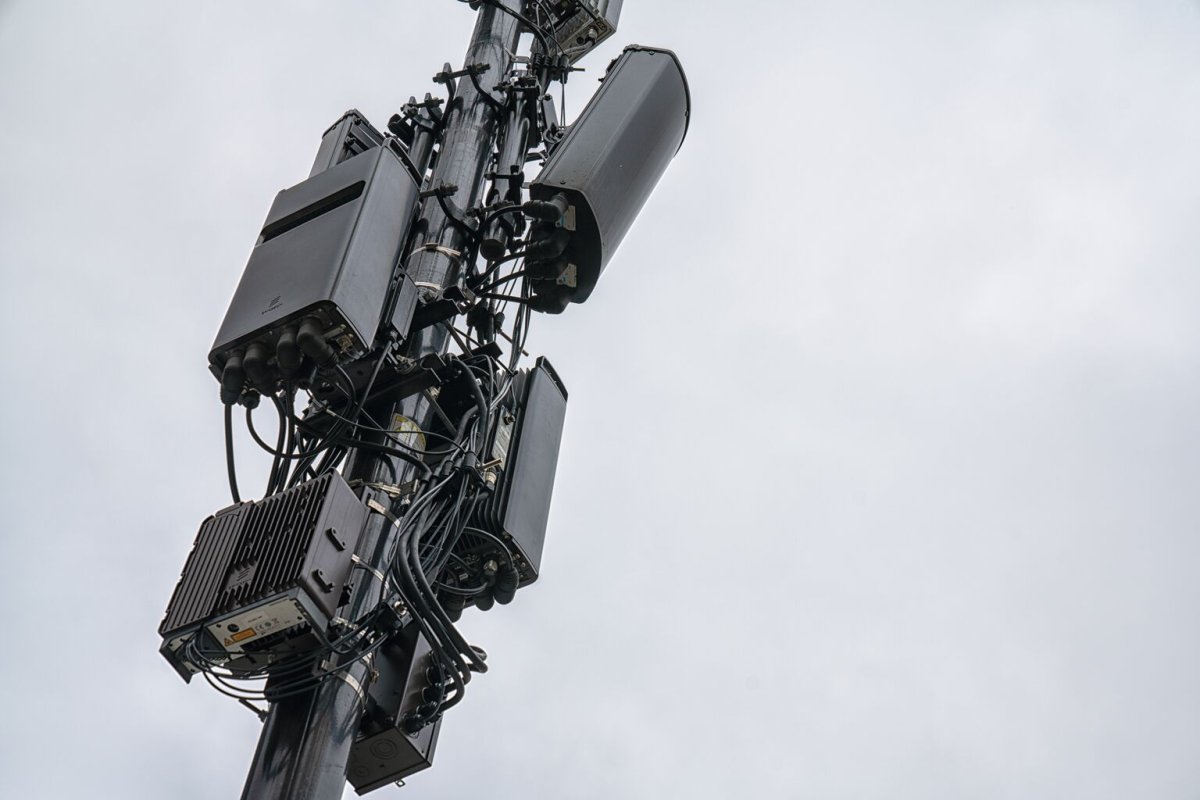
The Federal Communications Commission voted Thursday to move forward with a proposal that would significantly expand the spectrum available for satellite-to-phone communications, adding 482 megahertz of new frequency bands. While the move is seen as a major step for the emerging direct-to-device satellite industry, the agency has left a critical engineering question unanswered: how to protect terrestrial 5G base stations from potential interference.
The proposal, which would broaden the existing Supplemental Coverage from Space (SCS) framework, aims to increase eligible spectrum from 344 MHz to 826 MHz across 13 bands, up from the current five. However, the FCC's own technical draft acknowledges that the proposed emission limits were designed primarily around handset receivers, not the more sensitive receivers used in cellular base stations that rely on time-division duplexing (TDD).
TDD technology shares the same frequency for both uplink and downlink, separating them by time slots. This creates a synchronization challenge when satellite signals are introduced into the mix. The FCC's draft specifically asks whether satellite and terrestrial networks can align their TDD timing, and if not, how they could coexist without causing harmful interference.
At the heart of the matter is a proposed boundary power limit of −76 dBm per square meter per megahertz. This limit would apply to the aggregate of all visible beams from a satellite constellation, rather than just a single satellite signal. However, the draft concedes that this terrestrial-based boundary may not adequately protect satellite downlinks, which can behave differently across adjacent markets.
FCC Chairman Brendan Carr acknowledged the unresolved issues during the meeting. “There are important technical questions to answer about whether satellite and terrestrial uses can successfully coexist in the bands we consider today,” he said, according to Light Reading. The consultation process will now seek input from industry stakeholders on these engineering challenges.
In a separate but related action, the FCC also advanced a proposal to auction 25 MHz of spectrum in the 1675–1695 MHz and 2020–2025 MHz ranges. This auction would create new licensing opportunities, though it is a distinct proceeding from the SCS expansion. The auction draft proposes two 10-MHz unpaired blocks and one 5-MHz block, with flexible use options for uplink, downlink, or TDD operations.
Market analysts see the FCC's move as a positive signal for satellite-to-phone service providers like AST SpaceMobile (ASTS) and Lynk Global, as well as established players such as SpaceX (via Starlink) and Globalstar (GSAT). However, the unresolved interference questions could delay final rules and limit the operational flexibility of satellite operators in TDD bands.
The FCC's technical draft calls for detailed evaluations of base-station antenna gain, orientation, and receiver performance. The key challenge is to determine signal limits that protect terrestrial infrastructure while still allowing viable satellite connections. The agency is seeking public comment on whether lower limits or band-specific protections would be more effective.
The proposal's expansion would include two significant TDD additions: the 2500–2690 MHz band and the 3450–3550 MHz band, together accounting for 290 MHz, or 60.2% of the proposed increase. These bands are crucial for 5G networks, making the interference question all the more pressing.
As the FCC moves forward with its consultation, the industry will be watching closely to see how these technical challenges are resolved. Final rules could narrow the list of eligible bands or impose stricter interference protections, potentially impacting the rollout timeline for satellite-to-phone services. Neither Thursday's vote nor the separate auction proposal sets a launch date, but the proceedings represent a significant step toward expanding connectivity options for consumers.