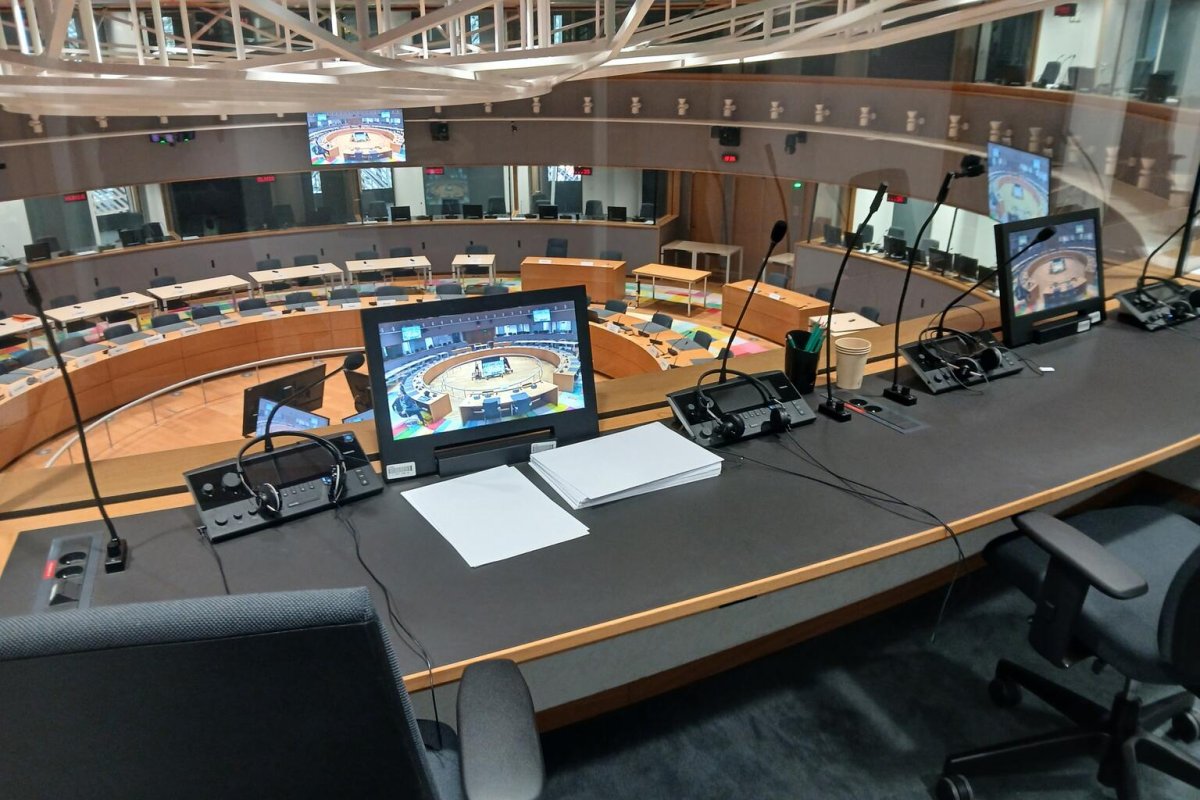
European Union telecommunications ministers are scheduled to converge on a unified negotiating stance for new mobile-satellite spectrum regulations on December 1, according to the Council's forward agenda published November 20. This marks a pivotal step toward finalizing the bloc's 2 GHz satellite communications framework, which is critical as existing operator authorizations are set to expire in May 2027.
Path to a General Approach
The ministerial meeting aims to adopt a "general approach," which represents the Council's position for subsequent negotiations with the European Parliament. The presidency's preparatory document explicitly outlines this next step, underscoring the urgency of reaching a consensus. Even if ministers agree on this negotiating position, the regulation will still require further negotiation and formal adoption before any new spectrum rights can be assigned to operators.
Timeline and Key Dates
The legislative process has been progressing steadily since the European Commission tabled its proposal on May 27, 2026. The Council updated its work on November 20, with the ministerial target set for December 1. Current rights are slated to end in May 2027, and the final regulation still awaits adoption, making the upcoming meeting a critical juncture in the timeline.
Proposed Spectrum Allocation
The Commission's May proposal seeks to establish EU-level authorization for services using the harmonized 2 GHz band, providing providers with more consistent conditions for cross-border operations. The plan identifies direct-to-device connectivity as a key application, alongside security and defense communications. The paired frequencies cover Earth-to-satellite transmissions at 1980–2010 MHz and satellite-to-Earth transmissions at 2170–2200 MHz, as outlined in the Council draft. Notably, the reform focuses solely on these mobile-satellite bands and does not encompass all frequencies used by satellite broadband networks.
The December 1 agenda details a proposed split: one-third of the spectrum for government communications provided by an EU operator, and two-thirds for commercial services. The commercial portion would be equally divided between EU new entrants and a selection open to both EU and non-EU operators. This allocation aims to balance strategic interests with market openness.
Fees and National Responsibilities
Key provisions in the November 16 presidency text address how one-off contributions and recurring fees would be assessed, collected, and distributed. The arrangements are designed to reflect spectrum value and cover national authorities' costs. The document also proposes allowing member states to set parameters for complementary ground or airborne components. For providers, these provisions define the costs and operating conditions of future spectrum access, but they remain part of a negotiating text—companies cannot treat the draft as authorization to launch new services.
Implications for Users and Industry
The Commission's November 11 explanation highlights voice, messaging, internet access, and connected-device services as potential uses for direct satellite links. Satellite connectivity is also positioned as a backup when terrestrial networks are unavailable or disrupted, with applications in emergency response, logistics, and remote areas. These are potential service applications; the December 1 agenda sets a legislative objective but does not award spectrum to any operator or set a consumer launch date. The immediate test is whether ministers can bridge their differences and agree on a position before negotiations over the final rules proceed.
Industry stakeholders will be closely watching the outcome, as the 2 GHz band is crucial for next-generation satellite-to-device services, which could complement terrestrial 5G networks and extend coverage to underserved regions. The regulatory framework will also influence investment decisions and competitive dynamics among satellite operators, telecom providers, and technology firms.
As the deadline approaches, the focus remains on achieving a balanced approach that addresses security concerns, promotes innovation, and ensures efficient use of spectrum resources—a delicate equilibrium that will shape Europe's satellite communications landscape for years to come.