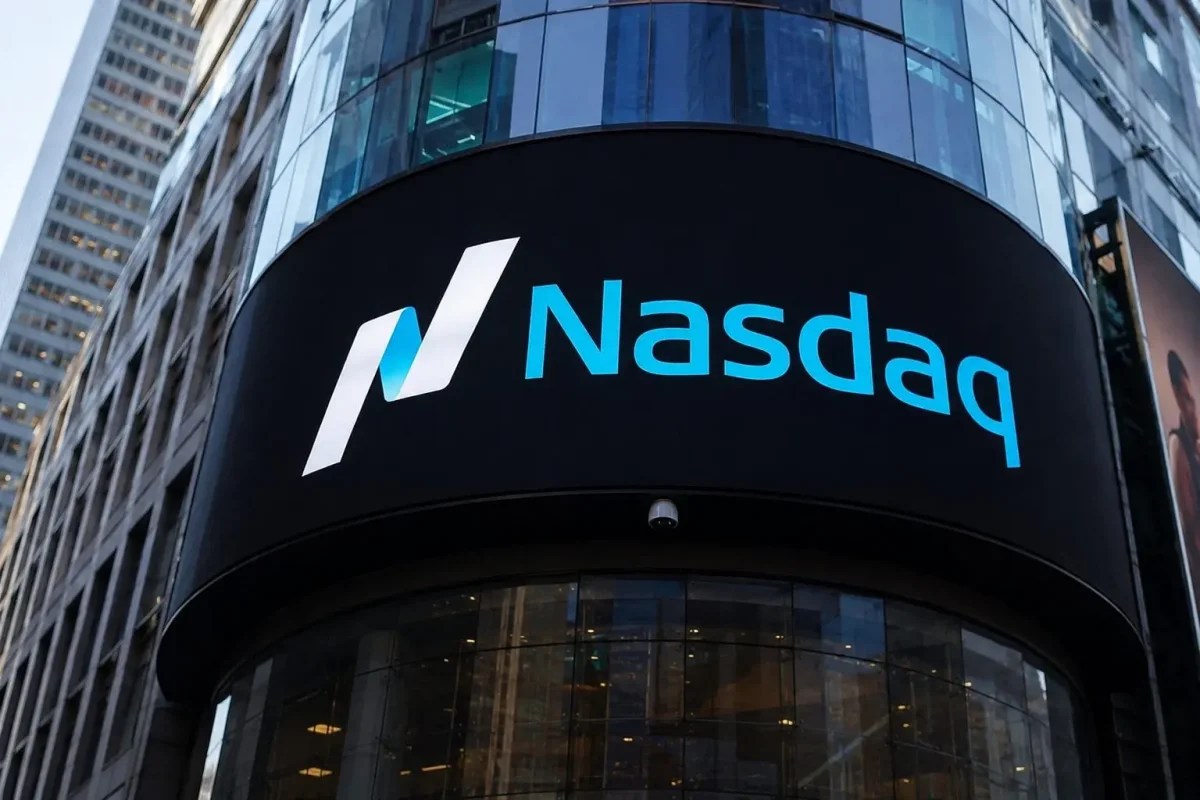
NEW YORK, July 17, 2026 — U.S. stocks ended the week on a down note as a sharp selloff in semiconductor shares erased roughly one-third of the sector's gains for the year. The Nasdaq Composite dropped 1.19%, following a 1.5% decline on Thursday. The S&P 500 fell 0.86%, and the Dow Jones Industrial Average lost 0.56%.
Semiconductor Index Takes a Hit
The Philadelphia Semiconductor Index plunged 17% in July, wiping out approximately 35% of its 2026 advance. Despite the pullback, the index remains up 63.2% year-to-date, far outperforming the S&P 500's 10% rise. Before July, the index had surged 96.6%.
The selloff was not driven by weak demand but rather by valuations that had priced in near-perfect growth. Taiwan Semiconductor Manufacturing (NYSE: TSM) reported a 33.7% revenue increase in U.S. dollars and a 77.4% jump in net income. Yet its U.S.-listed shares fell about 3%.
Fund Flows Signal Rotation
Investors pulled $7.18 billion from growth funds last week while adding $3 billion to value funds, reflecting a rotation away from high-growth names. LSEG Lipper data showed a $10.18 billion gap between growth and value fund flows. Options activity remained focused on less crowded sectors, suggesting a tactical shift rather than a broad market retreat.
Market Breadth and Key Movers
Declining stocks outnumbered advancers by two-to-one on the New York Stock Exchange, and by 1.59-to-one on the Nasdaq. Energy was the only S&P 500 sector in positive territory. Netflix (NASDAQ: NFLX) slid about 7% after a disappointing earnings outlook. Intuitive Surgical (NASDAQ: ISRG) tumbled roughly 13% after maintaining its procedure forecast and citing insurance-related delays.
TSMC reported second-quarter revenue of $40.2 billion, with advanced nodes contributing 77% of wafer revenue. The company projected third-quarter revenue between $44.6 billion and $45.8 billion. Despite strong results, shares traded lower as investors focused on the long-term outlook.
Earnings Season and Outlook
Overall earnings reports remain robust. Of the first 49 S&P 500 companies to report, 90% exceeded expectations. Analysts now forecast a 26% rise in second-quarter profits, up from 19.2% on April 1. However, strong performance alone is no longer enough to sustain share prices.
UBS Group (NYSE: UBS) projects that hyperscaler capital expenditure growth will slow from 76% this year to 25% in 2027, and to just 6% in 2028. The trajectory is seen as more critical than current spending levels.
“Valuations in semiconductor stocks had priced near-perfect demand,” said Toni Meadows, investment chief at BRI Wealth Management. The decline has been exacerbated by leverage; a triple-leveraged semiconductor fund traded 57% below its June peak on Friday morning.
Key Events Ahead
Next week brings major earnings reports from Alphabet (NASDAQ: GOOGL), Intel (NASDAQ: INTC), and Texas Instruments (NASDAQ: TXN). More than 80 S&P 500 companies are scheduled to report. Investors will be looking for confirmation that AI spending continues to generate returns.
Risks include a potential oil surge linked to Iran, which could reignite inflation and interest rate concerns, triggering a broader selloff. Conversely, strong guidance from hyperscalers could spark a rapid recovery in chip stocks following the current leveraged pullback.