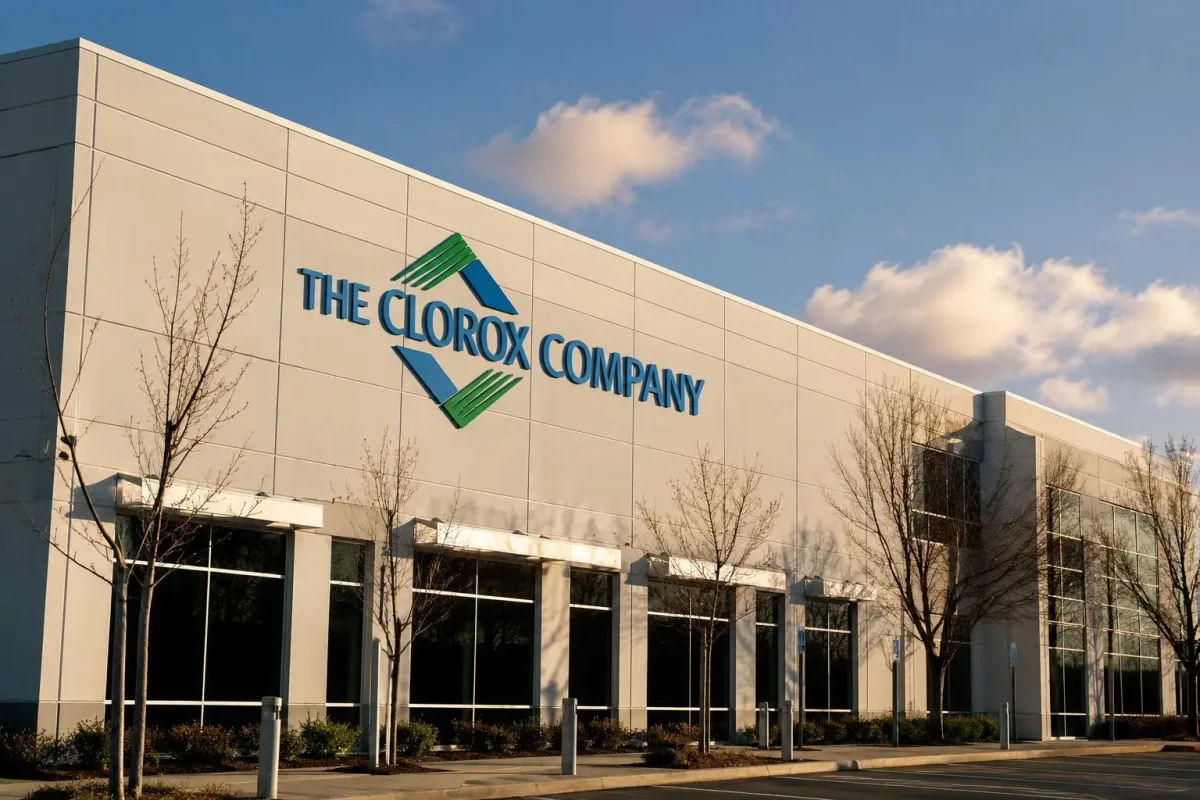
Clorox (NYSE:CLX) shares climbed 3.8% in New York on Friday, closing at $96.56 and snapping back sharply to end the week. Despite the bounce, the stock remains 0.7% below its July 2 price and just 44 cents under the median analyst target of $97, according to FactSet (NYSE:FDS).
The company's main draw is its income. Clorox pays a quarterly dividend of $1.24, annualizing to $4.96 per share, which yields 5.14% based on Friday's close. That is about 58 basis points above the 10-year U.S. Treasury yield of 4.562%.
However, the dividend cushion looks thin. Clorox expects fiscal 2026 adjusted EPS of $5.45 to $5.65, putting the payout at about 89% of the midpoint. Using the GAAP EPS forecast midpoint of $4.88, the annual dividend would be roughly 102% of earnings, indicating a potential squeeze if profits slip.
No clear catalyst drove Friday's move. The last corporate news on Clorox's investor page was June 17. Bank of America analyst Anna Lizzul maintained a Hold rating and set a $102 price target, though that is not an upgrade.
The stock's gain outpaced other household products names. Procter & Gamble (NYSE:PG) rose just 0.13%, Colgate-Palmolive (NYSE:CL) added 1.35%, and Church & Dwight (NYSE:CHD) gained 0.72%. The S&P 500 climbed 0.4% on Friday, up 1.2% from July 2.
Valuation differences stand out. Clorox trades at a trailing P/E of 15.7 times, well below PG's 21.5, CL's 35.8, and CHD's 31.7. Its 5.1% yield is also the highest among peers. Investors appear to demand a premium for holding Clorox amid its operational reset.
The company expects full-year sales to fall 6% and gross margin to narrow by 250 to 300 basis points due to higher energy, freight, and acquisition costs. Third-quarter revenue was flat at $1.67 billion, with organic sales down 1%. CEO Linda Rendle noted there is "more work to do" in a "challenging consumer and cost environment."
Interest rates could shift the picture. Joseph Purtell of Neuberger Berman expects Treasury yields to stay "largely stable, if not slightly lower," while Citigroup's Jason Williams says "inflation is priced too sticky" in markets. If yields drop, Clorox's dividend becomes more appealing. Upcoming data—the June CPI on Tuesday, producer prices on Wednesday, retail sales, and Fed Chair Kevin Warsh's testimony—will provide further signals.
The risks extend beyond rates. Clorox used debt for most of its $2.25 billion acquisition of GOJO Industries (Purell). If costs for freight, energy, and interest remain elevated, and consumer demand for branded goods stays weak, a profit miss could further squeeze the dividend. The payout gap does not predict a cut, but it leaves little margin for error.