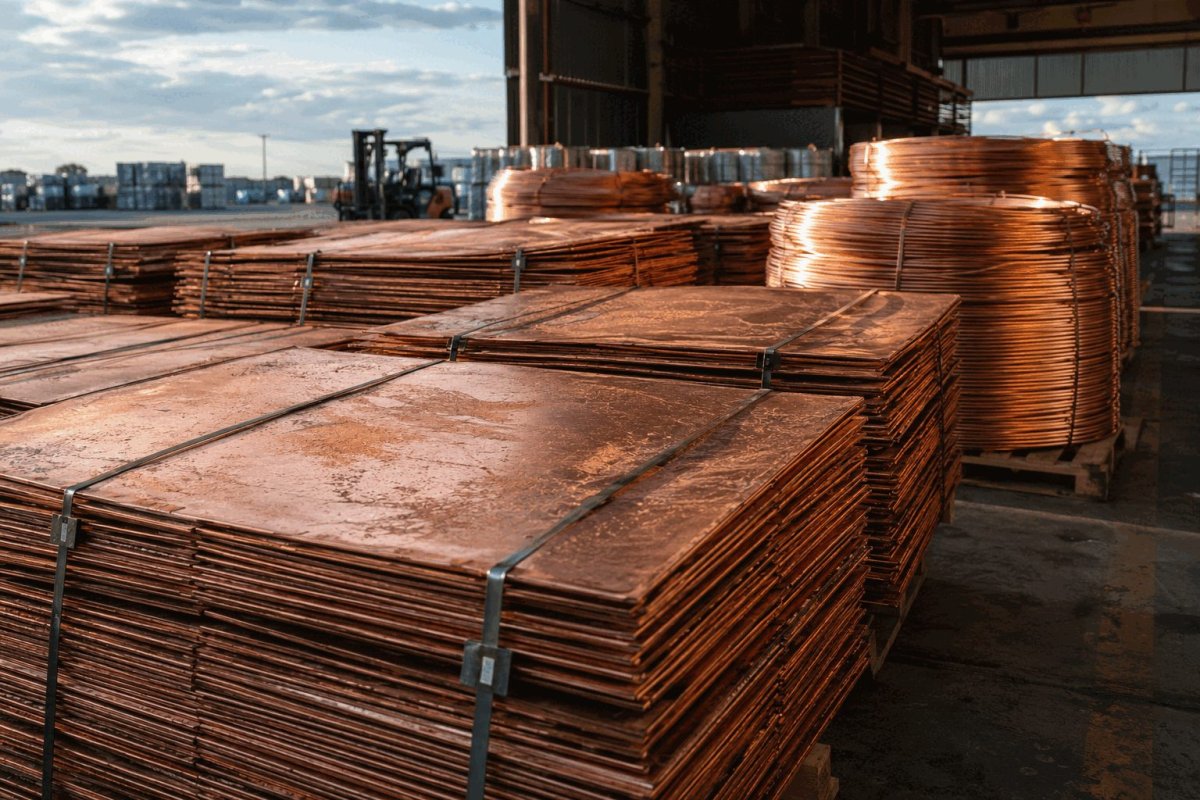
Copper futures in New York closed at an all-time high of $6.7115 per pound on Tuesday, August 25, 2026, marking a 1.61% gain. The rally came as U.S. tariff policies continued to divert refined metal into domestic warehouses, leaving overseas buyers with a tighter supply picture.
According to exchange data, COMEX stockpiles climbed for a 46th consecutive session, reaching 675,185 metric tons. That figure now exceeds the full-year global surplus forecast of 639,000 tons made by industry consultant CRU for 2026. The unusual buildup underscores how trade policies are reshaping the physical copper market.
Tariffs Drive Stockpiles, Scarcity Premium
The record price is not simply a reflection of stronger demand; it is increasingly a location-based premium. With the possibility of new U.S. tariffs in 2027, traders have been shipping refined copper into the United States at an accelerated pace. As a result, while global inventories remain comfortable, metal that could be subject to future duties is becoming less accessible to buyers in other regions.
U.S. import data highlights the scale of this flow. Refined copper imports totaled nearly 885,000 tons in the first half of 2026, a 3% increase from the same period in 2025 and more than double the volume recorded in 2024. This surge in imports has contributed directly to the record COMEX stockpile levels.
Global Market Response
On the London Metal Exchange, three-month copper reached $14,343 per metric ton, just 1.3% below the January high of $14,527.50. Requests to withdraw 65,400 tons from LME warehouses have further tightened available supply, adding to the upward pressure on prices.
Investors have taken notice. The United States Copper Index Fund (NYSEARCA:CPER) rose 1.52% to $40.68, while the Global X Copper Miners ETF (NYSEARCA:COPX) gained 1.53% to $95.98. Mining stocks provided a higher-beta play: Freeport-McMoRan Inc. (NYSE:FCX) advanced 2.30% to $79.59, and Southern Copper Corporation (NYSE:SCCO) climbed 2.54% to $219.70, near its 52-week high.
Outlook and Risks
The market's focus now turns to whether the tariff-driven inventory buildup will continue. If imports remain elevated, the divergence between U.S. and non-U.S. copper availability could widen further, sustaining the scarcity premium. Conversely, a rollback of tariff threats or a slowdown in import flows would likely erode that premium.
Demand conditions also matter. A significant slowdown in Chinese consumption could reveal the underlying surplus, while supply disruptions or additional LME withdrawals would tighten the market further.
For investors, the key takeaway is that copper's price is increasingly determined by where the metal is located, not just how much is produced globally. Tuesday's record settlement is a clear signal that trade policy is now a central factor in commodity pricing.