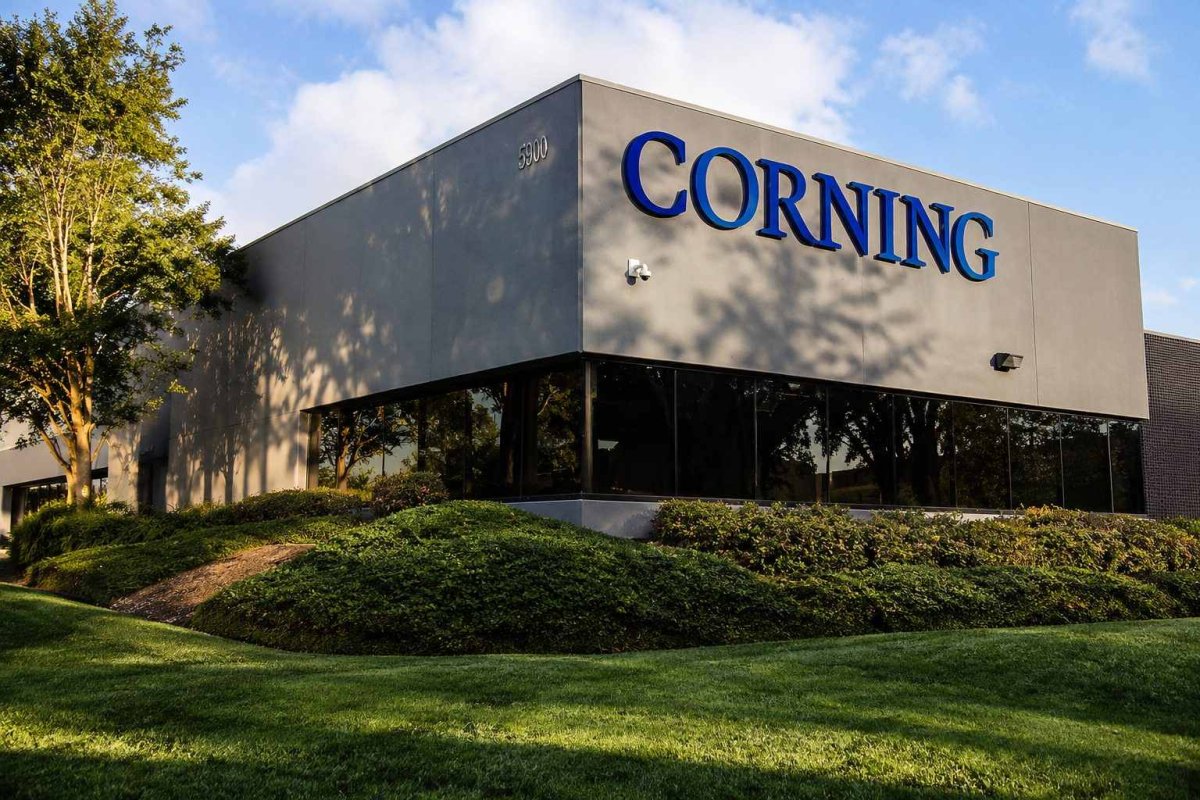
Corning Incorporated (NYSE: GLW) saw its stock climb 6.1% on Wednesday, closing at $205.83, even as the broader market declined. The only new corporate announcement was the board's decision to maintain the quarterly dividend at $0.28 per share, a level that has been unchanged since early 2023. At the current price, the annualized dividend yield stands at a mere 0.54%, underscoring that the stock is not being valued for its income potential.
The stock's intraday range on Wednesday spanned from a low of $190.93 to a high of $217.09, a spread of $26.16. That single-session swing is roughly 23 times the annual dividend payout of $1.12 per share. With 860.64 million shares outstanding, the total annual dividend cost to Corning is approximately $964 million, while a $10 move in the stock price alters the company's equity value by about $8.6 billion.
Growth Story Centers on AI and Solar
Corning's recent stock performance reflects investor enthusiasm for its growth prospects in artificial intelligence data center infrastructure and solar energy, rather than any yield appeal. The company's Optical Communications segment, which supplies fiber optic components for AI-driven data centers, posted a 36% year-over-year sales increase to $1.846 billion in the first quarter. Meanwhile, its solar business surged 80% to $370 million. Total core sales rose 18% to $4.35 billion, and core earnings per share jumped 30% to $0.70.
Chief Financial Officer Ed Schlesinger highlighted the momentum, noting that core sales were led by Optical Communications and the new solar business. The company has set ambitious targets, including a $20 billion annualized sales run rate by the end of 2026, and a $10 billion revenue stream from its Photonics platform by 2030, according to CEO Wendell P. Weeks.
Major Hyperscaler Deals Underpin Growth
A key driver of investor optimism is Corning's strategic partnerships with major cloud and technology companies. In early June, Amazon.com Inc (NASDAQ: AMZN) announced a multiyear, multibillion-dollar supply agreement for optical fiber, cable, and connectivity to support its U.S. data center expansion. Corning plans to add 1,000 jobs at its North Carolina facilities as part of the deal. AWS CEO Matt Garman characterized the agreement as an investment in U.S. manufacturing.
Corning has also secured significant contracts with other hyperscalers. During its first-quarter earnings call, the company revealed it had signed two additional contracts with hyperscaler customers, each comparable in size and duration to the up-to-$6 billion deal it previously inked with Meta Platforms Inc (NASDAQ: META). This positions Corning as a critical supplier to the AI infrastructure buildout, linking its fiber business to names like NVIDIA Corp (NASDAQ: NVDA) and other leading technology firms.
Wall Street Targets Cluster Around Current Levels
Despite the strong growth narrative, Wall Street appears cautious about further upside. According to Google Finance, the average 12-month price target among 11 analysts is $205.10, just slightly below the stock's current price. Analyst targets range from a low of $180 to a high of $228. Truist's Matthew Niknam rates the stock a Hold with a $205 target, while UBS's Joshua Spector is more bullish with a Buy rating and a $228 target. Barclays' Tim Long also rates it Hold, setting a target of $180.
The next major catalyst for Corning will be its second-quarter earnings report, expected on August 4. Analysts project Q2 EPS of $0.75, which falls within the company's own guidance range of $0.73 to $0.77. The results will provide further clarity on whether the AI-driven growth momentum can sustain the stock's elevated valuation, which currently trades at a trailing price-to-earnings ratio of nearly 99.