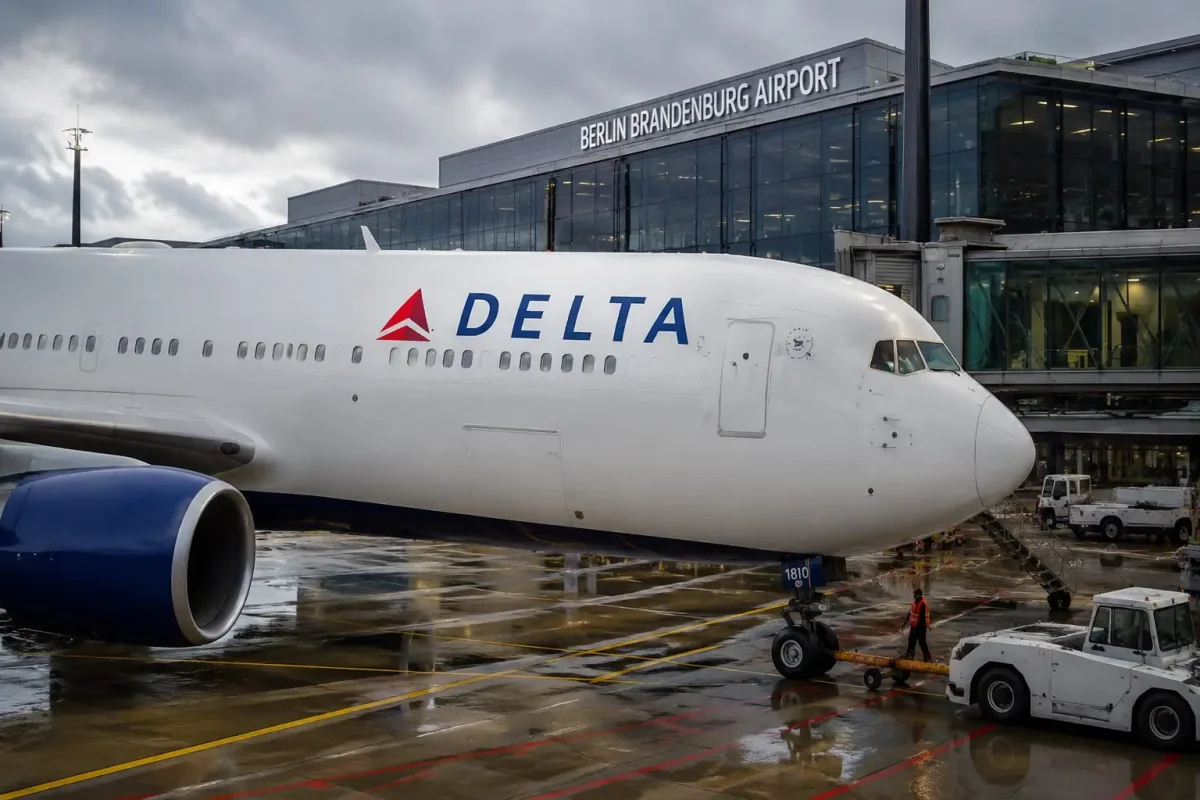
Delta Air Lines has resumed daily nonstop flights between Los Angeles and Hong Kong, marking its return to the Hong Kong market after a multi-year hiatus. The service, which began with flight DL89 departing Los Angeles on June 6 and landing in Hong Kong at 5:05 a.m. on June 8, is a key element in Delta's strategy to strengthen its trans-Pacific presence.
Strategic Expansion Amid Industry Headwinds
Delta's move comes at a time when the airline industry faces significant challenges. The International Air Transport Association (IATA) recently slashed its 2026 profit forecast to $23 billion—nearly half its earlier projection—citing elevated fuel prices and regional disruptions stemming from the Iran war. IATA Director General Willie Walsh noted that the combination of Gulf region turmoil and higher fuel costs forced the downward revision, potentially leading to capacity cuts and sustained high fares.
Despite these headwinds, Delta is betting on its premium cabins, cargo capacity, and Los Angeles hub to carve out a competitive edge. The airline is using Airbus A350-900 aircraft on the route, featuring Delta One Suites, Premium Select, Delta Comfort+, and Main Cabin seating. Delta also highlighted that the service offers travelers over 30 one-stop connections via Los Angeles.
Competitive Landscape
The Los Angeles-Hong Kong route is already heavily contested. Cathay Pacific operates three daily nonstop flights between the two cities, while United Airlines runs two daily nonstops on the same route, according to travel data site Upgraded Points. United remains the largest U.S. carrier across the Pacific, with a broader network that includes flights to Australia, Bangkok, and Ho Chi Minh City. Delta's last Hong Kong service from Seattle ended in October 2018.
Delta's new president, Peter Carter, told CNBC at the IATA meeting in Rio de Janeiro that the airline aims to be "stronger, better, faster" in the trans-Pacific market and aspires to become the top U.S. carrier in that region. The Hong Kong route is a direct challenge to United's dominance and Cathay's home-market advantage.
Beyond Passenger Service
The route also bolsters Delta's cargo operations. Each A350 flight can carry over 20 tons of freight, including electronics, e-commerce goods, and perishables, providing a new link for cargo between Hong Kong and the U.S. Delta's partnership with Korean Air, through a trans-Pacific joint venture that shares revenue and coordinates routes, further strengthens its network. The venture now connects over 80 cities in Asia and more than 290 in the Americas, with Korean Air's integration of Asiana Airlines expanding the hub in Seoul.
Delta's Los Angeles hub remains its largest global operation by seats and departures. The airline previously pitched the Hong Kong and Chicago flights as part of a broader LAX expansion. Paul Baldoni, Delta's senior vice president of network planning, stated last year that these additions strengthen Delta's presence in two of the world's most dynamic markets.
The inaugural flight is a ceremonial milestone, but the real test lies in sustaining passenger demand day after day. With high fuel costs and intense competition, Delta's strategy of leveraging premium cabins, cargo, and Los Angeles connectivity will be closely watched by industry analysts.