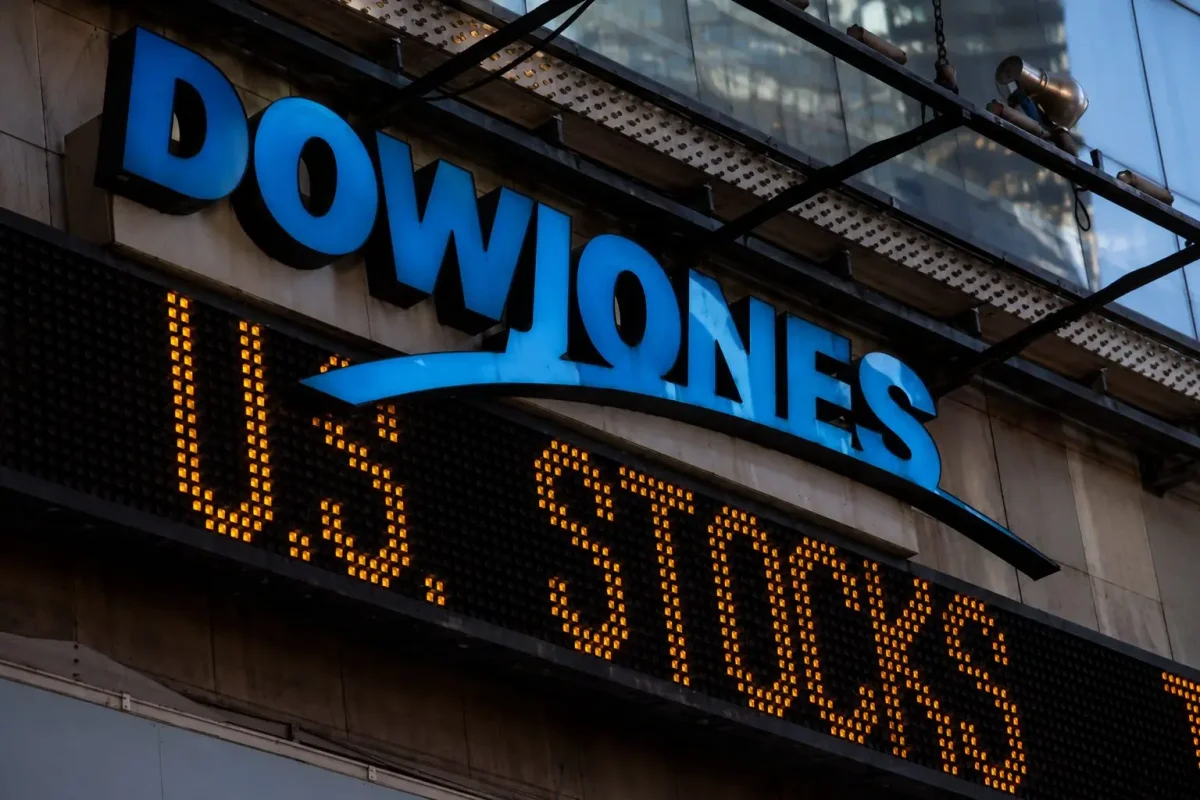
The Dow Jones Industrial Average reached a historic milestone on Tuesday, closing at 52,003.34, a gain of 332.31 points or 0.64%, as market participants rotated out of technology shares into banks and industrial companies. The blue-chip index touched an intraday high of 52,189.97 before settling at the record close, according to Investing.com data.
While the Dow celebrated its latest record, the broader market showed a more mixed picture. The S&P 500 and the Nasdaq Composite traded in negative territory near the closing bell, weighed down by weakness in the technology sector. The divergence highlighted a clear shift in investor sentiment as the market prepares for the Federal Reserve's interest rate decision on Wednesday, followed by Chair Kevin Warsh's first policy statement.
Rotation Out of Tech Fuels Blue-Chip Gains
The Dow's price-weighted structure amplified the impact of gains in higher-priced components like Caterpillar (CAT) and Goldman Sachs (GS). Industrial and financial stocks led the advance, with JPMorgan Chase (JPM), Wells Fargo (WFC), and Bank of America (BAC) all posting solid gains, as reported by Reuters. In contrast, the S&P 500 technology sector lagged the most, reflecting investor caution after a prolonged rally in artificial intelligence and semiconductor stocks.
“We’re just digesting some of those gains and the setup in anticipation of the Fed meeting is always a little tentative,” said Mark Luschini, chief investment strategist at Janney Montgomery Scott, in comments to Reuters.
Oil Prices and Inflation Outlook
Falling oil prices also played a role in the rotation. U.S. crude oil experienced a sharp decline following reports of a potential interim deal between the U.S. and Iran, which could ease global supply concerns. Lower energy costs are seen as reducing inflationary pressure, potentially giving the Fed room to maintain a dovish stance and supporting consumer spending. Traders are also monitoring developments regarding the Strait of Hormuz, a critical chokepoint for oil shipments.
Market Implications and Outlook
The Dow's rise to a record high indicates that capital remains in equities but is flowing away from crowded AI and chip trades into companies tied to real-world demand, credit, and consumer spending. Wells Fargo (WFC) recently raised its 2026 year-end S&P 500 target to 7,950, citing improved corporate earnings and reduced macroeconomic risks following the U.S.-Iran interim deal.
However, bearish voices caution that the Dow's record stands in contrast to struggling tech names on the Nasdaq. If the Fed disappoints, oil prices reverse, or the AI trade unwinds further, the Dow could face headwinds. Valuation is also a concern, with the index trading at fair to stretched levels after the recent rally.
Federal Reserve Decision in Focus
All eyes are now on Wednesday's Federal Reserve policy announcement. Markets widely expect the central bank to hold interest rates steady at 3.50% to 3.75%. The key focus will be on Chair Kevin Warsh's commentary regarding inflation, employment, and the economic outlook. A dovish tone could sustain the rotation into cyclicals, while a hawkish surprise might reignite inflation fears and pressure equity prices.
As the market digests the Fed's message, the Dow's record close underscores a pivotal moment where investor appetite for risk is shifting, but the sustainability of this move depends on the policy path ahead.