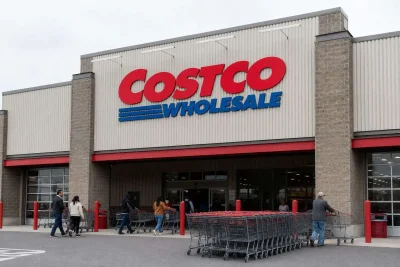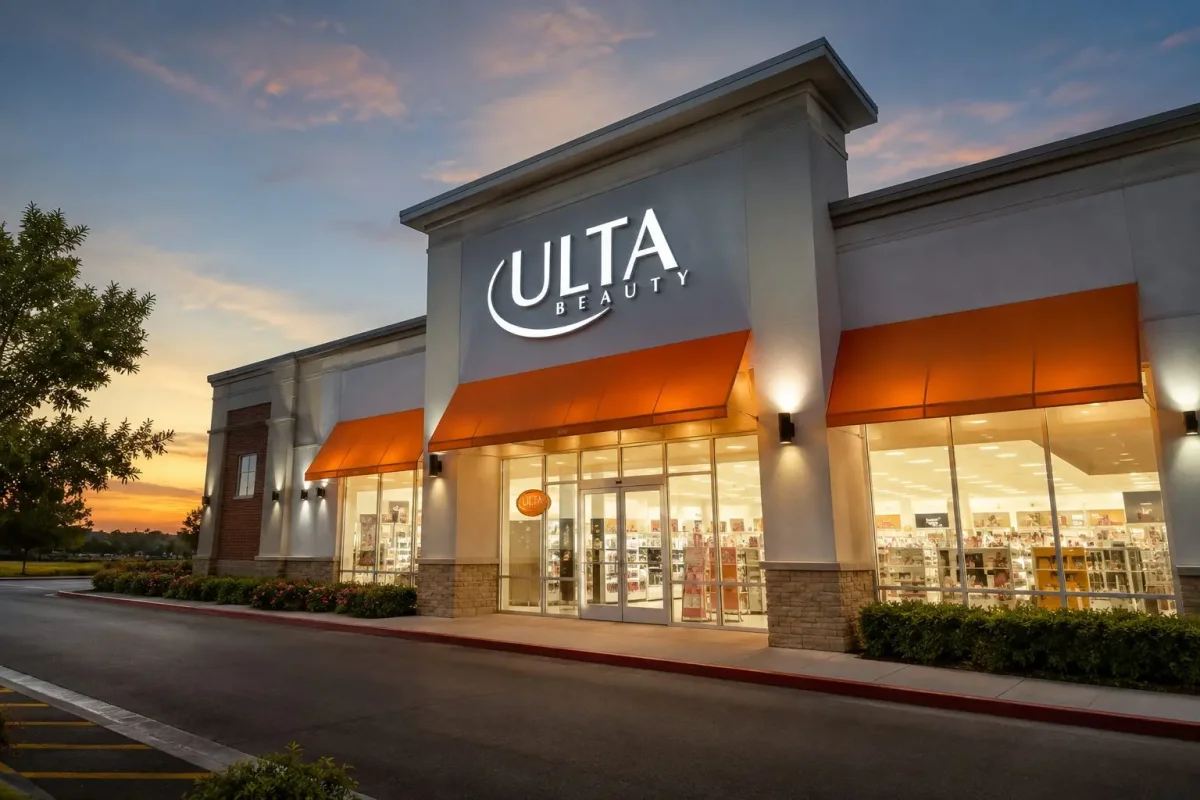
Ulta Beauty (NASDAQ:ULTA) is pivoting its growth strategy with a new youth-focused partnership with Pacsun, even as its in-store presence at Target (NYSE:TGT) comes to an end. The beauty retailer announced the exclusive collaboration, which will bring a curated line of beauty kits to more than 100 Pacsun locations, along with Ulta stores and its e-commerce platforms. This move comes as Target begins phasing out approximately 600 Ulta shop-in-shops, a process expected to conclude by August.
The strategic shift is significant for investors, as the two retail partnerships serve different purposes. While Pacsun offers access to a younger demographic and fashion-forward consumers, its physical footprint and customer traffic patterns are not comparable to Target's. The key question is whether Ulta can recapture the sales volume previously generated through its Target partnership.
Bank of America (NYSE:BAC) analyst Lorraine Hutchinson estimates that the Target program contributed roughly $650 million in gross merchandise value (GMV), representing total customer purchases. However, Ulta's earnings from this arrangement were primarily derived from royalties rather than direct sales. Hutchinson's analysis suggests that recapturing even a portion of these sales could be a meaningful growth driver for Ulta.
In the lead-up to this transition, Ulta's stock has shown resilience. Shares closed Thursday at $516.73, marking a fourth consecutive session of gains and an 8.70% increase since July 24. Over the same period, Target's stock advanced 5.65%.
Assessing the Physical Footprint Impact
The headline number of store closures might overstate the actual space reduction. Target's Ulta shop-in-shops typically measured around 1,000 square feet each, while a standard Ulta store spans approximately 10,000 square feet. Some smaller Ulta formats range between 5,000 and 7,500 square feet. Since May 3, 2025, Ulta has added 70 net new locations, which could offset a substantial portion of the departing Target space.
An illustrative analysis of the physical footprint shows that Ulta's expansion in compact format (5,000–7,500 sq ft per store) would cover 58%–88% of the exiting Target area, while a standard layout (10,000 sq ft) would exceed it at 117%. However, these comparisons are not direct, as Ulta's standard stores include approximately 950 square feet allocated to salon services, and the nature of customer traffic differs significantly.
Pacsun's nationwide launch, which begins with a SoHo pop-up on July 28 and broader distribution starting August 6, adds another layer to the strategy. The collection includes two beauty kits: the Lip Statement set (10 products, priced at $29, with a stated value of $99) and the Glow Authority set (13 products, also $29, with a stated value of $74). These discounts indicate a focus on customer acquisition rather than direct sales substitution.
Ulta's chief marketing officer, Kelly Mahoney, emphasized the company's goal to be present "where culture is created and embraced," highlighting the importance of reaching younger consumers through platforms like TikTok Shop, where the kits will also be available starting August 2.
Financial Outlook and Analyst Projections
Hutchinson has modeled three scenarios for recapturing Target-related sales in Ulta's fiscal third quarter. If Ulta retains 20% of that spending, it could see a revenue increase of $130 million, translating to a 1.05 percentage point boost in annual revenue growth. Retaining 40% would add $260 million (2.10 percentage points), and 60% would add $390 million (3.15 percentage points).
According to her model, Ulta keeps 29 cents of operating profit for every dollar of recaptured sales. To maintain current operating profit levels, Ulta would need to recapture roughly one-third of the spending associated with Target. Any recovery beyond that would enhance profitability.
Ulta's recent performance provides a strong foundation. First-quarter revenue rose 11.1% to $3.16 billion, with comparable sales up 5.3%. Earnings per share increased 15.5% to $7.74, and gross margin expanded by one percentage point to 40.1%. The company raised its full-year earnings outlook to a range of $28.36 to $28.80 per share. CEO Kecia Steelman cited "broad-based growth across all channels and major categories."
Risks and What to Watch
Despite the optimistic outlook, risks remain. The Pacsun collection is available in limited quantities and only while supplies last. Additionally, Target is launching its own Beauty Studio concept at 600 locations in August, which could compete for the same customers. Analysts suggest that Ulta may capture less than the projected one-third profit margin.
The initial test of consumer demand will come next week, with kit sales launching on August 2 and August 6. Investors should closely monitor the pace of sell-through, as this will provide more meaningful insights than the sheer number of store doors, according to analysts.