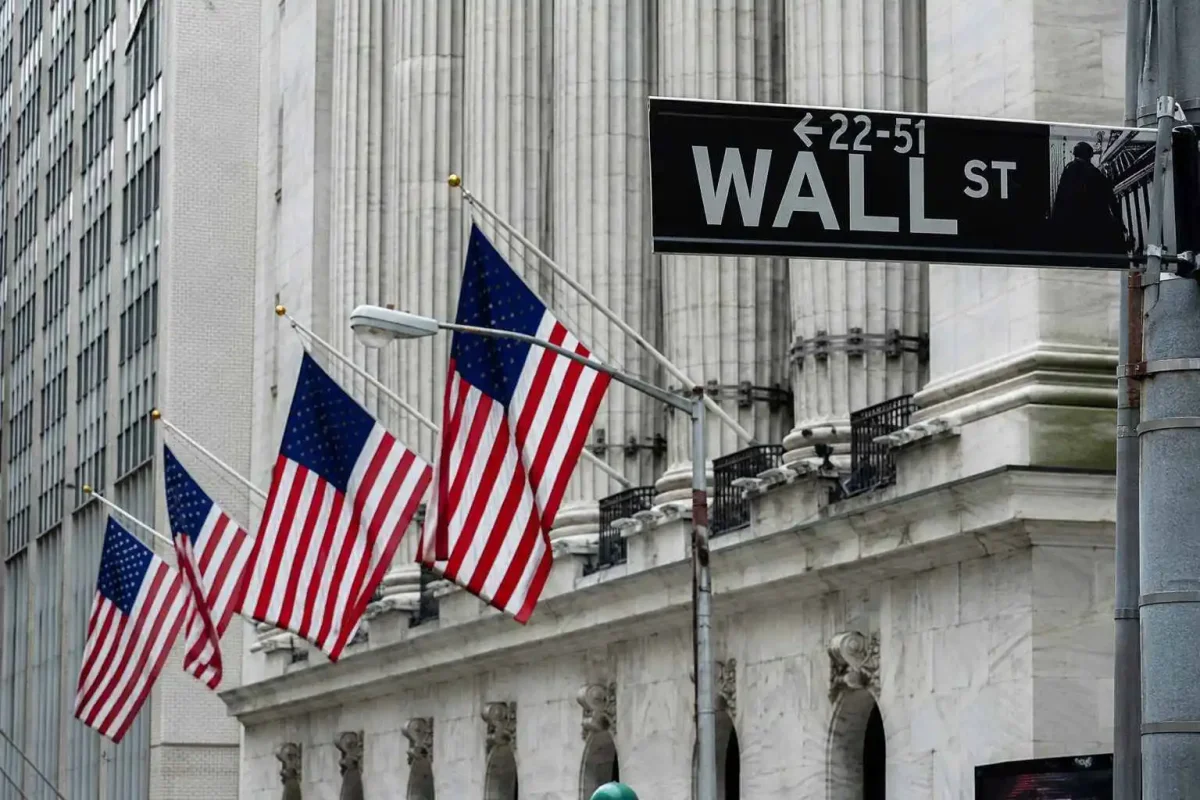
NEW YORK, July 28, 2026, 12:00 EDT — The Dow Jones Industrial Average led a mixed session for U.S. equities on Tuesday, advancing roughly 1.1% as investors rotated toward value and consumer staples, while semiconductor shares suffered another sharp selloff, deepening the divide in the stock market.
The S&P 500 managed a modest gain of 0.41%, trading at 7,443.91 by midday. The tech-heavy Nasdaq Composite was little changed, reflecting ongoing pressure in growth and technology sectors. Meanwhile, equal-weighted stocks outperformed the cap-weighted S&P 500 by 0.86 percentage point, signaling broader participation beyond megacap names.
Dow Lifted by Earnings Giants
The Dow's price-weighted structure amplified the impact of standout earnings reports from Coca-Cola (NYSE:KO) and Sherwin-Williams (NYSE:SHW). Coca-Cola soared 6.0% after reporting quarterly revenue of $13.37 billion, a 6% increase year-over-year, and updating its full-year outlook for about 5% organic revenue growth and earnings growth of 9% to 10%. Sherwin-Williams jumped 8.0% after posting adjusted earnings of $3.70 per share, beating the consensus estimate of $3.52, with revenue climbing 7.5% to $6.79 billion and management raising guidance. Together, these two stocks contributed roughly 186 points to the Dow's 579-point advance, given that each dollar move in a Dow component represents 5.94 index points.
Boeing (NYSE:BA) also added to the Dow's gains, rising 3.9% after reporting revenue of $24.6 billion and positive free cash flow of $631 million. CEO Kelly Ortberg noted that operations are "more stable" and major certification efforts remain on track.
Chip Sector Rout Continues
In stark contrast, the semiconductor sector faced another wave of selling. The Philadelphia Semiconductor Index dropped 4.35%, extending its one-month decline to 22.4%, though it remains up 56% for the year. Micron Technology (NASDAQ:MU) fell 8.4%, Advanced Micro Devices (NASDAQ:AMD) declined 6.6%, and Applied Materials (NASDAQ:AMAT) retreated 7.1%. Nvidia (NASDAQ:NVDA) bucked the trend with a modest 0.7% advance.
The selloff highlights growing uncertainty about the scale and returns of massive AI-related capital expenditures. "These huge dollar amounts feel irresponsible at this point," said Robert Pavlik of Dakota Wealth, as quoted by Reuters.
Macro Data and Fed Watch
Macroeconomic data offered little relief. The Conference Board's consumer confidence index fell to 90.8 from July's 92.2. Brent crude oil declined 4.2% to $82.24 per barrel, while the 10-year Treasury yield slipped to 4.59%.
Investors are now focused on the Federal Reserve's rate decision on Wednesday. Market pricing suggests about a 36% to 37% probability of a rate hike. Key earnings reports from Microsoft (NASDAQ:MSFT), Meta Platforms (NASDAQ:META), Amazon.com (NASDAQ:AMZN), and Apple (NASDAQ:AAPL) are also due later this week.
Market Implications
The divergence between the Dow's advance and the chip sector's decline underscores a shift in market leadership. While the S&P 500's equal-weight version outperformed its cap-weighted counterpart, the bulk of the Dow's gains came from a handful of expensive stocks. This suggests a rotation toward value and quality, but not a broad risk-on move. The danger, analysts note, is a rapid reversal if the Fed surprises with a rate increase or if AI spending disappoints, potentially intensifying the chip sector's downturn.
Tuesday's message for investors is nuanced: typical S&P 500 stocks are outperforming megacaps, but the headline index gains are heavily concentrated. It's a shift in market dynamics, not a full capitulation.