The European Space Agency (ESA) announced on Monday that its CRISTAL ice-monitoring satellite has successfully completed solar-array deployment and launcher-interface tests at Airbus facilities in Friedrichshafen, Germany. The milestone moves the mission one step closer to its targeted launch window of late 2027 to early 2028.
Engineers at Airbus (EPA:AIR) finished assembling the satellite in September and then conducted joint tests of the solar-wing mechanisms and onboard software. Checks with launch provider Avio also verified the adapter fit and spacecraft release mechanism. The same milestones were reported by Actualidad Aeroespacial on October 26.
"Everything is progressing very well and the satellite passed these tests with flying colours," said Kristof Gantois, ESA's project manager for CRISTAL. However, he noted that flight qualification remains ahead. The next phase is environmental qualification, which will take place at ESA's Netherlands establishment during most of 2027.
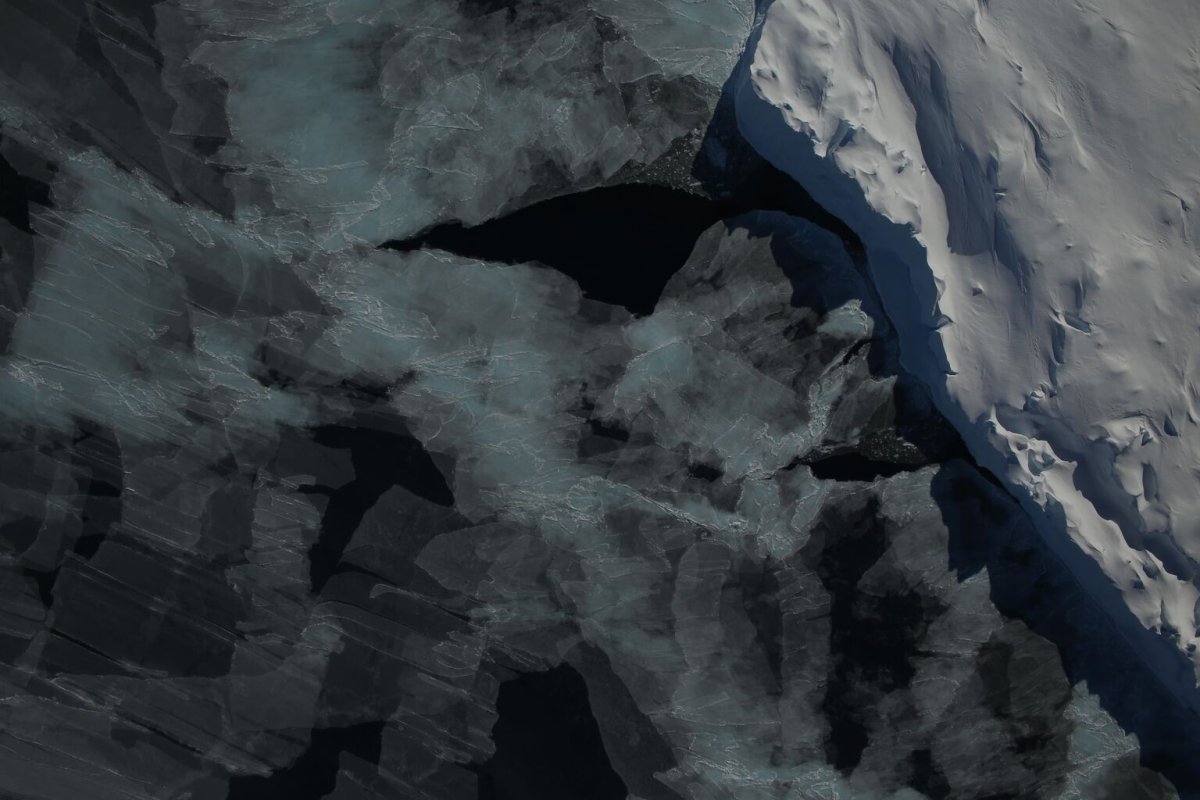
CRISTAL is designed to add a second radar frequency to the ice-monitoring approach used by CryoSat. The mission aims to distinguish overlying snow from sea ice, a critical measurement because snow depth affects the inferred thickness of floating ice. The stakes are quantifiable: a peer-reviewed study published in January found that 8–10 centimeters of snow-depth uncertainty introduces 17–29 centimeters of ice-thickness uncertainty, even with a perfectly measured Ku-band radar height.
The satellite carries two radar bands: Ku-band at about 13.5 GHz and Ka-band at about 35.75 GHz, each with 500 MHz of bandwidth. Two cross-track antennas provide interferometric measurements to capture changes in elevation. The spacecraft has a design mass of 1,700 kg, four terabits of science-data storage, and a design lifetime of 7.5 years.
The January study, led by Jack Landy, analyzed 2018–2023 observations from existing satellites. Combining CryoSat's Ku radar with AltiKa's Ka radar produced an 8.9-centimeter snow-depth root-mean-square error against airborne observations. These are heritage proxy results; CRISTAL has yet to produce orbital measurements. The researchers support the dual-frequency concept, noting that approximately coincident radar footprints could improve snow retrievals, though surface roughness and processing choices still affect measured heights.
CRISTAL is planned as the first Copernicus Sentinel Expansion mission to reach orbit. A follow-on satellite, CRISTAL-B, would be launched near the end of CRISTAL's operational life to ensure continuity of data.
The power system had reached an earlier milestone this summer when supplier SpaceTech delivered the solar arrays on August 21. Monday's update moves the evidence from component delivery to testing on the assembled satellite. The successful deployment test is a key step, but the ultimate test will be in orbit, where the satellite must demonstrate its ability to measure snow depth within the required accuracy of 5 centimeters or better, corresponding to ice thickness uncertainty of 15 centimeters or less at a 25-km scale.
Risks remain: environmental qualification could expose hardware faults and delay the launch, and snow-depth retrievals will need validation across different ice surfaces and snow conditions. The mission's success will depend on whether the dual-frequency approach can deliver the promised improvements over existing techniques.