Exxon Mobil Corp. (NYSE: XOM) experienced a premarket decline of approximately 2% on Friday after the energy giant reported second-quarter adjusted earnings that fell short of Wall Street expectations. The company posted adjusted earnings of $3.52 per share, missing the LSEG consensus estimate of $3.60 per share. Despite the earnings miss, the results highlighted a substantial improvement in cash generation, which the company directed toward debt reduction.
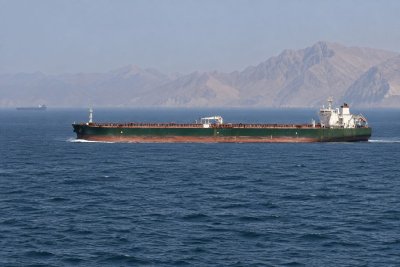
The Houston-based oil major reported adjusted earnings of $14.68 billion for the quarter, a 67% increase from the previous quarter and more than double the year-ago figure. This marked the company's strongest quarterly profit in four years. However, production declined 1.7% sequentially to 4.514 million barrels of oil equivalent per day (boepd), and 2.5% year-over-year. The company attributed the production dip to disruptions in the Middle East, including a prolonged shutdown in the Strait of Hormuz, which reduced regional output by an estimated 750,000 boepd compared to the prior year.
Exxon's cash flow performance was a bright spot. The company generated $17.24 billion in free cash flow during the quarter, a dramatic increase from $2.70 billion in the first quarter. After spending $9.4 billion on dividends and share buybacks, Exxon had $7.84 billion in residual cash. This surplus was nearly sufficient to cover the $7 billion reduction in net debt reported for the quarter, representing 89% of the decrease. CFO Neil Hansen emphasized that strengthening the balance sheet remains a priority over increasing shareholder distributions.
The company's integrated business model proved resilient, with refining, chemicals, and specialty products contributing $2.72 billion in adjusted profit, accounting for 46% of the quarter-over-quarter increase. Upstream remained the largest profit driver, adding $2.92 billion, while Energy Products contributed $1.30 billion and Chemical Products added $1.10 billion. CEO Darren Woods characterized the quarter as "shaped by disruption, but defined by execution," noting that Exxon achieved its strongest second-quarter diesel output from its existing asset base.
Exxon maintained its quarterly dividend at $1.03 per share and reiterated its $20 billion annual share repurchase target. The company's decision to prioritize debt reduction over boosting payouts underscores a cautious approach amid volatile energy markets. Brent crude averaged $96.68 per barrel during the quarter, up 23% from the prior period, providing a tailwind for upstream operations.
In comparison, rival Chevron Corp. (NYSE: CVX) outperformed, beating LSEG's EPS estimate by 9% and advancing roughly 2% in premarket trading. Chevron's production rose 3.9% sequentially to 4.0 million boepd, benefiting from less exposure to Middle East disruptions. RBC analyst Biraj Borkhataria praised Chevron's "robust operational performance and strategic consistency."
Exxon's Permian Basin output exceeded 1.8 million boepd, offering a degree of resilience. The company also plans to bring its fifth production vessel in Guyana online in the fourth quarter, which will add 250,000 barrels per day of capacity. However, approximately 450,000 boepd remains offline in Qatar, and 50,000 bpd is still shut in the UAE, according to Reuters.
Prior to Friday's trading, Exxon shares had risen 28% year-to-date, while the S&P 500 energy index had gained 29%. This left little room for error, and the slight earnings miss triggered a modest selloff. Investors will be watching to see if Exxon can sustain its cash flow momentum and continue reducing debt in the coming quarters.