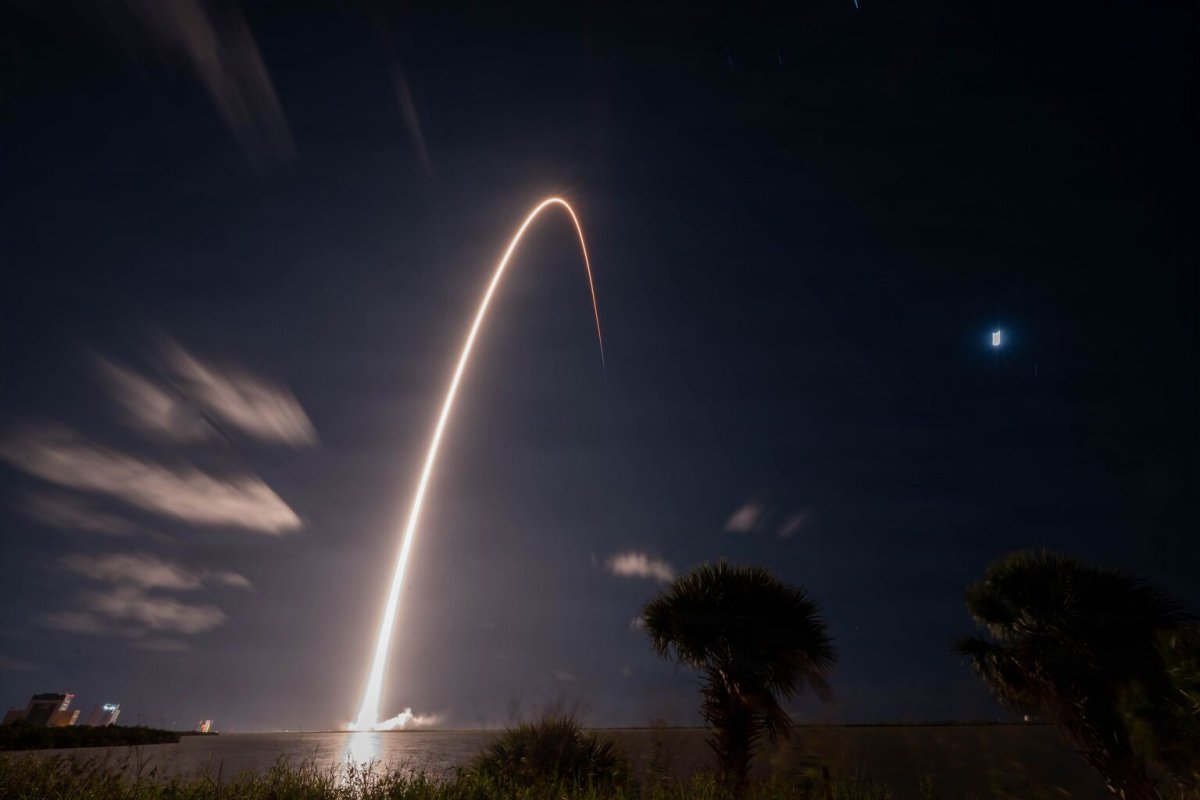
The Federal Communications Commission's Space Bureau has granted SpaceX conditional authorization to utilize backup radio frequencies for its ambitious Starmind project, a planned constellation of up to one million orbital data-center satellites. The approval, issued on November 25, 2026, allows the company to maintain critical command and control capabilities even if its primary laser communication systems fail.
Under the approved plan, SpaceX will rely on laser links for routine data transmission between Starmind satellites and into its existing Starlink network. The backup radio frequencies, operating in the Ka-band (18.8–19.3 GHz for downlink and 28.6–29.1 GHz for uplink), are designated solely for emergency spacecraft operations, including monitoring, tracking, and commanding satellites.
The FCC's decision imposes strict conditions to prevent interference. SpaceX must coordinate with other spectrum users and immediately cease any transmissions that cause harmful interference upon documented reports. Additionally, gateway stations require separate authorizations before communicating directly with Starmind satellites.
This regulatory milestone follows SpaceX's February application filing and marks a significant step forward for the Starmind project, which aims to process data in orbit and relay results to Earth via Starlink. The company's 2025 progress report highlighted the existing laser mesh network among Starlink satellites, which will serve as the backbone for Starmind's data relay.
Deployment Timeline and Milestones
The authorization outlines a phased deployment schedule, requiring the first Starmind satellite to be operational by November 25, 2033. Subsequent milestones include 100,000 satellites by 2035, 500,000 by 2038, and the full fleet of one million by 2040. Failure to meet these deadlines would result in the lapse of the license.
The FCC also accepted SpaceX's debris mitigation plan for satellites operating below 600 kilometers. However, for deployments above that altitude, the company must file a modified authorization with a final debris plan. The bureau deferred SpaceX's request to use disposal orbits instead of atmospheric reentry for decommissioned satellites.
Astronomical Concerns and Opposition
The approval did not come without opposition. Amazon's Kuiper Systems, Viasat, and the American Astronomical Society (AAS) filed petitions against the project, citing concerns about the constellation's brightness and potential interference with optical and infrared observations. The AAS warned that a fleet of larger, brighter satellites could disrupt astronomical research.
Despite these objections, the FCC declined to impose additional optical astronomy conditions, citing SpaceX's commitment to coordinate with the National Science Foundation. The bureau denied all three petitions, allowing the project to proceed under the current framework.
Operational Requirements and Reporting
SpaceX must certify to the FCC within five business days of activating its first Starmind satellite, which initiates the 15-year license term. The company is also required to submit semi-annual reports detailing the usage of backup radio bands for ground station communications.
This approval represents a critical regulatory step for SpaceX's vision of space-based computing. By leveraging its Starlink network, the company aims to create a scalable orbital data infrastructure that could transform how data is processed and transmitted globally. However, the project's scale and timeline remain ambitious, and the coming years will test SpaceX's ability to execute on this frontier.