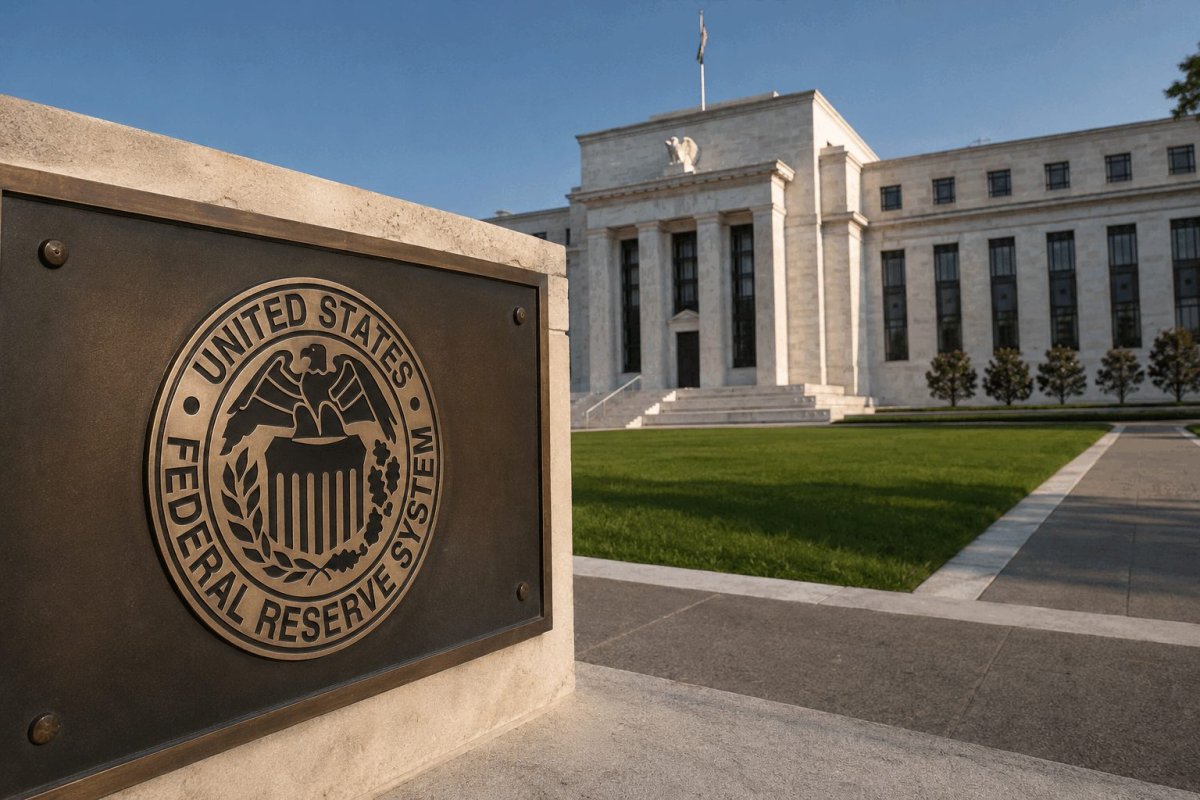
Federal Reserve officials showed a broader appetite for interest rate increases at their July meeting, according to minutes released Wednesday. The document revealed that several policymakers favored a quarter-point hike at the time, and many others indicated that further tightening would likely be necessary if inflation does not cool. Yet the market's reaction was notably muted, particularly at the short end of the yield curve.
The two-year Treasury yield, which is the most sensitive to Fed policy expectations, edged up by just one basis point to 4.181% following the release. That level stands roughly 56 basis points above the midpoint of the Fed's target range of 3.50%–3.75%, suggesting investors see a real, but not urgent, risk of another hike. In contrast, long-term yields moved lower, driven by the Treasury's announcement that it would double its buyback operations for older 10- to 30-year debt.
Split Signals in the Bond Market
The divergence between short and long yields is the clearest takeaway for investors. The front end is pricing in a possible additional hike, while the long end is being artificially supported by the Treasury's liquidity operations. The 30-year yield fell by about 8 basis points to near 5.20% after the buyback news, even as the Fed's message turned more hawkish.
Analysts noted that the Treasury's move, while larger than before, remains small relative to the size of the market. Each affected buyback will now be at least $4 billion, up from $2 billion, with operations running from September 9 through November 4. But against a roughly $32.2 trillion Treasury market, these amounts are still seen as a drop in the bucket.
July Vote and Dissent
The July 28–29 decision was 9–3, with Beth Hammack, Neel Kashkari, and Lorie Logan dissenting in favor of a quarter-point increase. The official statement held the target range steady, but the minutes went further, noting that "several participants" supported a hike and "many" saw a hike as likely if inflation failed to decline.
Inflation expectations, as measured by five- and ten-year breakevens, remained near 2.3%, above the Fed's 2% target but not at a level that suggests panic. The minutes also noted that recent price increases were broad-based.
Market Reaction Across Assets
Equities welcomed the relief in long yields. The S&P 500 rose 0.58%, while the Nasdaq Composite gained 0.39%. The dollar weakened, with the dollar index down 0.71% to 98.93. Gold jumped 3.42% to $4,481.85, supported by lower yields and geopolitical risk.
Strategists remain cautious. Ross Pamphilon of Impax favors two- to ten-year bonds and avoids longer duration, calling the buyback expansion a "drop in the bucket." Gennadiy Goldberg of TD Securities suggests that more permanent steps, such as cutting long-end auction sizes, would be needed for durable stability. Mohamed El-Erian of Allianz warns that the short-term relief could create distortions later, and investors should watch for broader yield-curve control measures.
Policy Outlook and Data Dependence
Officials also discussed holding six meetings per year instead of eight and reviewed balance-sheet strategy, including Treasury maturities, but no decisions were made. September remains data-dependent, with softer jobs and inflation data arriving after the July meeting. The minutes make clear that the next move is not automatically a cut.
Risks remain: intraday yields can reverse quickly, and fresh inflation, labor, or geopolitical news could outweigh both the minutes and the buybacks. Treasury support may improve liquidity without lowering the economy's underlying cost of capital.