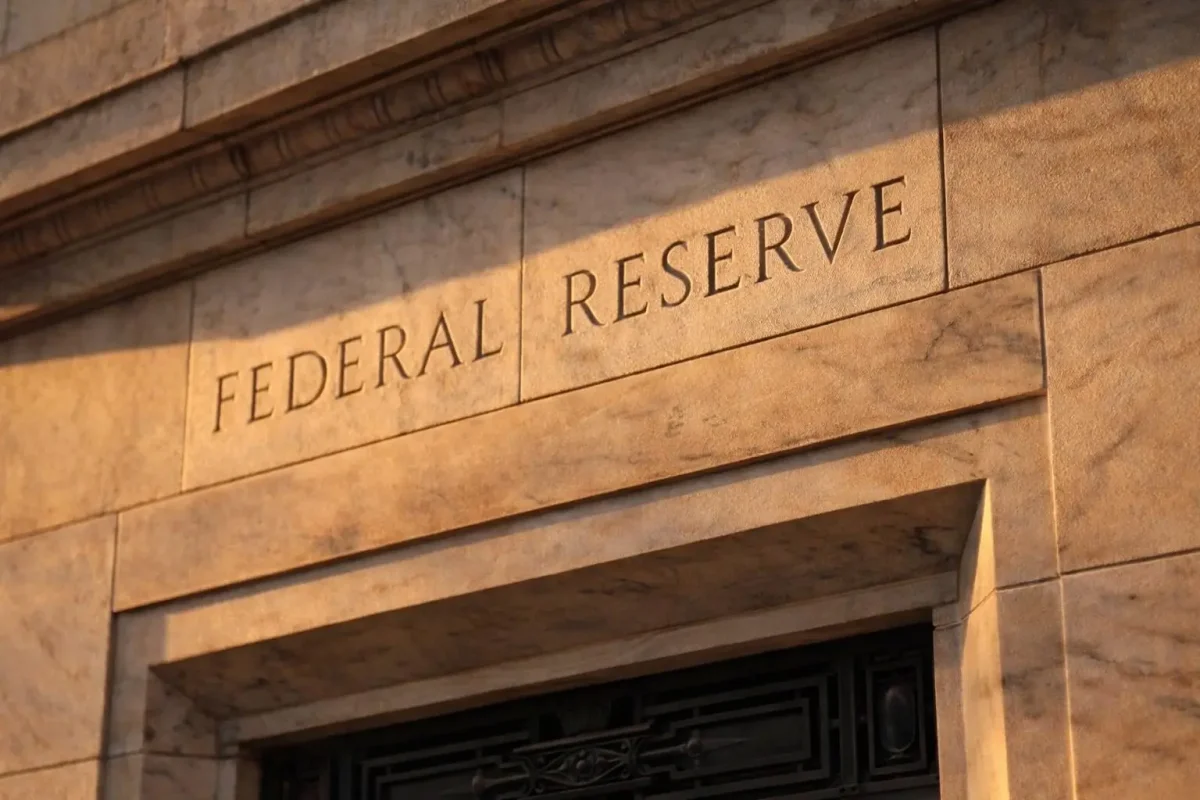
The Federal Reserve is widely anticipated to maintain its current benchmark interest rate when policymakers conclude their two-day meeting on Wednesday, as geopolitical tensions and stubborn inflation data have significantly altered the outlook for monetary easing this year. The central bank's decision comes against a backdrop of economic crosscurrents that have complicated what appeared just weeks ago to be a clearer path toward rate reductions.
Energy Shock Reshapes Policy Calculus
Brent crude oil prices have surged past $108 per barrel following escalating conflict involving Iran, creating what economists describe as an "oil shock" that threatens to feed through to broader inflation measures. This energy price spike arrives at a particularly sensitive moment for the Fed, which had been signaling potential rate cuts in 2026 before the recent geopolitical developments. The national average for regular gasoline has jumped to $3.842 per gallon from $2.923 just one month earlier, according to AAA data, directly impacting consumer spending power.
Inflation Data Offers Little Comfort
Recent economic reports have provided Federal Reserve officials with minimal room for policy flexibility. Consumer prices increased 0.3% in February, translating to a 2.4% annual gain. The core measure, which excludes volatile food and energy components, rose 2.5% year-over-year. More concerning for policymakers, producer prices jumped 0.7% for the month and 3.4% annually—the sharpest yearly increase since February 2025.
Labor market data presents a mixed picture that further complicates the Fed's decision-making framework. February payrolls declined by 92,000 positions, though the unemployment rate held steady at 4.4%. This combination of cooling employment growth alongside persistent price pressures creates what analysts describe as a "stagflation-lite" environment that challenges traditional policy responses.
Internal Divisions and Updated Projections
The Federal Open Market Committee currently maintains the federal funds rate in the 3.5%-3.75% range, having kept it unchanged at its January meeting. At that gathering, two committee members dissented, advocating unsuccessfully for an immediate quarter-point reduction—revealing internal divisions that predate the recent energy market turmoil.
Market participants will scrutinize the Fed's updated economic projections, particularly the "dot plot" that illustrates individual policymakers' rate expectations. Traders are now assessing whether the first anticipated rate cut will be pushed back to December or possibly into 2027. Diane Swonk, chief economist at KPMG, noted that the Fed is formulating its forecasts "under a cloud of uncertainty," expecting officials to downgrade growth projections while raising estimates for both inflation and unemployment.
Communications Challenge Intensifies
The central bank faces mounting challenges in signaling its policy intentions clearly. BNP Paribas analysts have identified what they term a "symmetric policy bias," with markets pricing roughly equal probabilities of a rate hike or cut in coming months. Former Fed economist Claudia Sahm has suggested the conflict-related uncertainty has grown so substantial that the central bank might consider suspending its quarterly economic forecasts temporarily.
Former St. Louis Fed President James Bullard has adopted a more hawkish posture, warning that the committee may need to become "a little tougher on inflation" given the current data landscape. This perspective reflects growing concern that energy-driven price increases could become embedded in longer-term inflation expectations.
Global Central Banks Adjust
The policy implications of the oil shock extend well beyond U.S. borders. The Bank of Canada maintained its benchmark rate at 2.25% on Wednesday while explicitly warning it would consider increases if rising energy prices risked cementing inflationary pressures. Australian policymakers moved a day earlier, opting for a rate hike—both decisions underscoring how commodity price movements are reshaping monetary policy discussions globally.
As Chair Jerome Powell prepares to address reporters at 2:30 p.m. EDT following the 2 p.m. policy announcement, investors will parse his language for indications of how long the Fed might maintain its current restrictive stance. The central bank must balance concerns about economic slowing against risks that inflation could prove more persistent than anticipated, all while navigating unprecedented uncertainty stemming from geopolitical conflict.