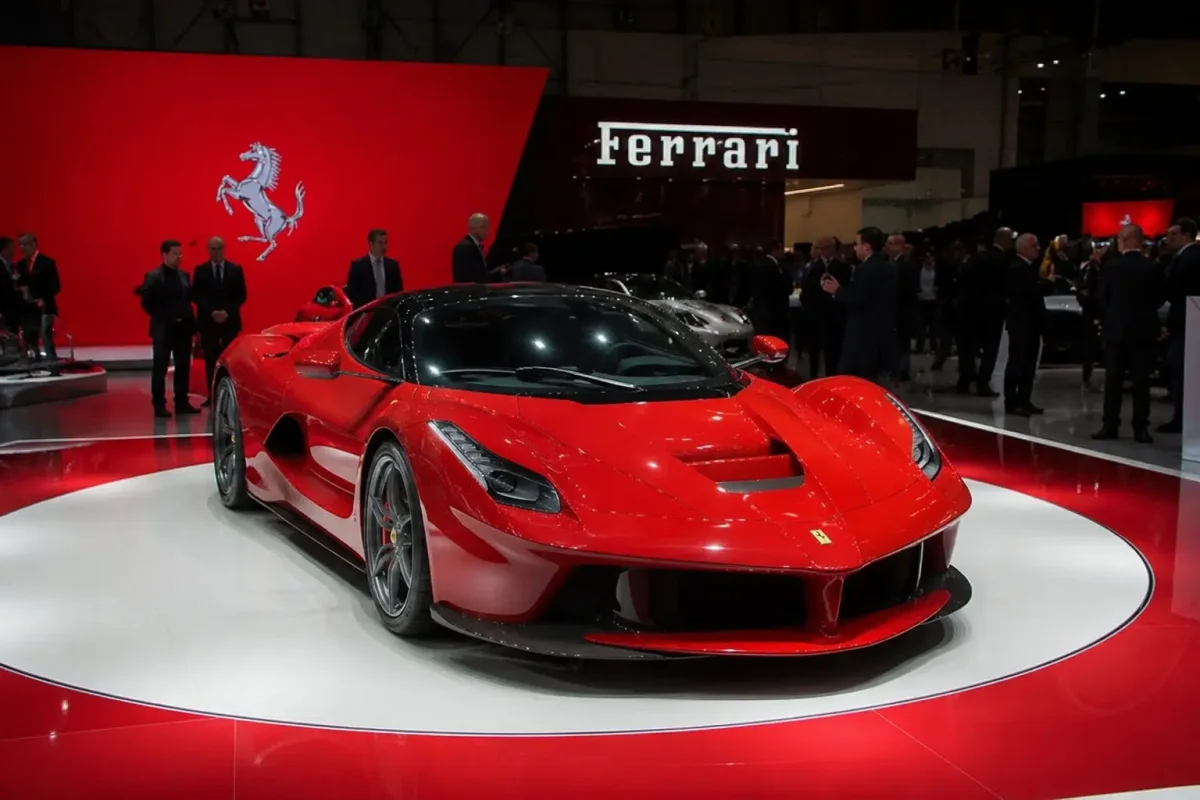
Ferrari shares experienced a notable decline on Tuesday, falling approximately 6% to 291.38 euros in Milan trading. The drop came after the company unveiled its inaugural electric vehicle, the Luce, marking a significant strategic pivot for the iconic Italian automaker. This price movement positioned Ferrari as one of the weakest performers among major European automotive stocks during the session, while the broader market remained relatively stable.
Market Reaction and Context
The selloff was particularly striking given that the Luce represents more than just a routine model update. It is Ferrari's first serious attempt to demonstrate that its brand—historically associated with roaring combustion engines, exclusivity, and strong resale values—can maintain its pricing power as it transitions to electric vehicles. The broader STOXX 600 index showed minimal movement, though the automotive sector declined by 2%.
Reuters reported that Ferrari shares initially fell as much as 7%, heading for their steepest single-day drop since October. The launch event in Rome on Monday showcased the four-door, five-seat Luce, which translates to "light" in Italian. Priced at 550,000 euros, the vehicle delivers over 1,000 horsepower, a top speed exceeding 310 kph, and a range of more than 500 km. Deliveries are scheduled to begin in the fourth quarter of 2026.
Strategic Implications
CEO Benedetto Vigna described the Luce as "the result of five years of work," while commercial chief Enrico Galliera called it "absolutely stunning." The vehicle was designed in collaboration with Jony Ive and Marc Newson's LoveFrom, adopting a more minimalist design language that diverges from Ferrari's traditional low-slung aesthetic. According to The Verge, the Luce is Ferrari's second four-door model and its first five-seater, equipped with four motors generating 1,035 horsepower.
However, not all reactions were positive. Pierre-Olivier Essig, head of research at AIR Capital, was critical, describing the Luce as "a mix between a Honda Accord EV and a Tesla 3," and suggesting that Ferrari's new strategy is "lost in translation." Following the reveal, shares in Milan dropped as much as 7.8%, according to Cinco Días citing Bloomberg.
Industry and Financial Context
Ferrari's move contrasts with the more cautious approaches of rivals Lamborghini and Porsche, which have held back on strong bets for luxury EV demand. Ferrari is pressing ahead with a high-priced electric model aimed at families and younger buyers who may be less attached to traditional V8 or V12 engines.
Despite the market skepticism, Ferrari maintains financial cushions that many automakers lack. The company reaffirmed its 2026 EBITDA target of at least 2.93 billion euros and reported a 4% increase in first-quarter EBITDA to 722 million euros. CEO Vigna noted that the order book extends into late 2027, with no "strange" or "abnormal" cancellations observed.
Future Outlook
The strong backlog suggests investors are looking beyond near-term results. Ferrari's business model—producing relatively few cars, commanding high prices for customization, and tightly controlling supply—means that even a low-volume EV could influence the stock if it shifts market perception of the brand. However, the Luce could prove to be an expensive experiment rather than a meaningful profit driver. Margins and investor sentiment may face pressure if luxury demand softens, used EV prices continue to decline, or U.S. tariffs impact European imports. Design criticism could also weigh on the stock, even if initial orders appear satisfactory.
Milan markets operated normally on Tuesday, with Borsa Italiana following its standard trading hours. May 26 is not listed as a holiday on the exchange's 2026 schedule.