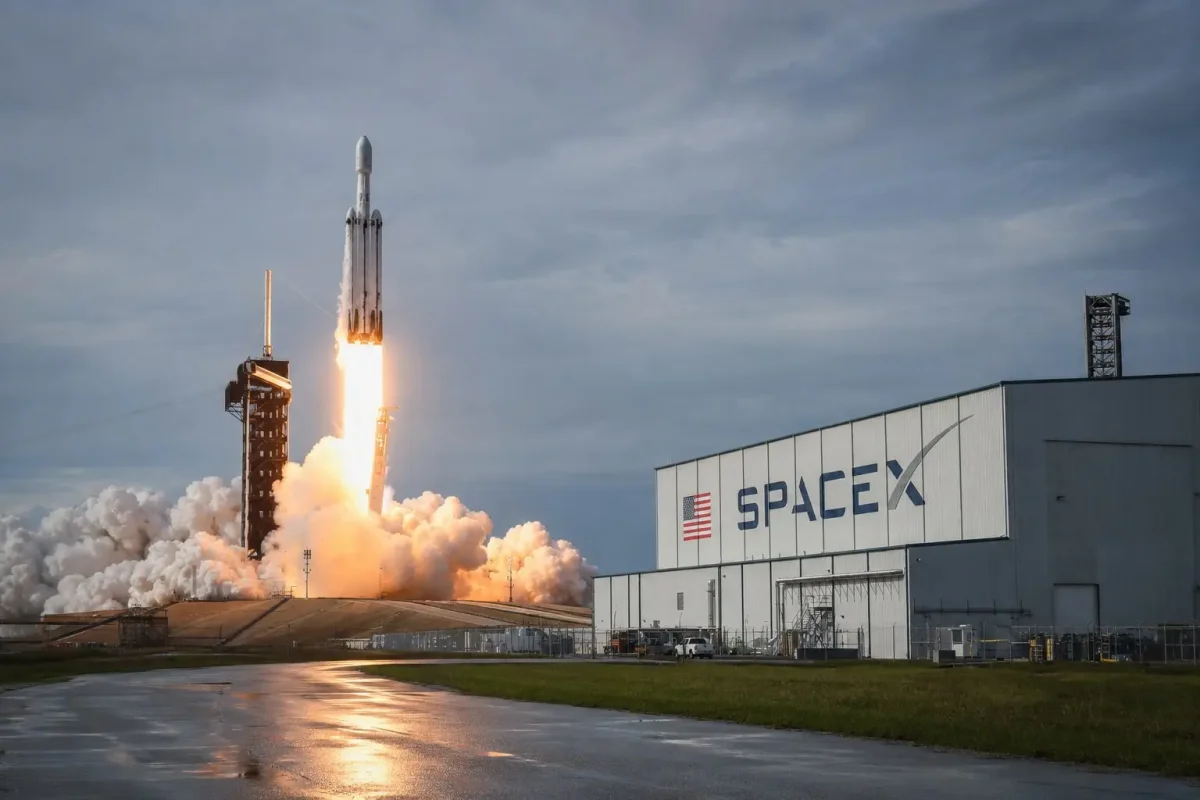
NEW YORK, July 10, 2026 – SpaceX (NASDAQ:SPCX) shares edged lower in pre-market trading on Friday, falling approximately 1% to around $150.60, as the stock gave back some of the gains from Thursday's 2.6% rally that pushed it to $152.16. The pullback came amid a notable divergence between the company's equity and debt markets, with its 2036 bonds declining for a fourth consecutive session.
The yield spread on SpaceX's $6 billion in 2036 bonds, which carry a 5.875% coupon, has widened to 170 basis points over Treasuries, up from 140 basis points at issuance. This 30 basis point increase translates to an additional $18 million in annual interest costs for a new $6 billion loan, assuming the Treasury benchmark remains unchanged. Analysts at CreditSights, led by Davis Hebert, attributed the widening to “fatigue on heavy AI issuance,” the stock’s volatile trading patterns, and allocations to “fast money” traders, according to The Wall Street Journal.
SpaceX shares have struggled to sustain momentum since joining the Nasdaq-100 index on Tuesday. JPMorgan Chase (NYSE:JPM) had estimated forced fund buying of $4.3 billion, but the stock slipped 6.8% on its benchmark debut and remained 6.1% below its July 2 close by Thursday. Despite these headwinds, shares are still trading 12.7% above the initial public offering price of $135. Based on the 13.08 billion shares used for the IPO valuation, SpaceX's implied equity value stood at approximately $1.99 trillion at Thursday's close, about $220 billion above its IPO valuation. However, from the post-IPO intraday peak of $225.64 reached in June, the stock has lost roughly $961 billion in implied value—a decline exceeding the market capitalization of most listed U.S. companies.
The bond market weakness contrasts with more optimistic views from equity analysts. When Blue Origin recently sought a $10 billion valuation at $130 billion, William Blair analyst Louie DiPalma raised his valuation estimate for SpaceX's rocket launch business to $546 billion, more than four times Blue Origin's proposed valuation. William Blair noted it helped underwrite the SpaceX IPO and makes a market in the shares.
Thursday's rally was not mirrored across the space sector. Rocket Lab (NASDAQ:RKLB) slipped 0.9%, while Firefly Aerospace (NASDAQ:FLY) dropped 2.4%. SpaceX now trades at nearly 40 times Rocket Lab's equity value and close to 500 times Firefly's, underscoring its sensitivity to shifts in expectations for businesses that have yet to generate consistent cash flow.
Despite the bond selloff, SpaceX's credit profile remains robust. The company held over $100 billion in cash following its IPO and carries investment-grade ratings, suggesting default risk is low for now. However, S&P Global Ratings (NYSE:SPGI) projects negative free cash flow through 2029, meaning cash flow will not cover operating and capital costs. If SpaceX continues heavy investment in Starship, Starlink, and AI and needs to tap debt markets again, the wider spreads could result in higher borrowing costs.
A more convincing signal of a sustained rally would be both equity and debt markets moving higher simultaneously. If shares stabilize around $150 while the 2036 spread tightens, it would provide stronger support for the bounce. Conversely, if the stock climbs but bonds continue to slide, it suggests equity buyers are betting on index flows and long-term growth, even as lenders demand higher yields.