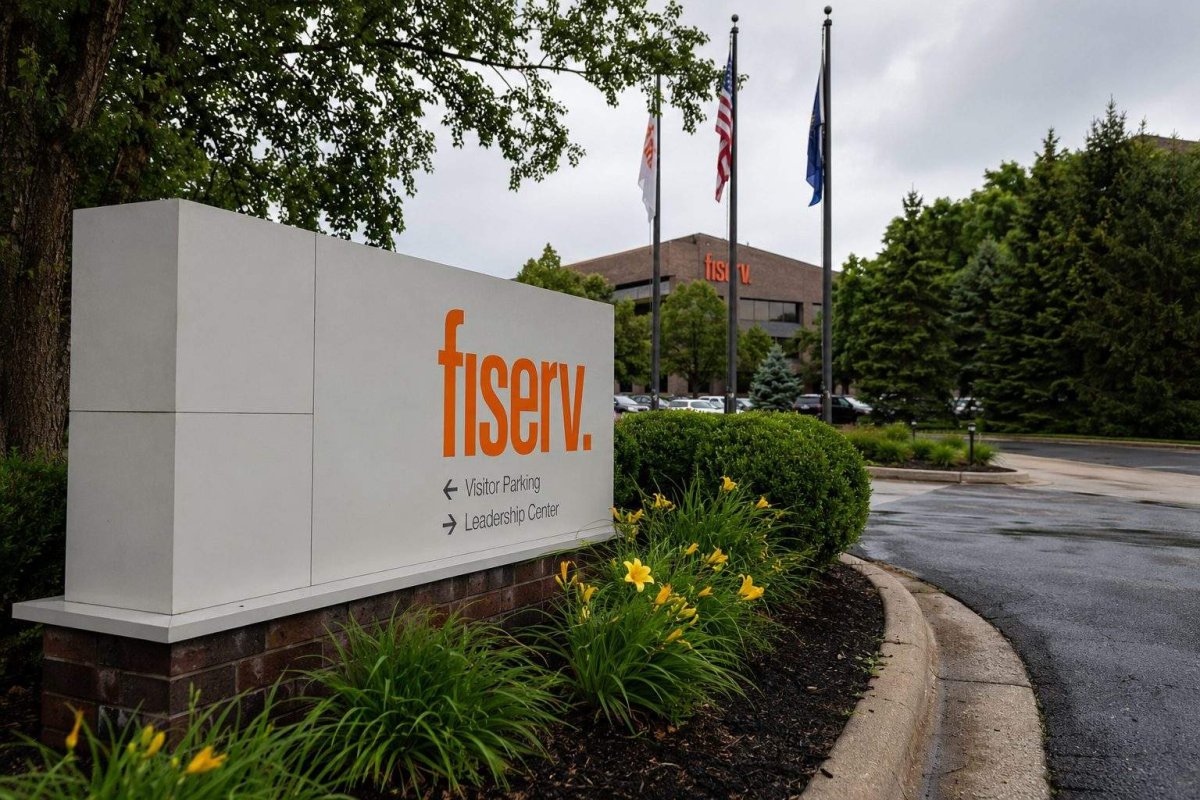
Fiserv Inc., the payments technology company, is facing heightened leadership instability after President Dhivya Suryadevara resigned effective July 7, citing a contractual “good reason” clause. The departure comes just weeks after the appointment of a new chief executive, raising fresh concerns among investors about the company’s strategic direction and execution capabilities.
Suryadevara’s exit was disclosed in a regulatory filing, which noted that she will remain as a non-executive employee until July 31 to assist with the transition. The company has named Andrew Gelb, chief operating officer for Financial Solutions, and Srini Krish, head of technology and operations for the same unit, as interim leaders. Fiserv stressed that its “strategy, priorities and key actions” remain unchanged, but analysts at Robert W. Baird described the move as “somewhat disruptive,” warning it could revive doubts about the staying power of the Financial Solutions strategy.
The leadership shakeup follows last month’s CEO shift, when former JPMorgan payments executive Takis Georgakopoulos took the helm, succeeding Mike Lyons, who moved to Truist Financial. Chairman Gordon Nixon hailed Georgakopoulos as “the right leader,” and the new CEO pledged to advance the strategic priorities outlined at investor day. Fiserv has maintained its 2026 guidance for organic revenue growth of 1% to 3% and adjusted earnings per share of $8.00 to $8.30. Organic revenue excludes acquisitions and currency effects, while adjusted earnings strip out certain costs and gains.
Market reaction has been muted but watchful. Fiserv shares traded near $50.60 in early premarket activity, placing the company’s market capitalization around $27.1 billion. Analysts had already flagged the June CEO change as a risk. KBW’s Vasundhara Govil said she was “clearly surprised,” while TD Cowen’s Bryan Bergin called it “another layer of uncertainty” for execution. Suryadevara’s resignation now puts a fresh timeline on those worries.
Adding to the strategic complexity, Reuters reported this week that Fiserv has held discussions with major U.S. banks, including JPMorgan Chase and Bank of America, about a potential sale of the payments infrastructure unit that processes debit-card transactions. No deal has been reached, and some potential buyers expressed concerns about possible backlash from lawmakers, regulators, and merchants. Selling the debit network could boost Fiserv’s valuation if executed smoothly, but regulatory hurdles and customer resistance remain significant risks.
Competition in the U.S. merchant acquiring market is intense. According to TSG, Global Payments leads with an estimated $2.8 trillion in processing volume for 2025, followed by JPMorgan Chase at $2.5 trillion and Fiserv at $2.2 trillion. PayPal also ranks in the top 10. This competitive landscape underscores the importance of stable leadership, both at Fiserv and across the industry.
Elsewhere, BellRing Brands appointed Michael Axelrod, former CEO of Snak King, as its new president and CEO, effective July 29, after an external search. Darcy Davenport will move into an advisory role. HF Sinclair named Steven Ledbetter as president and chief operating officer, and Valerie Pompa as president for growth, technology, and transformation, in moves that signal a planned operational split rather than internal turmoil.
For Fiserv, the risk is that investors may interpret the rapid executive turnover as a deeper warning than management acknowledges. Any further disruption in the Financial Solutions segment would intensify pressure on the new CEO to demonstrate that the team can stabilize operations faster than key personnel depart. The company must now prove it can navigate these transitions without losing momentum.