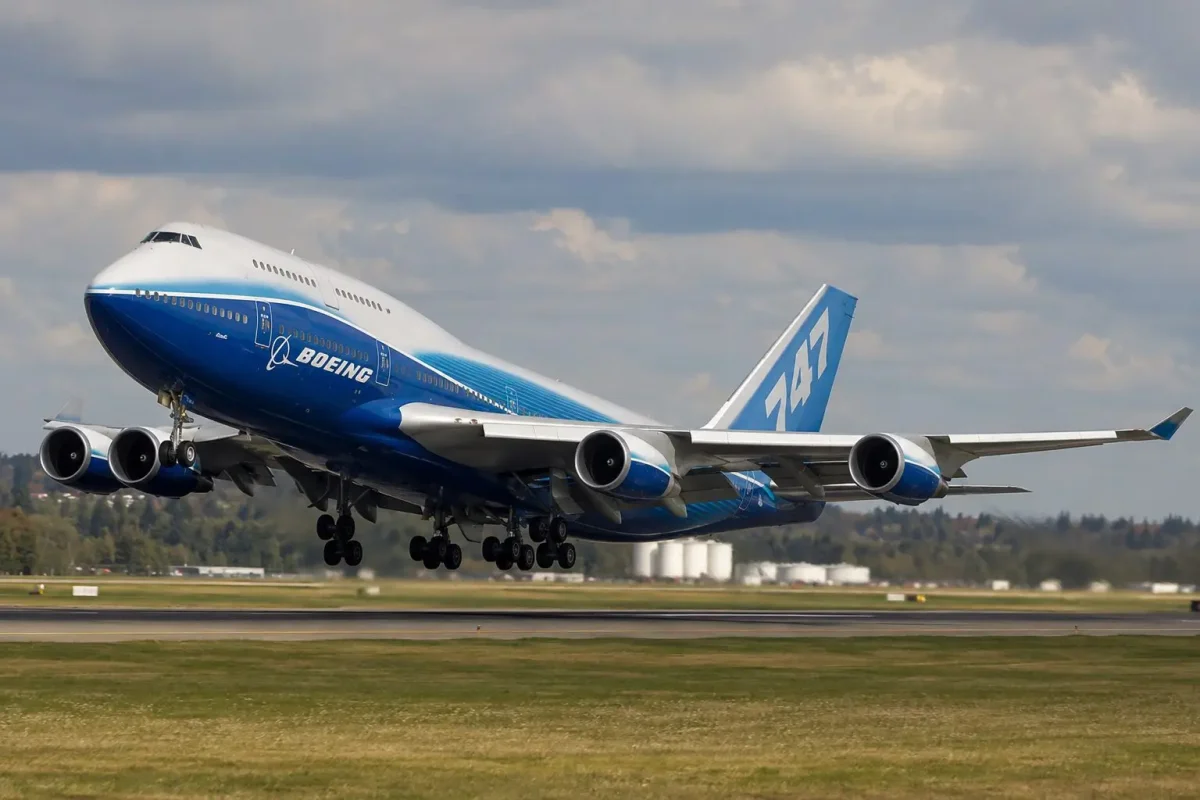
NEW YORK, July 27, 2026, 15:04 EDT – U.S. cash markets remained open as Boeing Co. (NYSE:BA) traded at $211.97, up 1.2%. The aerospace giant's decommissioned 747 aircraft illustrate a stark valuation disparity: listed prices vary by a factor of 2,000, from a modest $100,000 airframe to a specialized support jet costing $200 million per unit.
Boeing's second-quarter earnings are scheduled for release on Tuesday at 10:30 a.m. ET, with investors closely watching cash flow, defense-related expenses, and service margin performance. In the first quarter, the Global Services division posted an operating margin of 18.1%, while Defense, Space & Security recorded a much thinner 3.1% margin. The services margin expanded to 5.8 times its prior level, driven by limited aircraft availability and contract structures that influence Boeing's retained value.
Price Disparity Highlights Diverse Missions
The nominal value range for retired 747s underscores that scarcity alone does not determine an aircraft's worth; rather, its intended mission, certification requirements, and specific contract terms play decisive roles. For instance, a U.S. deal valued a pair of used 747-8 jets at $200 million each, designated for crew training and as spare parts sources. In stark contrast, Bahrain acquired an older 747-200 for an estimated $100,000, repurposing the 1982 aircraft as the centerpiece of a 100,000-square-meter dive park after being cleaned and sunk in 2019.
Other examples include Thai Airways' HS-TGP 747-400, placed into storage in 2020 and relocated to a field in 2023 for a planned cafe and restaurant, though limited evidence of advancement exists. A Qatar-origin 747-8, donated and initially listed at $400 million, has been temporarily used as a presidential jet. The two VC-25B replacements, specially developed for Air Force One, involve a fixed-price contract of $3.9 billion, with total expenses now exceeding $5 billion.
Boeing's 747 Legacy and Market Context
Boeing ceased production of the 747 in 2023 after 1,574 units, with no new sales ongoing. However, support and specialized mission projects continue. The 747-8, originally from Qatar, entered presidential transport service on July 1 following an expedited conversion by L3Harris Technologies Inc. (NYSE:LHX). An FAA filing effective the same day addressed an AMAC-modified 747-8, introducing enhanced safety requirements for side-facing seats, with a maximum capacity of 89 passengers and 14 crew members. AMAC Aerospace is listed as the applicant, though the aircraft's owner remains undisclosed, leaving the connection to the Qatar-linked jet unverified.
Boeing's custom-made planes for the U.S. president operate under a separate financial arrangement. The manufacturer agreed to a $3.9 billion fixed-price deal covering two aircraft, but costs have surpassed $5 billion. Boeing defense head Steve Parker stated this month, "We're on track for 2028," while anticipating additional cost increases related to wiring, structural work, and certification.
Thai Airways International Pcl (BKK:THAI) is positioned at the opposite extreme. Its HS-TGP 747-400 was put up for sale alongside nine additional 747-400 aircraft in 2021. The airline subsequently completed its restructuring, reducing both workforce and fleet size by 50%. Thai has posted operating profits each quarter from 2023 onwards after completing its restructuring, indicating that the aircraft's disposal is legacy-related rather than a sign of new operational decline.
Investment Implications
For investors, the numbers are not direct comparisons. The Bahrain figure includes just the airframe, whereas U.S. planes fulfill specific mission roles. Expenses for conversion and maintenance may far exceed the initial purchase price. Boeing's earnings report on Tuesday will provide key insights into cash flow, defense-related expenses, and service margin performance. The legacy of the 747 holds potential worth, but realizing that value remains a challenge.