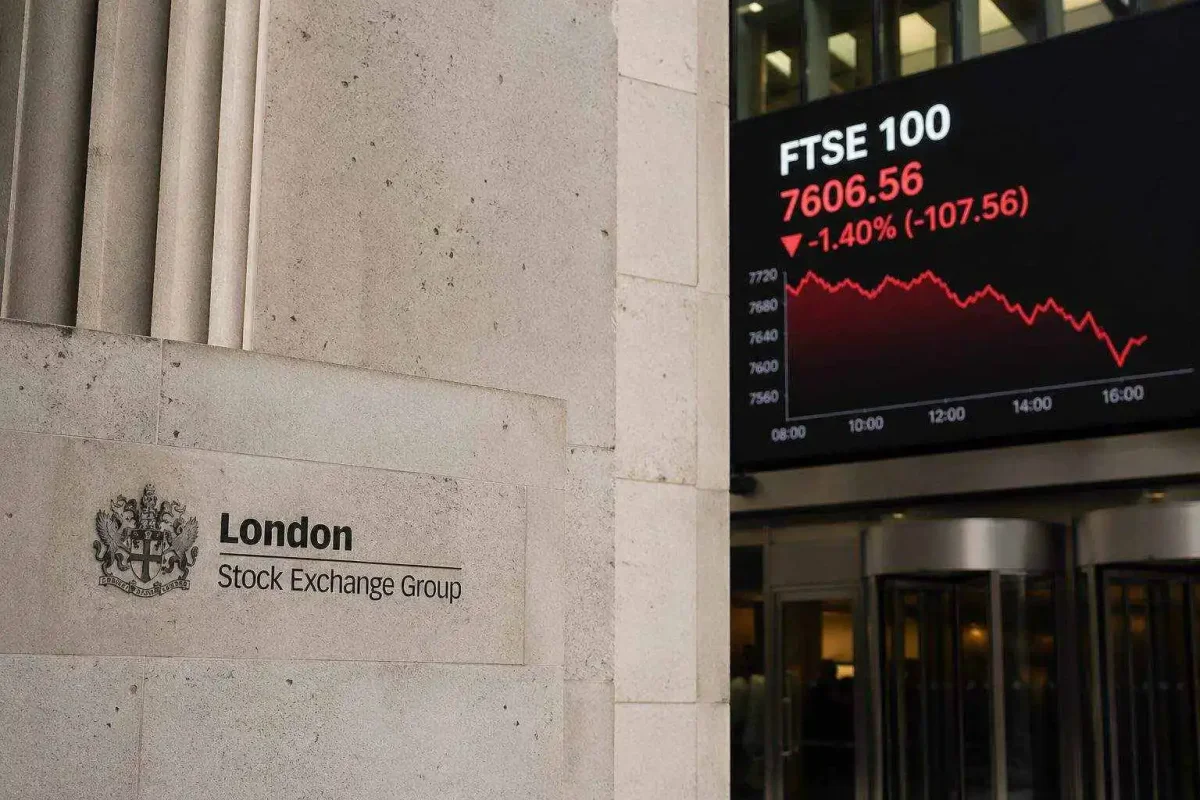
London's FTSE 100 staged a sharp recovery on Wednesday, climbing approximately 1.6% to hover near 10,387 points, as investors shook off Tuesday's steep losses. The blue-chip index was buoyed by a broad rally in mining and banking stocks, along with a boost from spirits giant Diageo, while a retreat in crude oil prices and cautious optimism over US-Iran negotiations helped stabilize market sentiment.
Miners and Banks Lead the Charge
Mining stocks topped the FTSE 100 leaderboard, with Fresnillo, Anglo American, and Antofagasta all posting strong gains as gold prices edged higher. The banking sector also contributed significantly, with Standard Chartered among the advancers, recovering some ground after HSBC's unexpected loss had pressured financials earlier in the week. Meanwhile, energy giants BP and Shell slipped as Brent crude pulled back on hopes of a potential US-Iran agreement, though traders remained wary of supply risks tied to the Strait of Hormuz.
Diageo Lifts Sentiment with Sales Beat
Diageo provided a notable lift to the index after the Johnnie Walker and Guinness maker reported third-quarter organic net sales growth of 0.3%, slightly ahead of forecasts. The company cited strong demand for Guinness in Britain and Ireland, as well as distributor stockpiling ahead of the soccer World Cup in Latin America and the Caribbean. However, CEO Dave Lewis acknowledged that North America remains the biggest challenge, and RBC Capital's James Edwardes Jones cautioned against declaring a turnaround in the US business. The results drew attention to broader industry trends, with Pernod Ricard and Brown-Forman facing headwinds in spirits, while AB InBev posted its first quarterly volume gain in three years, highlighting divergent fortunes between beer and spirits.
Next Raises Guidance, Smith & Nephew Dips
Retailer Next saw its shares inch higher after lifting its pre-tax profit guidance for 2026/27 to £1.218 billion from £1.210 billion, driven by a 6.2% rise in first-quarter full-price sales. The company also plans limited price hikes overseas to offset costs linked to the Iran conflict, echoing concerns flagged by H&M that an extended Middle East war could push prices higher and dampen demand. In contrast, Smith & Nephew shares fell despite announcing a $500 million buyback and a 6.6% jump in first-quarter revenue to $1.50 billion. CEO Deepak Nath described the results as in line with expectations, but the market focused on weaker US knee implant sales and a guidance tilt toward the second half.
Gilt Yields Ease, Political Risks Loom
UK government bonds found some stability on Wednesday, with gilt yields slipping around 5 basis points across the curve after a sharp selloff on Tuesday that pushed 30-year yields to levels not seen since 1998. The relief came as traders digested progress in US-Iran talks, but attention remained fixed on Thursday's local elections, which could pose a headache for Prime Minister Keir Starmer amid ongoing fiscal policy scrutiny. Lingering UK inflation and political risks kept many investors cautious, even as the broader market rebounded.
Broader Market Context and Outlook
The FTSE 250 also gained 1.0% on Wednesday, reflecting a broader improvement in risk appetite. Michael Brown at Pepperstone noted that markets had adopted a more composed tone, though he cautioned that the Strait of Hormuz remained largely closed and discussions had not shifted materially in recent days. XS Market's Linh Tran added that while oil prices are coming off highs as geopolitical risk temporarily eases, any new supply shock could quickly drive the oil-risk premium back into UK inflation, gilts, and rate expectations. Investors are now looking ahead to the release of UK services and composite PMI data at 0930 BST, with a solid reading seen as key to cooling recession fears, though persistent cost pressures would keep the Bank of England on alert.