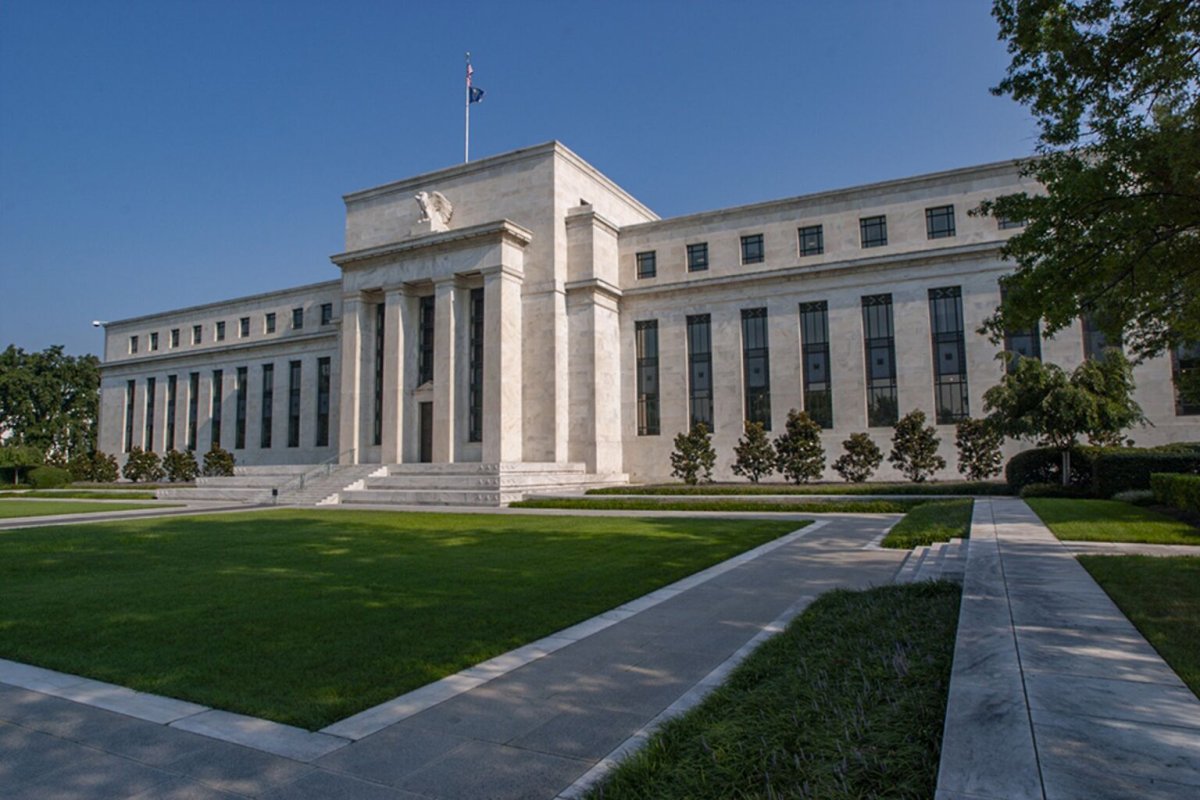
U.S. equity futures opened Wednesday with a modest advance, reflecting cautious positioning ahead of the Federal Reserve's policy announcement. At 4:13 a.m. Eastern time, futures on both the S&P 500 and the Nasdaq-100 were up 0.2%, while the 10-year Treasury yield retreated to approximately 4.98%, having briefly crossed the 5% threshold on Tuesday.
The narrow gains suggest that traders are not expecting a relief rally but rather are bracing for a widely anticipated quarter-point increase in the federal funds rate. According to market data, the implied probability of a 25-basis-point hike stands at 92.4%, a sharp rise from 59.4% just a week earlier. The focus, however, will be on the Fed's forward guidance and whether it can anchor long-term borrowing costs.
Global Markets Show Constructive Tone
Overseas markets provided a supportive backdrop. Japan's Nikkei 225 climbed 0.7%, South Korea's Kospi advanced 1.4%, and Hong Kong's Hang Seng added 0.2%, as reported by the Associated Press. European indices were also mostly higher in early trading. Oil prices offered some relief after Tuesday's climb, with U.S. crude down 1.5% to $104.24 per barrel and Brent crude down 0.9% to $107.76.
The Fed's Decision and Its Implications
The Federal Reserve's current target range for the federal funds rate is 3.5% to 3.75%. A standard quarter-point increase would lift it to 3.75% to 4%, marking the first rate hike in three years. The committee's internal divisions were evident in July, when the policy statement passed 9-3, with Beth Hammack, Neel Kashkari, and Lorie Logan favoring a quarter-point increase.
Wednesday's meeting is one of four this year accompanied by a fresh Summary of Economic Projections, making the rate path a critical component. A hike paired with projections for further increases would signal a more aggressive tightening cycle, whereas a hike framed as insurance against an energy-driven inflation shock would be less hawkish. The market's reaction will hinge on which narrative the Fed adopts.
The 10-Year Yield as a Litmus Test
The 10-year Treasury yield will be the quickest gauge of how investors interpret the Fed's message. A credible inflation response could reduce the term premium demanded by investors for holding longer-dated bonds, even as the Fed raises the overnight rate. Conversely, a message that leaves inflation expectations unsettled could push yields higher, keeping pressure on mortgage rates, corporate borrowing costs, and the valuations of long-duration growth stocks.
Energy prices remain a complicating factor. The Fed noted in July that inflation remained elevated partly due to supply shocks. Since then, the oil-price shock has persisted, with U.S. crude still above $104 per barrel even after Wednesday's pullback. A one-day decline in oil does not erase the inflation impulse already moving through transport and household fuel costs.
Counterarguments and Market Watch
There is a credible case for holding rates steady. Governor Christopher Waller said on Sept. 3 that he would support a hold if August data showed continued disinflation, while leaving the door open for a hike if progress proved fleeting. His remarks highlight that the vote need not be unanimous, even if the outcome aligns with market expectations.
For equity investors, the cleanest confirmation of a dovish hike would be a 10-year yield that stays below 5% alongside gains that broaden beyond a few megacap names. The warning signal would be the opposite: a quarter-point hike followed by a renewed rise in long-term yields. That would indicate the Fed delivered the move traders priced in but failed to provide the inflation reassurance they sought.