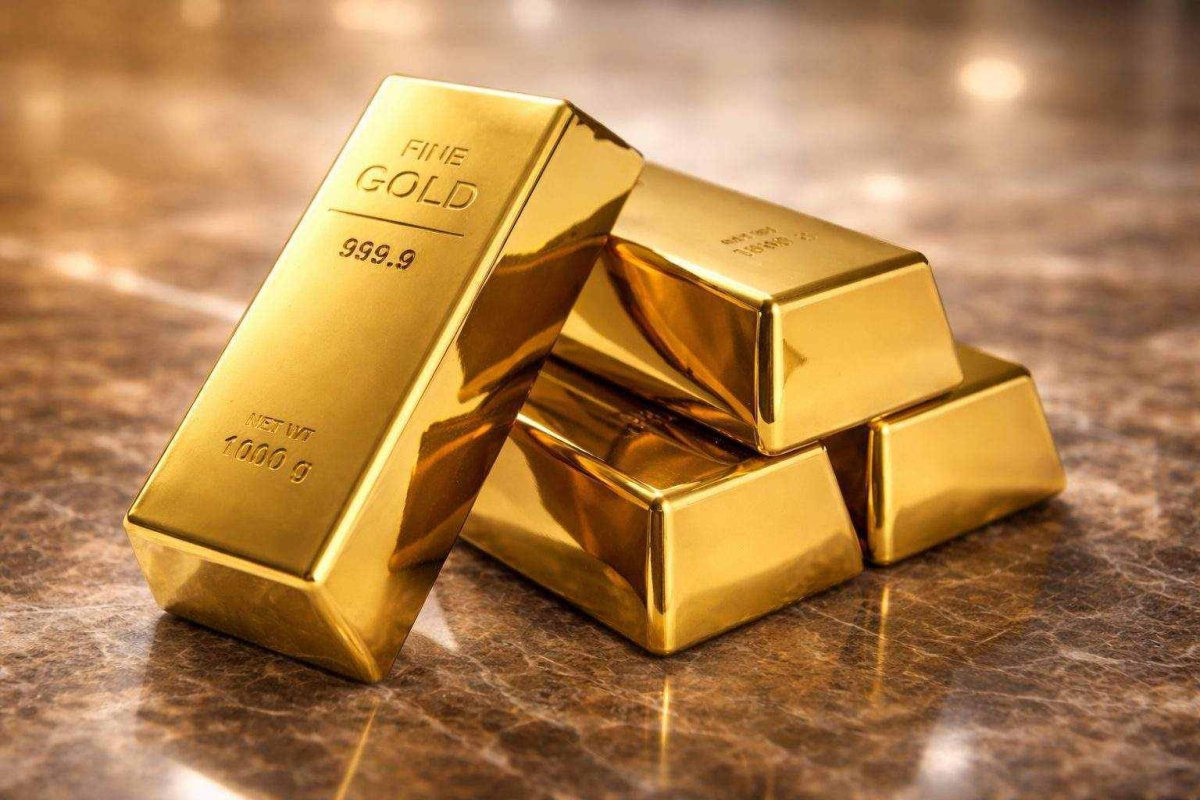
Gold markets exhibited limited volatility during Thursday's trading session, with prices holding in a narrow range as investors awaited developments from diplomatic talks between the United States and Iran. The precious metal's performance reflected broader market uncertainty driven by geopolitical tensions and shifting monetary policy expectations.
Price Action and Market Dynamics
Spot gold recorded a modest gain of 0.1% to reach $5,168.80 per ounce by early afternoon Eastern Time, after fluctuating between $5,130.30 and $5,206.40 throughout the session. The constrained trading range highlighted the cautious stance among market participants, who remained focused on the third round of indirect nuclear negotiations scheduled for later Thursday. Analysts noted that any signs of easing tensions could reduce the geopolitical risk premium currently supporting gold prices.
Meanwhile, April gold futures on the COMEX exchange declined 0.7% to settle at $5,190.80, demonstrating slight divergence from spot market pricing. The U.S. dollar index edged approximately 0.2% higher, applying mild pressure to dollar-denominated commodities.
Precious Metals Complex Shows Divergence
Other precious metals experienced more pronounced declines during Thursday's session. Silver faced significant selling pressure, dropping 2.4% to $87.25 per ounce. Platinum declined 1.5% to $2,252.28, while palladium fell 2.1% to $1,757.75. This divergence within the metals complex reflected varying industrial demand concerns and positioning adjustments among institutional investors.
Market analysts observed ongoing attempts by gold and silver to breach key resistance levels at $5,200 and $90 respectively, though neither metal managed to sustain such breakthroughs. "Resistance tends to attract sellers," noted Razan Hilal, market analyst at FOREX.com, highlighting the technical challenges facing the metals.
Economic Data and Policy Context
U.S. labor market data released Thursday showed initial jobless claims increased by 4,000 to 212,000 for the week ended February 21. The report characterized employment conditions as steady with limited hiring and firing activity, suggesting continued resilience in the job market despite broader economic uncertainties.
Monetary policy expectations continued to influence precious metals pricing, with markets still anticipating two Federal Reserve interest rate reductions later this year. Peter Grant of Zaner Metals described the current environment as "uncertain," noting that traders were balancing inflation concerns against potential growth slowdowns.
Geopolitical and Trade Factors
Recent trade policy developments have added complexity to the interest rate narrative, forcing investors to simultaneously consider inflationary pressures and economic stability. Last Friday's Supreme Court decision to overturn previous emergency tariffs was followed by Washington's implementation of a 10% global tariff, subsequently increased to 15%. These measures have contributed to market volatility and supported safe-haven demand for gold.
The metal had strengthened significantly on Wednesday, with spot prices advancing 1.1% to $5,202.28 by mid-afternoon in New York, while April futures approached $5,226.20. That rally was driven by concerns surrounding trade restrictions and Middle East tensions. Bart Melek, global head of commodity strategy at TD Securities, highlighted the "inflationary impact from tariffs and high oil prices" as key drivers of gold's appeal.
Broader Market Perspective
JPMorgan recently revised its long-term gold forecast upward to $4,500 per ounce while maintaining its year-end 2026 target of $6,300. The bank cited robust purchasing by both central banks and institutional investors as supporting factors. Spot gold has appreciated approximately 20% year-to-date, reaching a record high of $5,594.82 on January 29. This follows an impressive gain exceeding 64% throughout 2025, according to the financial institution's analysis.
However, market conditions remain fluid. A potential framework agreement emerging from Geneva negotiations could diminish the geopolitical premium currently embedded in gold prices. Conversely, should inflation data surprise to the upside, rising yields and dollar strength could exert downward pressure on bullion.
Looking Ahead
Market attention now turns to Friday's release of January producer price index data, scheduled for 8:30 a.m. Eastern Time. This report will provide crucial insights into pipeline inflation trends, with rate desks closely monitoring whether inflationary pressures show signs of moderation or acceleration. The outcome could significantly influence Federal Reserve policy expectations and, consequently, precious metals pricing in the coming sessions.
Gold's recent performance demonstrates its continued role as both a geopolitical hedge and inflation barometer, though its sensitivity to interest rate expectations creates ongoing volatility. As traders navigate competing narratives around diplomacy, trade, and monetary policy, the precious metal likely faces continued range-bound trading until clearer directional catalysts emerge.