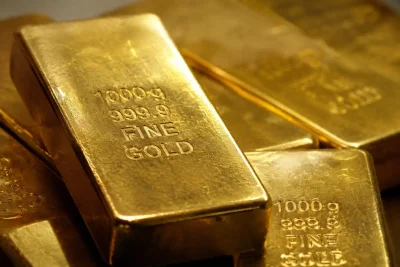
Gold markets staged a notable recovery on Friday, March 28, 2026, with prices climbing 2.6% to settle at $4,491.78 per ounce. This rebound followed a dramatic decline earlier in the week that saw bullion touch $4,097.99 on Monday—its lowest level in four months. The precious metal experienced whipsaw action throughout the trading period, with spot prices oscillating between approximately $4,100 and $4,600 as traders recalibrated positions amid evolving macroeconomic conditions.
Macroeconomic Pressures Weigh on Traditional Safe Haven
Gold has diverged from its typical safe-haven behavior in recent sessions, facing headwinds from multiple directions. Crude oil remains elevated above $110 per barrel, while the U.S. dollar index holds firm at 100.17. Simultaneously, U.S. 10-year Treasury yields stand at 4.438%, creating a challenging environment for non-yielding assets like gold. These factors have reinforced market expectations that the Federal Reserve will maintain a restrictive monetary policy stance for longer than previously anticipated.
Federal Reserve officials have offered little comfort to gold investors. Philadelphia Fed President Anna Paulson highlighted rising fuel and fertilizer costs as persistent inflationary threats that could anchor expectations at elevated levels. Richmond Fed President Thomas Barkin characterized the oil price shock as adding "fog" to the policy outlook, suggesting rates should remain steady until the economic picture clarifies.
Thursday's Sharp Decline and Analyst Perspectives
The most severe single-day drop occurred Thursday when spot gold fell 2.7% to $4,384.38 as dollar strength and higher oil prices converged. Kitco Metals senior analyst Jim Wyckoff warned that bullion could potentially decline "below $4,000" if current geopolitical tensions persist. Conversely, Wyckoff noted that a ceasefire combined with renewed expectations for rate cuts could propel prices toward the $5,000 threshold.
Friday's recovery appeared technically driven rather than reflecting a fundamental shift in market narrative. Daniel Pavilonis of RJO Futures pointed to the dip below the 200-day moving average—a key technical level monitored by traders—as creating "a really good opportunity" for buyers. Commerzbank revised its year-end gold forecast upward to $5,000 per ounce from $4,900, suggesting the recent price weakness may prove temporary.
Physical Demand Responds to Price Adjustments
Lower price levels stimulated some physical buying activity in key markets. Indian dealers reduced their discounts to $61 per ounce from $75 the previous week, while Chinese premiums tightened to a range of $14-$18. Bernard Sin of MKS PAMP observed that while overall demand had "cooled," ongoing central bank purchases and import quotas continued to provide underlying market support.
Other precious metals stabilized alongside gold as the trading week concluded. Spot silver advanced 2.2% Friday to $69.54 per ounce. Platinum gained 2.3% to $1,868.89, while palladium rose 1.8% to $1,377.25. All three metals had been dragged lower during Thursday's broader precious metals selloff.
Fragile Recovery Faces Ongoing Headwinds
The sustainability of Friday's bounce remains uncertain. Should oil prices continue climbing and the dollar maintain its strength, traders may reinforce bets against imminent Federal Reserve rate cuts—applying renewed pressure to gold. Wyckoff's warning about potential declines below $4,000 continues to influence market sentiment, while any geopolitical de-escalation might initially reduce safe-haven demand before potential rate-cut optimism can materialize.
Attention now turns to upcoming economic data, particularly the U.S. payrolls report scheduled for April 3. Markets will be closed for Good Friday preceding the release. A Reuters survey projects March job gains of 55,000 with unemployment holding steady at 4.4%. This data arrives against a challenging backdrop for equities, with the S&P 500 declining for five consecutive weeks and both the Nasdaq and Dow Jones Industrial Average confirmed in correction territory. For now, gold continues to track developments in oil markets, Federal Reserve policy signals, and geopolitical developments.