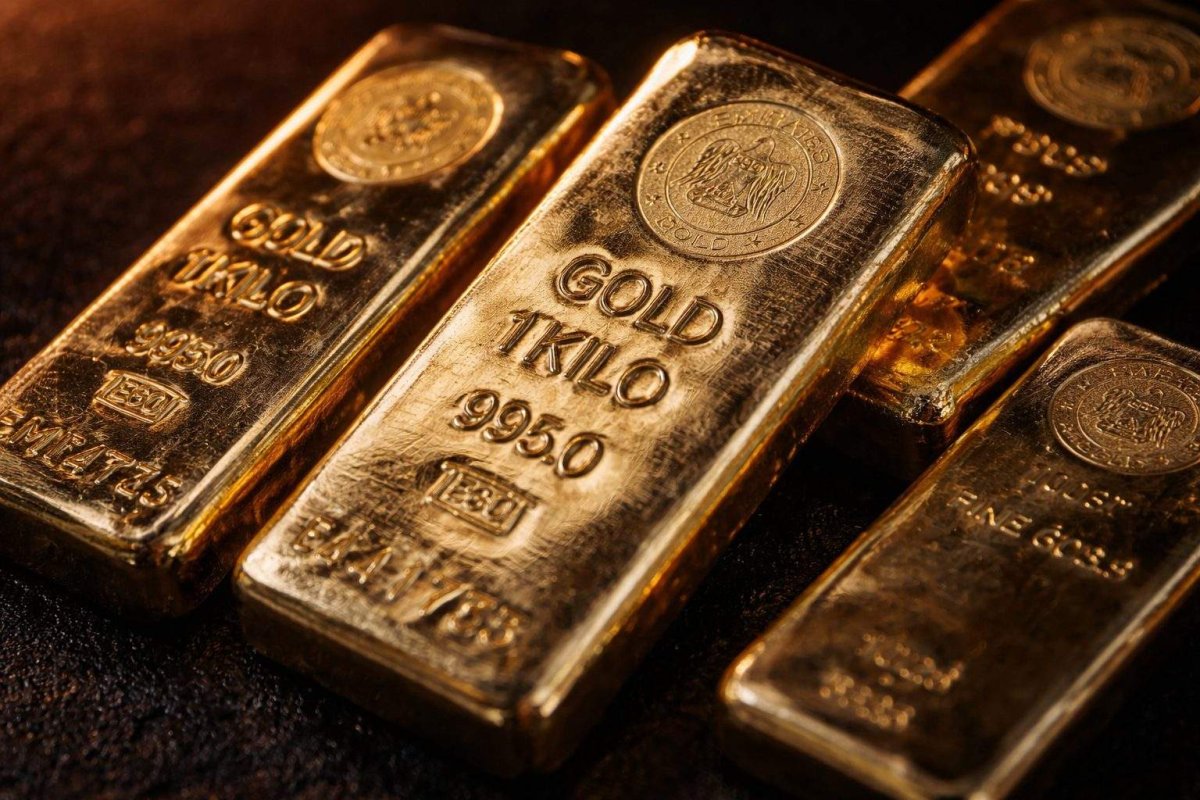
Gold staged a powerful recovery at the end of last week, climbing nearly 3% to settle at $4,504.79 per ounce. This rebound, however, is poised for a significant test in the coming days as a confluence of economic data and geopolitical developments converge to shape the precious metal's trajectory.
Economic Calendar Poses Immediate Hurdle
The week's economic docket is densely packed, presenting immediate challenges for the non-yielding asset. The Institute for Supply Management's manufacturing Purchasing Managers' Index (PMI) is scheduled for release, followed closely by the highly anticipated March employment report from the U.S. Labor Department on April 3 at 8:30 a.m. ET. Market liquidity is expected to be thin on Good Friday, when U.S. equity markets are closed, potentially amplifying volatility in the initial reaction to the jobs data. Concurrently, consumer confidence metrics will offer further insight into the economic landscape.
Inflationary Pressures from Oil and Yields
The rally in crude oil and U.S. Treasury yields presents a formidable headwind. Brent crude futures settled at $112.57 per barrel on Friday, while the benchmark 10-year Treasury yield pushed above the 4.4% threshold. This combination signals persistent inflationary forces to investors, moving beyond a transient shock. For gold, which offers no interest, higher competing yields diminish its relative attractiveness, creating a difficult environment for sustained gains.
Philadelphia Federal Reserve President Anna Paulson recently underscored these concerns, warning that escalating costs for fuel and fertilizer could entrench inflation expectations more stubbornly than in previous cycles, despite what she characterized as a still-fragile labor market. Supporting this view, the University of Michigan's latest survey showed one-year inflation expectations rising to 3.8% in March from 3.4%.
Market Sentiment and Technical Factors
Daniel Pavilonis, a senior market strategist at RJO Futures, observed that buyers emerged as gold dipped below its 200-day moving average—a key technical level monitored for long-term trend signals. He anticipates the potential for a "slow grind higher" in the metal over subsequent weeks. The Friday surge provided a lift across the precious metals complex, with silver gaining 2.2%, platinum 2.3%, and palladium 1.8%. In a notable revision, Commerzbank raised its year-end gold price forecast to $5,000 an ounce from $4,900.
Nevertheless, underlying physical demand offers only tepid support. In India, lower prices spurred some bargain hunting and narrowed dealer discounts. In China, premiums tightened, but Bernard Sin of MKS PAMP noted that "physical demand has cooled." Central bank purchases and quota restrictions continue to provide a foundational base for prices, but the impetus from retail and institutional physical buyers remains subdued.
Geopolitical Wildcards: Hormuz and Houthis
A significant geopolitical variable entered the equation over the weekend. Discussions in Islamabad focused on potential pathways to reopen the Strait of Hormuz, a critical maritime chokepoint that previously facilitated roughly 20% of global oil and liquefied natural gas trade. A diplomatic breakthrough that restores shipping flows could precipitate a decline in oil prices, calm broader markets, and alleviate some upward pressure on yields, potentially benefiting gold.
However, the situation remains fraught. The Houthi faction's involvement over the weekend introduced fresh uncertainty. With equity markets in the Gulf region closing mostly lower on Sunday, gold found itself caught between a renewed wave of risk aversion and the ongoing weight of the oil shock that has shadowed its performance throughout the month.
A Shift in Rate Expectations
The market's interest rate narrative has undergone a swift recalibration. Federal funds futures are now pricing in the possibility of a rate hike in 2026, a stark reversal for an asset traditionally favored during easing cycles. This evolving outlook underscores the complex dynamics gold must navigate, balancing its traditional safe-haven role against the powerful gravitational pull of rising real yields.
As the week unfolds, gold investors will scrutinize the jobs data for clues on labor market strength and the Federal Reserve's policy path. Simultaneously, any developments regarding the Strait of Hormuz will be critical for energy markets and global risk sentiment. The metal's Friday rebound demonstrated underlying support, but its durability will be tested by these powerful fundamental and geopolitical crosscurrents.