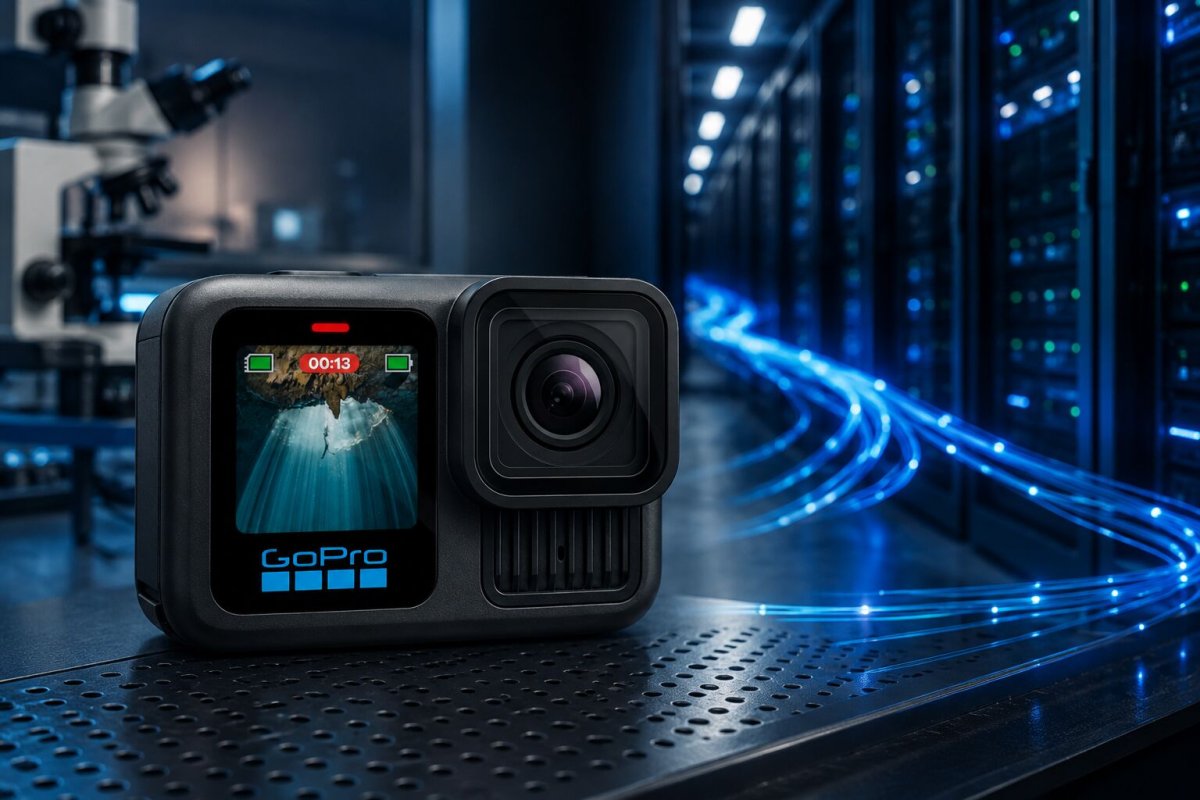
GoPro, Inc. (NASDAQ: GPRO) experienced a sharp rally on Friday, with shares surging approximately 24% in heavy trading volume. The stock, which closed the previous session at $1.39, climbed to as high as $2.04 before settling near $1.72 by mid-afternoon. More than 253 million shares had exchanged hands by 3:02 p.m. EDT, reflecting intense investor interest in the company's proposed merger with privately held Starman Optical.
The market's enthusiasm is not solely driven by the $1.14 per-share cash payment that GoPro shareholders are set to receive as part of the deal. At the current price of $1.72, investors are effectively assigning approximately $0.58 to the stock component of the merger consideration. This residual value, when divided by the 0.1 share of the surviving company that each GoPro share will convert into, implies a price of $5.80 per full share of the new entity.
This calculation is purely mechanical and does not constitute a valuation forecast. The $5.80 figure is derived from the difference between the market price and the cash component, divided by the exchange ratio. However, the cash payment is subject to adjustment for working capital shortfalls, and the calculation ignores closing risks and the time value of money.
Friday's repricing was abrupt. On Thursday, the stock's close of $1.39 implied a value of $2.50 per surviving-company share. By Friday's high of $2.04, that implied value had soared to $9.00. Such a wide range underscores the uncertainty surrounding the deal, as GoPro has yet to file pro forma financial statements for Starman Optical, a privately held company that manufacturers optical transceivers in the United States for AI data centers, defense, government, and aerospace markets.
The merger proxy statement, which will provide detailed financials, is now of paramount importance to investors. Without it, the market is essentially pricing the deal based on limited information. Starman Holding CEO Charles Tebele expressed optimism about the merger, stating, "Together, we intend to bring production of these critical components back to the United States."
Beyond the strategic rationale, the merger serves as a financial lifeline for GoPro. The company has been struggling with declining revenue and mounting losses. In the first half of 2026, GoPro reported a 28.9% drop in revenue to $204.0 million, an operating loss of $96.2 million, and an operating cash outflow of $47.4 million. As of June 30, the company had only $27.3 million in cash and $87.2 million in aggregate principal debt. The merger will repay approximately $92 million of GoPro's debt at closing, providing much-needed relief.
GoPro has also disclosed that substantial doubt about its ability to continue as a going concern has not been alleviated. This makes the successful closing of the merger critical to the company's survival. The deal is subject to shareholder and regulatory approvals and is expected to close by year-end. If the transaction fails to close by December 31, either party can terminate, and GoPro may owe a $10 million fee under certain conditions.
Friday's trading volume was particularly notable, equating to roughly 1.6 times the 158.25 million Class A shares outstanding as of August 7. While shares can be traded multiple times, the volume indicates significant speculative interest. A separate SEC filing revealed that content creator Mark Fischbach, known as Markiplier, holds 13.5 million shares, or 8.5% of the company, though the filing describes a passive stake.
Investors are now awaiting the merger proxy, which will provide crucial details on Starman's revenue, margins, customer concentration, and capitalization. Until then, Friday's rally represents a fast-moving price for an incompletely disclosed asset, leaving the market to speculate on the true value of the combined entity.