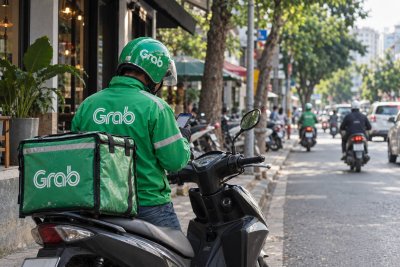
Grab Holdings (GRAB) is transforming its Singapore operations into a comprehensive electric vehicle (EV) ecosystem, integrating charging payments, vehicle financing, and car shopping into a single platform. The move, announced on September 11, aims to deepen driver engagement and broaden its financial services footprint, but it leaves key financial metrics undisclosed, prompting investors to question the true value of the initiative.
Platform Overview
The new EV Charging Network, built in partnership with Voltality and embedded within the Grab Driver App, offers access to over 3,000 charging points across multiple operators, including SP Mobility, EV Mobility, Busways, G.Tech, and MNL. Drivers can locate chargers, check real-time availability, and pay via their Grab wallet, with automatic discounts applied for eligible partners. A limited trial begins this month, with a full rollout to all Singapore driver-partners targeted by year-end.
Financing and Marketplace
More significantly for Grab's equity story, GXS Bank will leverage Grab's platform data—such as driver earnings and work history—to assess creditworthiness. The advertised terms are aggressive: zero down payment, up to 100% financing, and loan tenures extending to 10 years for new EVs or hybrids. Grab has also launched a car marketplace featuring new vehicles from dealer partners and used cars from GrabRentals, with BYD as the first named automaker in its preferential-deal program.
Financial Momentum and Risks
Grab's financial services segment is already growing rapidly. In the second quarter, financial services revenue surged 59% year-over-year to $134 million, while the gross loan portfolio nearly tripled to $2.318 billion. Quarterly loan disbursements grew 72% to $1.2 billion, and the segment's adjusted EBITDA loss narrowed to $15 million from $26 million. These figures underscore the lending opportunity, but they also highlight the risks: a 100%-financed vehicle with a 10-year term exposes the lender to used-car value fluctuations, borrower income volatility, and credit losses.
Investor Concerns
Grab's stock closed Friday at $3.05, up 1.33%, but remains near the bottom of its 52-week range of $2.96 to $6.62. The low valuation reflects skepticism about whether the EV push can translate into higher payment volumes, better driver retention, and profitable lending without disproportionate credit risk. Grab has not disclosed projected loan originations, interest rates, risk retention, or charging transaction fees, leaving investors to infer economics from product design.
Key Metrics to Watch
As the rollout progresses, investors should monitor three critical disclosures: active drivers using the charging network, EV-loan originations, and credit performance. A fourth useful metric would be the payment or referral revenue Grab earns per charging or vehicle transaction. Without these data, the 3,000-point footprint measures availability, not monetization.
Market Context
Singapore provides a supportive testing ground. The Land Transport Authority mandates that all new car and taxi registrations be cleaner-energy models from 2030, and current incentives include purchase subsidies and charger grants. However, a Singapore-only pilot cannot alone establish regional economics across Grab's eight Southeast Asian markets.
For now, the EV suite is strategically coherent but financially unquantified. It deserves option value for linking mobility, payments, and lending in one product loop, but it does not yet justify adding a material new revenue line to forecasts. The next earnings report will be more informative if management separates adoption, take rates, and losses instead of relying on charging-point coverage.