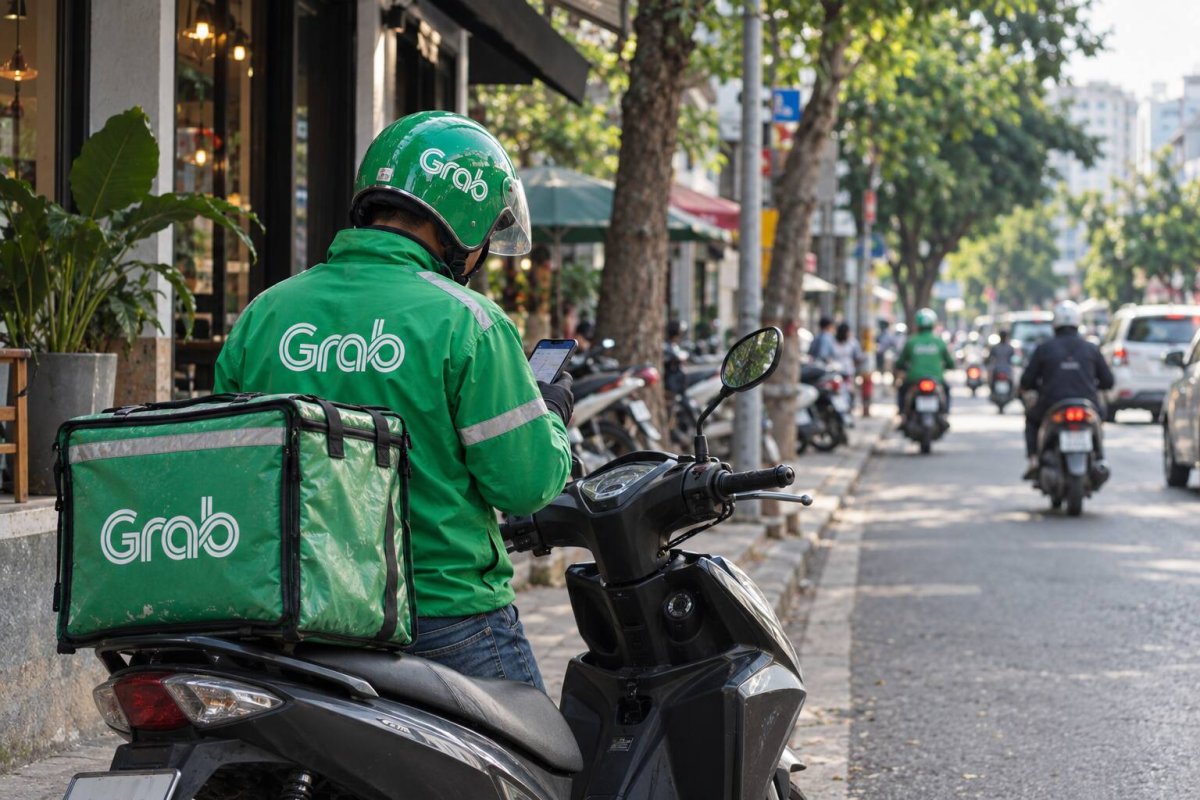
Grab Holdings (NASDAQ: GRAB) saw its shares tumble 6.5% on September 9, closing at $3.04, with trading volume surging to 148.2 million shares—more than three times the three-month average of 45 million. The sharp decline occurred without any company-specific announcement, prompting investors to question whether the market is sending a warning about the ride-hailing giant's fundamentals.
Market Context and Volume
The S&P 500 fell 0.48% and the Nasdaq Composite lost 0.64% on the same day, but Grab's drop was notably stock-specific. The company's market capitalization stood at approximately $12.44 billion at the close. The heavy volume suggests a shift in sentiment, but the absence of a clear catalyst points to broader concerns rather than a fresh earnings issue.
Buyback Program: A Cushion, Not a Cure
Grab's new $750 million share repurchase authorization, announced in its second-quarter results, represents about 6% of its market cap. While this is a meaningful commitment, it is not a guarantee of share price support. The company has discretion over the pace and amount of buybacks, and it prioritizes growth investments over repurchases. Notably, management has already executed $250 million in accelerated repurchases and $101 million in contingent forward purchases under a prior program, showing a willingness to act.
Fundamentals: Growth vs. Profitability
In the second quarter, Grab reported revenue of $997 million, up 22% year-over-year, and on-demand GMV grew 21% to $6.5 billion. Adjusted EBITDA rose 54% to $168 million, with margins expanding to 16.9% from 13.3%. However, the reported net profit of $235 million included a $307 million one-time gain from consolidating Superbank and a $183 million fair-value loss, leaving operating profit at just $19 million. Operating cash flow fell to $56 million, and adjusted free cash flow declined to $73 million.
Valuation: Modest Multiples, But Risks Loom
Based on the current market value and $5.4 billion in net cash, Grab's enterprise value is roughly $7.0 billion, implying about 1.7 times 2026 revenue and 9.6 times adjusted EBITDA. These multiples appear attractive for a company growing revenue above 20%, but they do not fully account for the risks in its ride-hailing economics, incentive spending, and expanding loan book.
Indonesia Policy and Incentives
Indonesia's parliament has mandated an 8% commission for motorcycle ride-hailing, affecting less than 6% of Grab's Mobility GMV. While the direct impact is limited, it raises concerns about potential regulatory spillover. Meanwhile, on-demand incentives rose 72 basis points to 10.9% of GMV, pressuring margins. Mobility adjusted EBITDA margin slipped to 8.6%, even as transactions grew 28%.
Financial Services: Opportunity and Risk
Financial services revenue surged 59% to $134 million, with gross loans nearly tripling to $2.3 billion. This growth enhances customer engagement but increases credit risk. Higher expected credit losses at Digibank were cited as a reason for rising operating costs, highlighting the trade-off between expansion and profitability.
In summary, Grab's valuation may offer a margin of safety, but the buyback alone is unlikely to offset persistent concerns about regulatory pressures, incentive costs, and credit quality. Investors should weigh these factors carefully before considering a position.