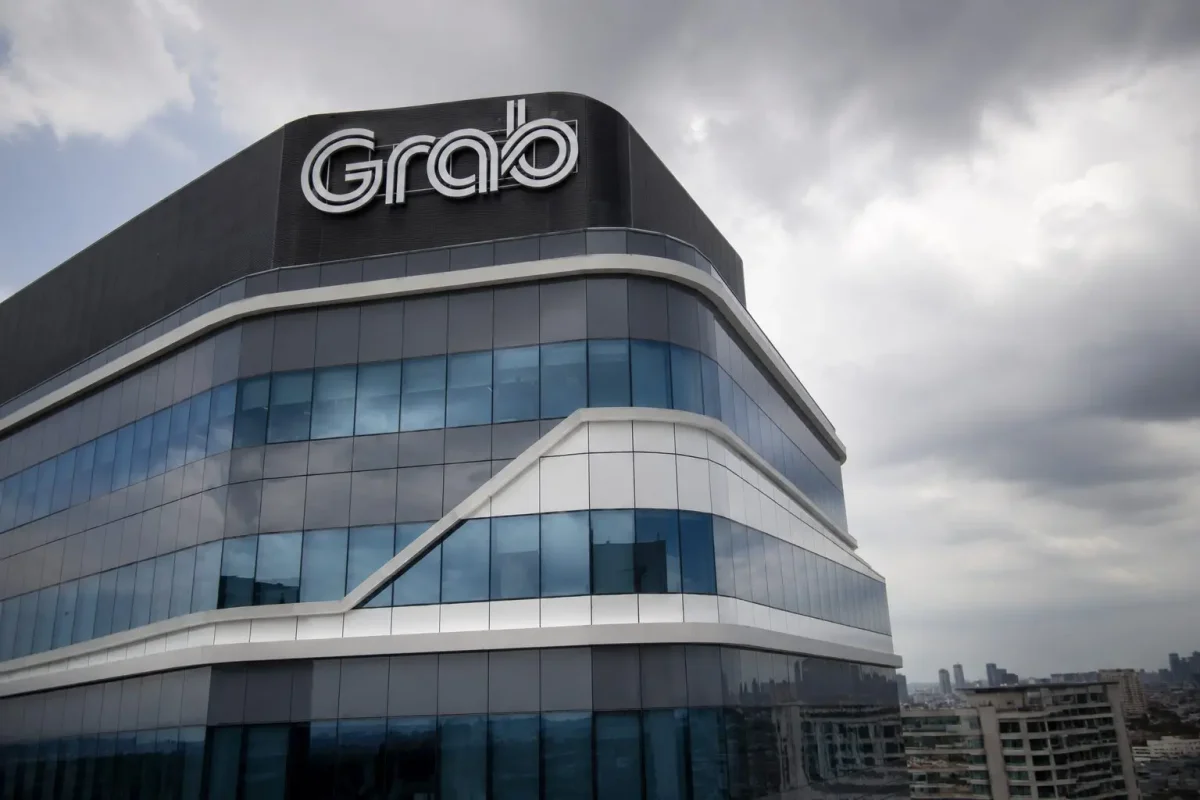
Grab Holdings Limited (NASDAQ: GRAB) announced a $750 million share repurchase program and raised its full-year guidance following the release of its second-quarter results, which showed robust revenue growth but a notable decline in cash conversion. The stock advanced 4% in after-hours trading before giving back gains during Tuesday's regular session, closing at $3.72 after touching a high of $3.97.
Capital Return Takes Center Stage
The buyback authorization, representing approximately 5.1% of Grab's $14.7 billion market capitalization, signals management's confidence in the company's cash generation capabilities. The program also equates to 13.9% of Grab's declared net cash of $5.40 billion and is 2.1 times larger than the $351 million in buybacks completed earlier in 2026.
However, the scale of the repurchase exceeds recent cash generation, coming in at 1.7 times the trailing adjusted free cash flow of $450 million. In the second quarter, adjusted free cash flow declined 35% year-over-year to $73 million, while operating cash flow slipped 12% to $56 million. Grab is not obligated to repurchase any shares under the authorization, leaving room for flexibility.
Q2 Financial Highlights
Revenue for the quarter reached $997 million, a 22% increase from $819 million in the prior-year period, marginally surpassing the LSEG consensus by 0.6%. On-demand gross merchandise value (GMV) grew 21% to $6.463 billion, while monthly transacting users rose 17% to 53.9 million. Adjusted EBITDA jumped 54% to $168 million, with the EBITDA margin improving to 16.8% of revenue.
The company reported a profit of $235 million for the period, but this figure was significantly influenced by one-off items. A $307 million gain from the remeasurement of Superbank and a $66 million deferred-tax benefit were partially offset by $183 million in fair-value losses. Operating profit more than doubled to $19 million from $7 million a year earlier.
Growth Driven by Volume, Not Pricing
Chief Executive Anthony Tan attributed the growth to "transactions and users rather than prices," with GMV per user rising only 3%. To support expansion, incentives increased to $706 million, representing 10.9% of on-demand GMV, up 72 basis points year-over-year. The company cited higher fuel prices and the rollout of lower-cost service options as contributing factors.
Segment Performance
- Deliveries: Revenue rose 21% to $531 million, with adjusted EBITDA up 53% to $96 million. Margin improved 45 basis points to 2.3% of GMV.
- Mobility: Revenue grew 12% to $331 million, while adjusted EBITDA increased 16% to $191 million. Margin slipped 9 basis points to 8.6% of GMV.
- Financial Services: Revenue surged 59% to $134 million, with adjusted EBITDA loss narrowing 41% to $15 million. The loan portfolio expanded 197%.
Guidance Raised, But Hurdles Remain
Grab increased its full-year revenue guidance to a midpoint of $4.125 billion, up 1.4% from the prior midpoint, and adjusted EBITDA guidance to $730 million, up 2.8%. However, the implied second-half adjusted EBITDA of $408 million represents a 26.7% increase over the first half, a tall order that will require continued momentum across segments.
The financial services division is expected to contribute meaningfully, with management projecting positive adjusted EBITDA in the second half. The loan portfolio is targeted to exceed $3 billion by year-end, and Stash's results will be consolidated from the third quarter onward.
Market Reaction and Key Risks
Investors appeared to differentiate between operational improvements and reported accounting profits. After-hours trading saw a 4% gain, but the stock gave back gains during the session, closing flat. The focus now shifts to the execution of the buyback and whether the company can convert its growing user base into sustainable cash generation.
Key risks include continued incentive spending, fuel price volatility, and rising credit exposure in financial services. In July, Indonesia implemented a revised commission scheme for ride-hailing, which could pressure margins. Additionally, integration steps and fair-value fluctuations from Superbank and Stash add complexity, and Grab updated its definition of adjusted free cash flow this quarter, making comparisons more challenging.
The immediate challenge for Grab is clear: it must quickly turn its expanding user base into consistent cash flow. The buyback must materialize in reduced share counts, and the financial services arm needs to achieve its promised profit turnaround. As the second half unfolds, investors will be watching these metrics closely.