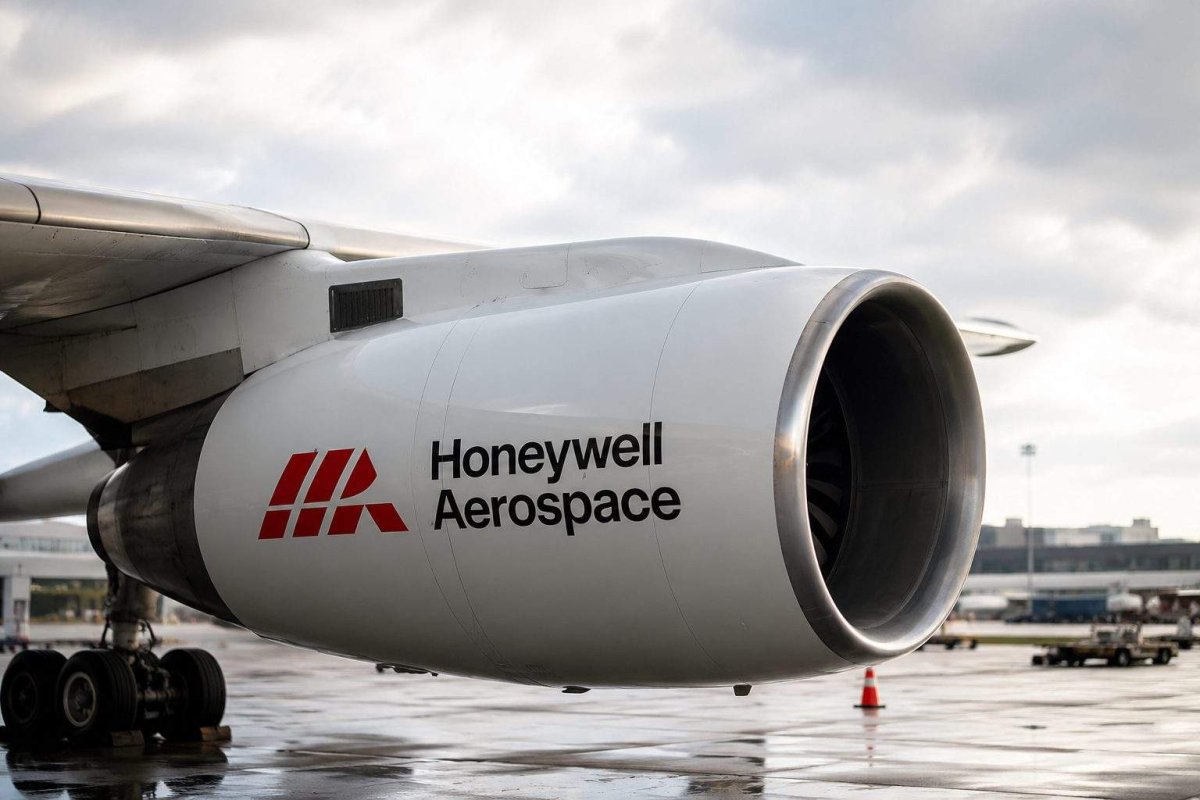
Honeywell Aerospace (NASDAQ: HONA) commenced trading as an independent entity on Monday, following its separation from Honeywell Technologies (NASDAQ: HON). The newly listed aerospace and defense stock, valued at approximately $71.76 billion, was immediately included in both the S&P 500 and S&P 100 indices, securing a wave of passive investment from index-tracking funds.
The spin-off arrives at a critical juncture for the industrial and technology sectors. While Honeywell Aerospace brings a focused portfolio of aviation and defense products, its debut coincides with growing investor caution regarding the data-center boom that has fueled much of the recent market rally. Concerns over artificial intelligence spending and a pullback in semiconductor and mega-cap tech stocks have injected a note of uncertainty into the broader market narrative.
Shares of HONA opened 7% higher at $236.78, compared to a when-issued closing price of $221.01 last week, according to Reuters. By midday, the stock had settled to around $226.45, with a trading range between $213.44 and $239.98. The company’s market capitalization places it above Vistra (NYSE: VST) but below Constellation Energy (NASDAQ: CEG) and Vertiv Holdings (NYSE: VRT), two companies closely tied to data-center power and infrastructure.
The timing of the listing is noteworthy. Ben Snider, chief U.S. equity strategist at Goldman Sachs (NYSE: GS), noted that the S&P 500’s 21% rise over the past 12 months has been “driven entirely by earnings,” according to Reuters. However, last week’s sell-off in tech and semiconductor names has dampened sentiment. Goldman Sachs projects U.S. data-center electricity demand will surge to 66 gigawatts by 2027, up from 31 gigawatts in 2025, underscoring the long-term opportunity even as near-term volatility persists.
Honeywell Aerospace enters the market with a clear strategic focus. CEO Jim Currier emphasized that the company’s capital allocation priorities will center on investment rather than shareholder payouts. “We have so much to make,” Currier told Reuters, pointing to factory expansion and supplier spending as key drivers of future returns. The company expects sales growth of 7% to 9% this year, with earnings before interest and taxes (EBIT) between $4.6 billion and $4.7 billion, and free cash flow of $1 billion to $1.5 billion in the second half of 2026. By 2030, it targets adjusted earnings of $6.5 billion and free cash flow exceeding $4 billion.
At its current valuation of $71.76 billion, the stock trades at roughly 11 times its 2030 adjusted earnings target and about 18 times its 2030 free cash flow goal. On a near-term basis, annualizing the second-half 2026 free cash flow forecast yields a multiple between 24 and 36. These figures provided the framework for Monday’s trading activity.
The defense sector offers a significant growth avenue. Honeywell Aerospace plans to invest $500 million in a Pentagon program alongside RTX (NYSE: RTX) and Lockheed Martin (NYSE: LMT) for precision-guided munitions. Currier noted that such a partnership would have been difficult to execute under the former conglomerate structure, highlighting the strategic benefits of the spin-off.
However, execution risk remains a key concern for investors. RBC analyst Ken Herbert pointed out that Honeywell Aerospace has historically lagged peers in aftermarket growth due to “execution and supply chain challenges.” He suggested that improved operational focus could unlock pricing power in the aftermarket, particularly through retrofit, migration, and upgrade work.
The spin-off was structured so that Honeywell Technologies shareholders received one HONA share for every two HON shares held as of the record date. Conagra Brands (NYSE: CAG) will exit the S&P 500 to make room for HONA, moving to the S&P SmallCap 600. Honeywell Aerospace begins operations with over 36,000 employees and a customer base of more than 10,000, marking what Currier called “the start of a new era.”