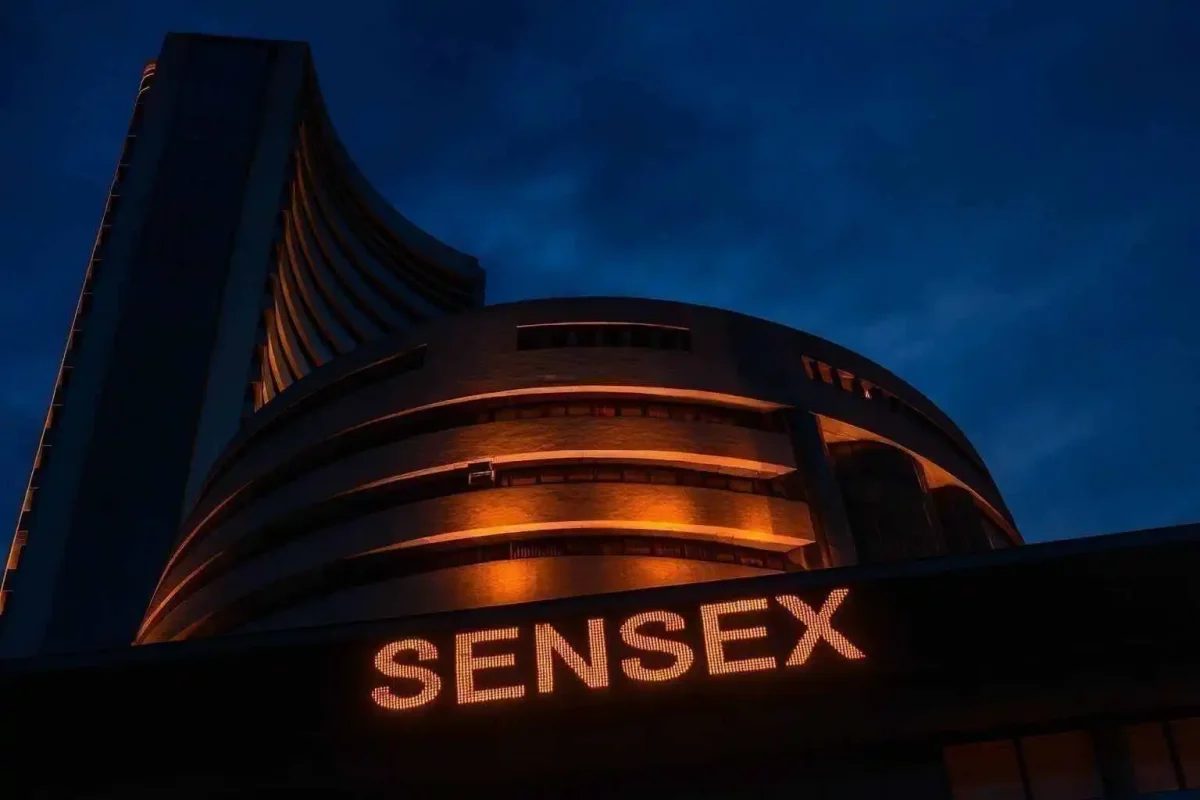
India's equity markets relinquished morning gains to finish lower on Thursday, with initial optimism over potential diplomatic progress between the United States and Iran fading as the session progressed. The benchmark Nifty 50 index declined 0.14% to settle at 24,196.75, while the Sensex dropped 0.16% to close at 77,988.68.
The reversal followed a robust 1.6% rally on Wednesday that had propelled both indices to their highest levels since March 10. Market participants are grappling with whether hopeful signals from international negotiations can counterbalance India's substantial reliance on imported crude oil, which satisfies approximately 90% of its domestic demand. This fundamental vulnerability resurfaced as a primary concern during Thursday's trading.
Stocks had opened higher, mirroring positive momentum across Asian markets, after Washington suggested a possible resumption of dialogue with Tehran. "The market is pricing in a potential de-escalation in the Middle East conflict," noted Ankur Punj, Managing Director and Business Head at Equirus Wealth. However, the supportive sentiment proved short-lived. The price of Brent crude oil, a global benchmark, climbed $1.65 to reach $96.58 per barrel, erasing its earlier decline and applying pressure to import-sensitive economies like India's.
Broader market indices demonstrated relative resilience despite the headline downturn. The mid-cap segment advanced 0.63%, and small-cap stocks gained 0.83%. Sectoral performance was mixed, with metals and information technology shares leading the advancers. In contrast, private banking and financial stocks retreated, with HDFC Bank, ONGC, and HDFC Life Insurance acting as notable drags on the Nifty.
HDB Financial Services emerged as a standout performer, its shares jumping after the non-bank lender reported a 41.4% surge in quarterly profit, driven by improved margins and stronger asset quality. Analysts at ICICI Securities highlighted that "a reduction in segment-specific stress fueled a sharp earnings recovery," underscoring a renewed investor focus on individual corporate results amid broader macroeconomic crosscurrents.
The sustained outflow of foreign capital remains a significant overhang for the market. Since the start of 2025, overseas institutional investors have withdrawn a staggering $38 billion from Indian equities, including a record monthly exodus of $12.7 billion in March. Angela Lan of State Street observed that "even prior to the recent geopolitical tensions, Indian markets were contending with headwinds from elevated valuations." The prevailing view at Aberdeen suggests foreign investors are likely to maintain a cautious stance for the foreseeable future.
Some underlying pressures showed signs of abating. The Indian rupee held steady near 93.30 against the U.S. dollar. Notably, one-month non-deliverable forward (NDF) points for the dollar/rupee pair—a key gauge monitored by offshore traders for hedging and speculative purposes—plummeted to approximately 37 paise. This marks a sharp decline from nearly 100 paise just one week prior. Dhiraj Nim of ANZ attributed the move to the unwinding of bearish offshore bets following recent foreign-exchange intervention measures by the Reserve Bank of India.
The sustainability of the market's rebound appears fragile. A breakdown in negotiations with Iran or renewed tensions in the critical Strait of Hormuz could trigger another spike in oil prices. Such a scenario would significantly inflate India's import bill, potentially rekindling inflationary pressures. This risk is particularly acute given that global equity valuations remain elevated, which could leave Indian stocks exposed to a fresh wave of selling pressure if sentiment sours.
Separately, economic data showed India's retail inflation for March accelerated to 3.4% year-on-year. However, the reading remained comfortably below the Reserve Bank of India's medium-term target of 4%, providing the central bank with some policy flexibility amidst the evolving external environment.