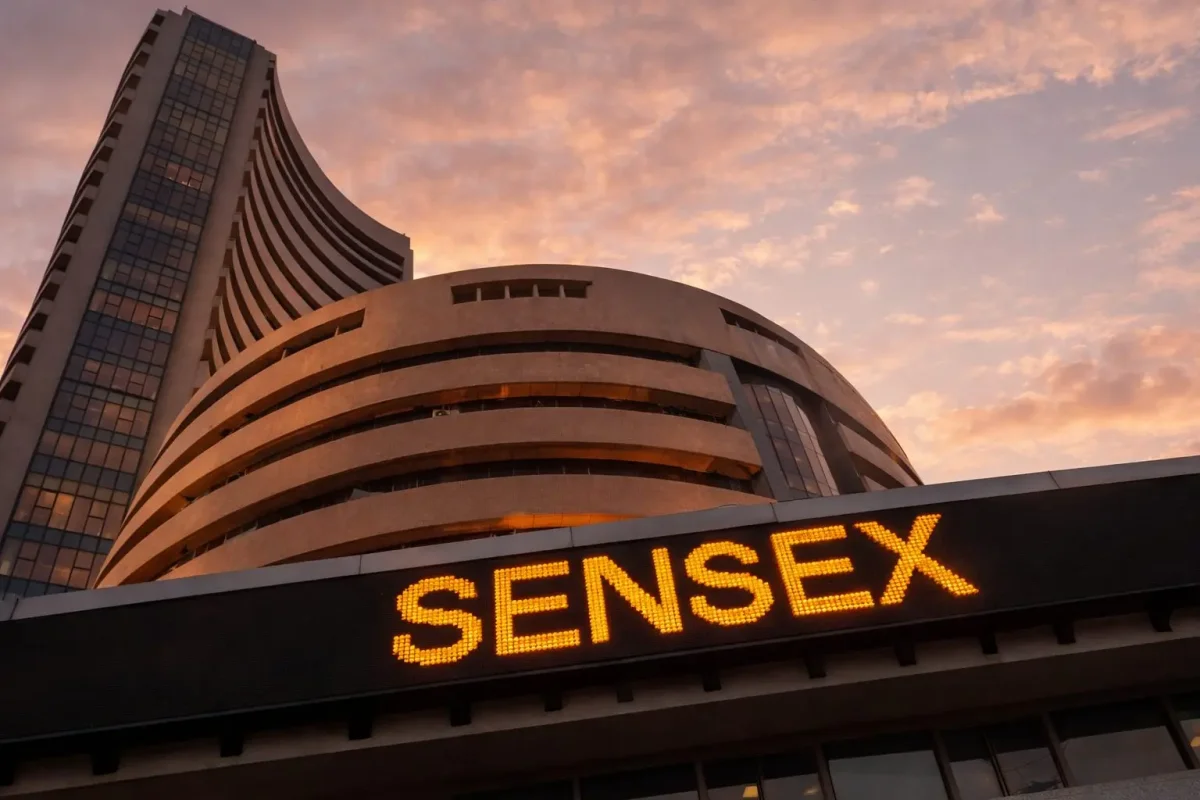
Indian equity markets staged a robust recovery on Monday, April 6, 2026, closing sharply higher as optimism over a potential ceasefire between the United States and Iran provided much-needed relief from oil-driven volatility. The benchmark S&P BSE Sensex surged 787.30 points, or 1.07%, to settle at 74,106.85. The broader Nifty 50 index followed suit, gaining 255.15 points, or 1.12%, to end the session at 22,968.25, within striking distance of the 23,000 psychological level.
Oil Price Retreat Fuels Risk-On Sentiment
The rally was primarily catalyzed by reports suggesting Washington and Tehran had agreed on a framework aimed at halting hostilities. This development sent Brent crude futures tumbling to approximately $107 per barrel from recent highs near $110. For India, a net importer of over 80% of its crude oil requirements, lower prices directly alleviate pressures on inflation, corporate input costs, and the currency. The Indian rupee strengthened by 33 paise against the U.S. dollar to close at 92.85.
Market sentiment underwent a dramatic intraday reversal. Indices had opened weak, declining by up to 0.8% in early trade, before swiftly pivoting into positive territory following the geopolitical headlines. Analysts characterized the move as headline-driven. "This is purely a headline-driven market," noted Sunny Agrawal, head of fundamental equity research at SBICAPS Securities. Ajit Mishra, senior vice president for research at Religare Broking, added that the ceasefire discussions "helped stabilize crude prices" and subsequently improved risk appetite among investors.
Financials and Consumer Stocks Drive Gains
The banking sector emerged as the primary engine for the upswing. The Nifty Bank index and the Nifty PSU Bank index rallied up to 2%, while the broader financial services index advanced 2.3%. Heavyweights like HDFC Bank rose 2.7%, Bajaj Finance added 2.9%, and Axis Bank jumped 4%. The momentum was supported by preliminary quarterly business updates indicating a pickup in loan growth and improved deposit accretion, as highlighted by analysts at Investec.
Gains were broad-based, with advancing stocks outnumbering decliners by a ratio of nearly 3 to 1. Approximately 3,083 stocks closed higher compared to 1,081 that ended in the red. The rally extended to mid-cap and retail-focused companies. Trent surged 7.7% post its quarterly update, while Sobha gained 5.8%. Avenue Supermarts rose 4.3% on the back of strong March-quarter numbers. In a standout move, Zydus Wellness skyrocketed 15% to 510 rupees, marking its most significant single-day gain in 17 years. RBL Bank also climbed 5.4% after releasing its business update.
Reliance Industries Buck the Trend
Not all constituents participated in the rally. Index heavyweight Reliance Industries slumped 3.4%, touching its lowest level in nearly a year. Analysts attributed the decline to margin compression in its refining business following the imposition of a diesel export tax. The oil and gas sector was the sole group on the Nifty to close in negative territory, with ONGC and JSW Steel also weighing on the sector's performance.
Market Breadth and Technical Perspective
The Nifty recorded its most substantial single-day jump in three weeks, underscoring the market's sensitivity to oil price movements and domestic banking sector health. However, strategists cautioned that the rally's sustainability hinges on the progression of geopolitical talks. "The Nifty still needs to sustain above key levels," warned Anand James, chief market strategist at Geojit Investments. He identified 22,525 as a crucial support level, noting that a breach could expose the index to a decline toward the 21,900-21,600 range.
The session's price action demonstrated how swiftly Indian equities can rebound when external headwinds from commodity prices abate, especially when coupled with encouraging domestic fundamentals from key sectors like banking. Investors were seen actively buying shares on early dips, capitalizing on the improved sentiment.
The timing of the rally coincides with the onset of the March-quarter earnings season, where companies are beginning to release early business updates on sales and loan growth. These disclosures are providing fresh domestic cues for investors after weeks of market swings dictated primarily by global oil price volatility. The interplay between stabilizing external factors and improving internal metrics will likely dictate near-term market direction.