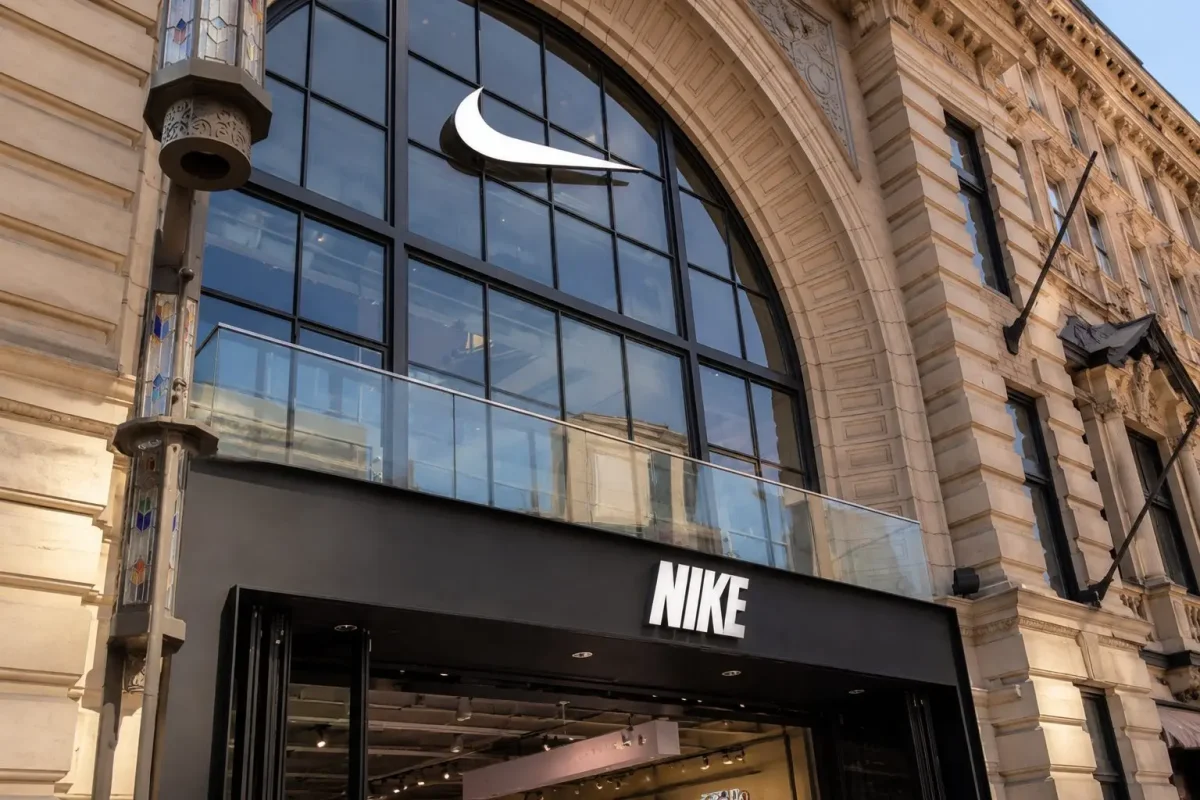
Nike Inc. shares advanced 3.4% to $44.07 on Wednesday, benefiting from a broader market rally driven by declining oil prices and lower U.S. Treasury yields. The move provided some relief for consumer discretionary stocks that have been under pressure from persistent inflation and concerns about household spending.
The broader market tailwind came as U.S. crude oil futures fell $5.89 to $98.26 per barrel, while Brent crude dropped $6.26 to $105.02. The 10-year Treasury yield declined 9.4 basis points to 4.576%, amid renewed hopes for a U.S.-Iran deal. Consumer discretionary stocks led S&P 500 sector gains, according to Reuters.
"Renewed positive sentiment because oil prices are down, yields are down," said Jake Dollarhide, CEO of Longbow Asset Management, though he warned that if oil prices remain elevated, the Federal Reserve could face a difficult position.
Despite the stock's rise, fundamental challenges persist for Nike. The company reported flat quarterly revenue of $11.3 billion, with direct-to-consumer sales declining 4% and wholesale revenue rising 5%. Gross margin contracted 1.3 percentage points to 40.2%, while net income plummeted 35% year-over-year.
CEO Elliott Hill acknowledged the company's progress but noted that "the direction is clear" and the work is "not finished." Nike is working to repair wholesale relationships after years of prioritizing its direct-to-consumer strategy, a shift that allowed competitors to gain market share.
According to Reuters, Nike's global sports footwear market share fell to 22.9% in 2025, down three percentage points, while Adidas increased its share to 12.2%. Short interest in Nike has also risen sharply, to 4.67% of shares outstanding as of May 1, up from just 0.41% when Hill took over as CEO in October 2024.
Morningstar analyst David Swartz expressed disappointment, stating, "There should have been more progress by now." Jennifer Saibil of The Motley Fool highlighted ongoing issues including China weakness, elevated inventory levels, markdowns, and tariff pressures, adding that shares are not yet cheap enough to be considered a bargain despite this year's decline.
In a move to boost digital engagement, Nike announced a partnership with Google to launch a Gemini-powered shopping feature in the U.S. in early June, just ahead of the summer football tournament. Shannon Glass, Nike's vice president of direct-to-consumer, said the tool will use technology to "anticipate their needs" and provide a more intuitive connection to the brand. The initiative comes as Nike's direct-to-consumer sales have been shrinking.
Wall Street remains cautious. HSBC downgraded Nike from Buy to Hold in April, slashing its price target from $90 to $48. Analyst Akshay Gupta described the turnaround as a "show me" story with no near-term catalysts. Nike shares were last traded at $44.19, giving the company a market capitalization of approximately $65.5 billion.
The rally this week has been largely driven by macro factors rather than company-specific developments. If oil prices or Treasury yields rebound, or if tariffs, weak Chinese demand, and heavy discounting continue to pressure margins, investor attention is likely to shift back to Nike's fundamental challenges. The key question remains whether the company can move more full-priced merchandise and demonstrate a sustainable recovery.