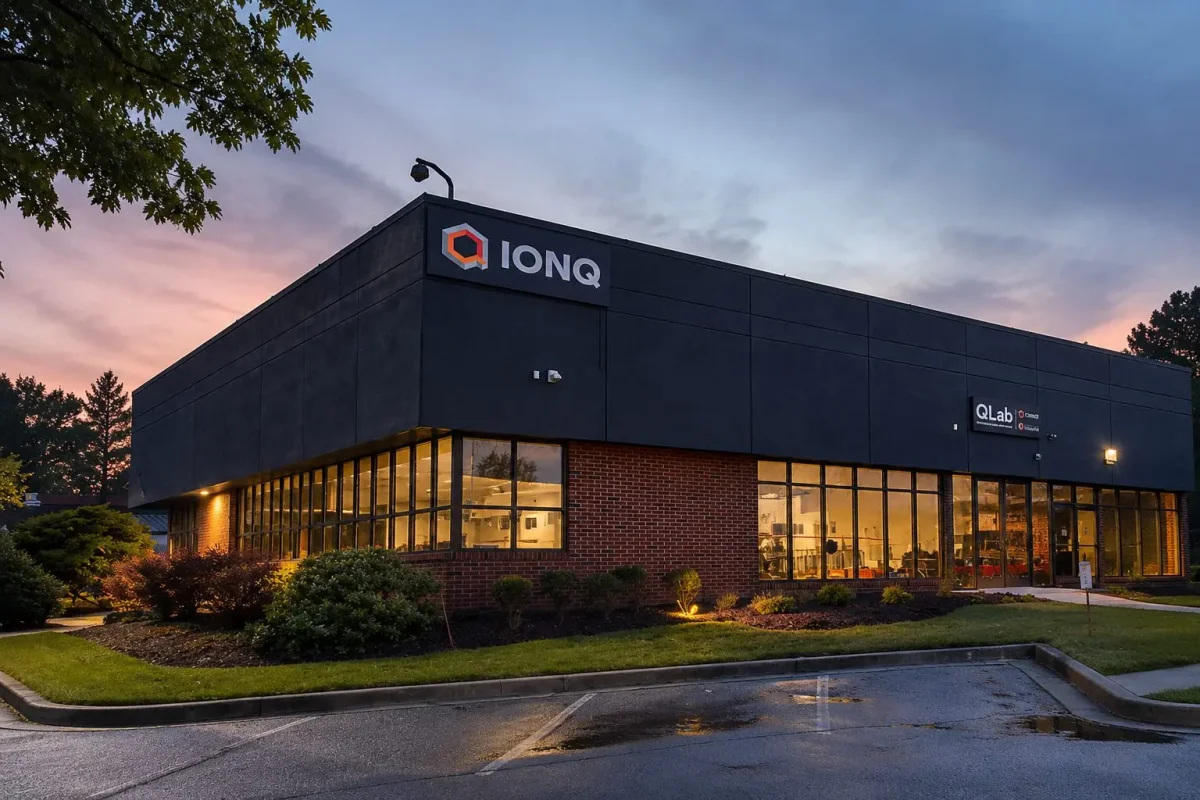
SkyWater Technology shareholders have voted overwhelmingly in favor of the company's acquisition by IonQ Inc., removing a significant obstacle from the quantum-computing firm's ambitious $1.8 billion plan to acquire the U.S.-based semiconductor foundry. According to a regulatory filing from SkyWater, approximately 32.6 million shares were cast in support of the merger, with only about 405,000 shares opposed. The vote, held on May 10, 2026, marks a critical milestone for IonQ as it seeks to deepen its control over the hardware that powers its quantum systems.
The transaction, first announced in January, offers SkyWater shareholders a combination of $15 in cash and $20 in IonQ stock for each share they hold. The equity portion is subject to adjustment based on IonQ's share price at closing. The deal is expected to finalize in the second or third quarter of 2026, pending regulatory approvals and customary closing conditions. SkyWater, which describes itself as the largest pure-play semiconductor foundry based in the United States, will continue to serve its existing foundry customers under the new ownership structure.
This acquisition comes at a pivotal moment for IonQ, which is transitioning from selling early-stage quantum systems and services to gaining tighter control over the manufacturing of the chips that are central to its technology. Quantum computers rely on qubits—units of quantum information that can exist in multiple states simultaneously—but the fabrication, scaling, and stabilization of qubits remain formidable engineering challenges. By integrating SkyWater's foundry capabilities, IonQ aims to accelerate its hardware development cycle and secure a domestic supply chain.
The week has been eventful for the broader quantum computing sector. Honeywell's Quantinuum filed its U.S. initial public offering paperwork on Friday, just days after IonQ raised its full-year revenue forecast. These developments have sharpened investor focus on a critical question: Can quantum companies successfully translate their technological breakthroughs into sustainable revenue streams? The sector has yet to experience a monetization catalyst comparable to the one that large language models saw with ChatGPT, according to Reuters Breakingviews.
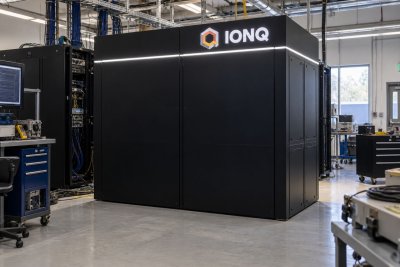
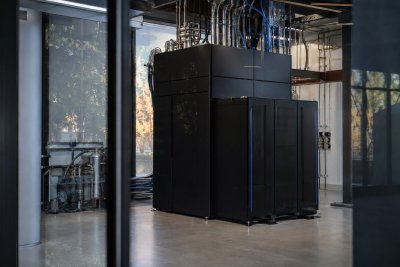
IonQ's financial performance has been a bright spot. On May 6, the company reported first-quarter revenue of $64.7 million, a staggering 755% increase from the same period last year. Management subsequently raised its 2026 revenue guidance to a range of $260 million to $270 million, while maintaining its adjusted EBITDA loss forecast of $310 million to $330 million. Adjusted EBITDA, which excludes interest, taxes, depreciation, and certain charges, is not a standard profit metric. The company also announced its first sale of a 256-qubit system and confirmed receipt of initial ion-trap chip samples from the fab, describing this as a pivotal shift toward commercial-scale production.
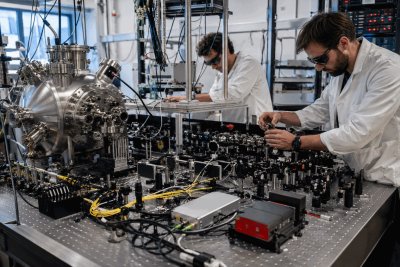
Despite the upbeat news, skepticism remains. D.A. Davidson analyst Alex Platt noted that IonQ entered the earnings report with high expectations, but doubts persist over whether its trapped-ion approach will ultimately prove commercially viable. IonQ's trapped-ion technology uses charged atomic particles manipulated by lasers and electromagnetic fields in a vacuum. CEO Niccolo de Masi acknowledged that profitability is not a near-term priority, telling Reuters, "Profitability is not a key focus this year."
The competitive landscape is fluid. According to Reuters Breakingviews, IonQ, D-Wave, Rigetti, and Xanadu collectively burned through roughly $500 million in operating cash during their latest fiscal years. The analysis underscores that quantum computing has yet to achieve a breakthrough comparable to the monetization spark that ChatGPT provided for large language models.
Risks remain. Regulatory approvals could face delays, and integrating SkyWater's operations may prove more challenging than anticipated, potentially undermining the manufacturing advantages that underpin the deal. In its merger filing, IonQ flagged risks such as failure to secure regulatory sign-offs, closing delays, difficulty extracting anticipated value, and potential fallout for existing business relationships. IonQ shares closed at $49.24 on Friday, up $1.54, giving the company a market capitalization of approximately $18.3 billion.