IonQ Inc. (NYSE: IONQ) experienced a sharp decline of 15.45% over the past five trading sessions, with Friday's volume surging to 215% of its 65-day average. The selloff, however, has not significantly dented the company's valuation premium, as its market capitalization remains near $18.3 billion, approximately 69 times the midpoint of its 2026 revenue guidance.
At Friday's close, IonQ shares were trading at $49.31, down 2.47% on the day, with 67.76 million shares changing hands. The volume exceeded the 50.49 million shares sold short as of June 15, indicating heightened trading activity. Despite the decline, the stock remains up 85.45% over the past three months, reflecting ongoing investor enthusiasm for the quantum computing sector.
The recent drop has not made IonQ appear cheap based on sales metrics. The company's enterprise value stands at roughly 39 times its $470 million in remaining performance obligations. IonQ reported first-quarter revenue of $64.7 million in May, a 755% increase year-over-year, and raised its full-year revenue forecast to between $260 million and $270 million. Chairman and CEO Niccolo de Masi described the quarter as the biggest in the company's history, with 2026 revenue guidance set at the high end of $270 million. The company also holds $3.1 billion in cash, cash equivalents, and investments.
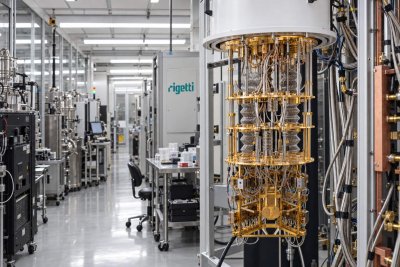
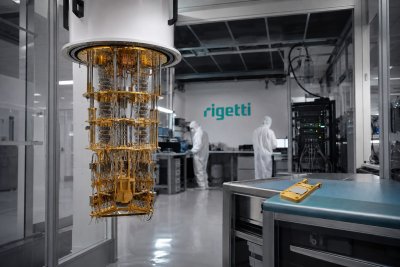
IonQ's market valuation now exceeds the combined market capitalizations of its quantum computing peers: D-Wave Quantum Inc. (NYSE: QBTS) at $8.36 billion, Rigetti Computing Inc. (NASDAQ: RGTI) at $6.16 billion, and Quantum Computing Inc. (NASDAQ: QUBT) at $2.06 billion. This premium underscores the market's confidence in IonQ's technology and growth trajectory.
Analyst sentiment remains positive, with a consensus Buy rating and an average price target of $65.63 from 17 analysts, according to Benzinga. Targets range from a high of $100 to a low of $30. Northland Capital Markets recently set a $70 target on June 22. The gap between the current trading price and analyst targets suggests potential upside, but also highlights the volatility inherent in the quantum computing space.
In corporate governance, IonQ held its annual meeting on June 22, where shareholders elected two directors and approved executive compensation in a non-binding vote, with 45.9 million votes in favor and 39.5 million against. The auditor was approved by a wider margin, with 165.0 million for and 1.2 million against, as disclosed in an SEC filing.
On the product front, IonQ launched the Clavis XG Multiplex on June 17, a quantum key distribution system designed to handle both quantum and classical traffic over metropolitan fiber networks. Jordan Shapiro, President of Quantum Platform, stated, "Quantum security is moving beyond specialized network environments." This move expands IonQ's reach beyond core quantum processors into quantum security applications.
Sector developments have kept IonQ in the spotlight. Barron's reported that the White House signed two executive orders on June 23 to accelerate quantum development, signaling government support for the industry. Additionally, Quantinuum Inc. (NASDAQ: QNT) raised $1.68 billion in its U.S. IPO earlier in June, selling 28 million shares at $60 each, providing a fresh valuation benchmark for the quantum sector.
Looking ahead, the U.S. stock market will operate on a shortened schedule this week, with the NYSE closed on Friday, July 3, for Independence Day. Regular trading hours will run from 9:30 a.m. to 4:00 p.m. ET on normal days. MarketBeat estimates IonQ's next earnings report on August 5, though the company has not yet confirmed the date. Investors will be watching closely for any updates on revenue growth and quantum technology milestones.