Global oil markets experienced a sharp rally on Wednesday, March 18, 2026, driven by escalating geopolitical tensions in the Middle East. The international benchmark, Brent crude, surged $5.14, or 5%, to settle at $108.56 per barrel after spiking to an intraday high of $109.95. U.S. benchmark West Texas Intermediate (WTI) climbed $2.17 to $98.38.
Direct Threats to Gulf Infrastructure
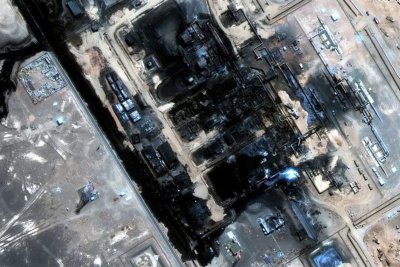
The price spike followed explicit threats from Iran's Revolutionary Guards, which named specific energy facilities in Saudi Arabia, the United Arab Emirates, and Qatar as potential strike targets. The list included Saudi Arabia's Samref refinery and Jubail petrochemical complex, the UAE's Al Hosn gas field, and Qatar's Ras Laffan Industrial City. Later in the day, QatarEnergy confirmed "extensive damage" from missile strikes at Ras Laffan, though no casualties were reported. This development followed earlier attacks on Iran's own South Pars and Asaluyeh energy sites, which had already begun to pressure prices upward.
Market Ignores Bearish Inventory Data
The geopolitical flare-up caused traders to overlook a significant bearish signal from U.S. inventory data. The Energy Information Administration reported a 6.2 million-barrel build in commercial crude stockpiles for the previous week, dramatically exceeding analyst expectations for a modest 383,000-barrel increase. However, concurrent drawdowns in gasoline and distillate supplies, coupled with the heightened risk premium, led the market to shrug off the surplus. "This crude stock build would certainly be more bearish if there was not so much else going on," noted John Kilduff of Again Capital.
Supply Disruptions and Global Implications
The threats target a critical chokepoint for global energy flows. The Strait of Hormuz, a key export corridor for the region, typically sees roughly 20 million barrels of oil and about 20% of the world's liquefied natural gas (LNG) pass through daily. With Qatar halting some LNG production due to the conflict, approximately 20% of global LNG supply is now in question. Analysts warn that further hits on infrastructure "would continue to raise prices," according to SEB analyst Ole Hvalbye. The situation puts significant operations of international oil majors at risk; annual reports indicate Middle East production accounts for around 34% for TotalEnergies, 20% for Exxon Mobil, and 11% for Shell.
Policy Responses and Alternative Flows
In response to the mounting pressure, Washington and regional producers scrambled to stabilize markets. The U.S. administration issued a 60-day waiver of the Jones Act, temporarily lifting restrictions on domestic shipping to ease logistical constraints, and greenlit some oil transactions with Venezuela's state-owned PDVSA. Meanwhile, Iraq restarted exports of 250,000 barrels per day from Kirkuk via Turkey, and Saudi shipments from the Red Sea are on track to hit a record 3.8 million barrels daily in March, providing some alternative flows to the threatened Hormuz route.
Broader Market and Consumer Impact
The energy sector outperformed in equity markets, with the S&P 500 energy index leading gains even as the broader market declined. Fund flow data from LSEG Lipper showed $2.1 billion pouring into global energy-sector funds so far in March, a pace not seen in 12 years for a single month—a move characterized as a "geopolitical risk trade" by David Russell of TradeStation. The price surge is already filtering through to consumers. The U.S. average for regular gasoline jumped to $3.79 a gallon on Tuesday, up sharply from $3.54 a week ago and $2.92 a month prior. Analysts warn "it's going to take time for those prices to come back down," according to Matt Smith of Kpler.
Inflation and Fed Outlook
The oil price surge complicates the inflation picture for central banks. The Federal Reserve, which held interest rates steady, concurrently lifted its year-end inflation outlook to 2.7% from 2.4%, putting increased attention on energy-driven price pressures. While increased supply from Iraq and Saudi Arabia, alongside the large U.S. inventory build, could temper further gains, traders remain on high alert for any escalation that could impact critical alternative infrastructure like Saudi Arabia's East-West pipeline or Red Sea terminals.