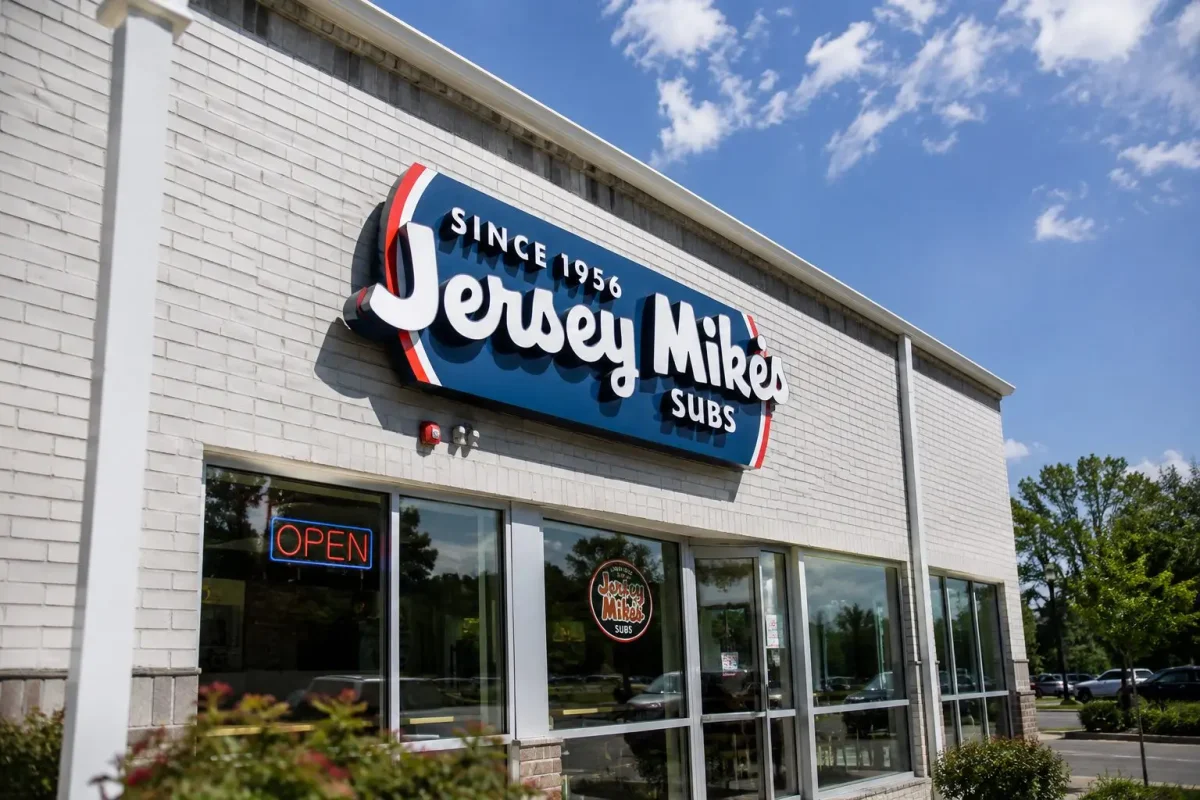
Jersey Mike's, the fast-growing sandwich chain, has priced its initial public offering at $23 per share, raising approximately $1 billion. The offering of 43.48 million shares values the company at around $7.3 billion. Trading under the ticker JMKE on the New York Stock Exchange, the stock is expected to begin trading later today.
The IPO structure is notable for its heavy allocation to existing shareholders. Of the base offering, 29.70 million shares are being sold by current holders, while the company itself is issuing only 13.78 million new shares. This means sellers will receive roughly 68 cents of every dollar raised, with Jersey Mike's netting about $317 million from the deal. An overallotment option could add another 6.52 million shares from sellers, potentially generating an additional $150 million.
Net proceeds to the company, estimated at $301 million after underwriting discounts and expenses, will be used primarily to strengthen the balance sheet. According to the prospectus, approximately $295 million, or 98% of net proceeds, is earmarked for debt repayment. Jersey Mike's reported total debt of $2.12 billion and cash of $232 million as of the latest filing. Pro forma, net debt would decrease from $1.888 billion to $1.593 billion, and net debt to adjusted EBITDA would fall from 5.6 times to 4.7 times.
The company's financial performance has been solid. Systemwide sales rose 13% to $4.2 billion in 2025, while revenue increased 11% to $724 million. Adjusted EBITDA jumped 29% to $339 million, representing about 47% of revenue. Net income improved sharply to $55 million from $5 million a year earlier, though interest expense more than doubled to $104 million due to higher leverage.
At the IPO price, Jersey Mike's equity value stands at 10.1 times revenue and 21.5 times adjusted EBITDA. Including pro forma net debt, the enterprise value reaches approximately 26.2 times EBITDA. The growth story hinges on store expansion: the company operates over 3,300 outlets, with more than 1,600 in development, about 90% of which are backed by existing franchisees.
CEO Charles Morrison previously led Wingstop (NASDAQ:WING) through its 2015 IPO. Blackstone (NYSE:BX) will retain nearly two-thirds of voting rights post-IPO, with only about 14% of total shares available to public investors. IPOX Research analyst Lukas Muehlbauer described the company as an easy-to-understand franchise business with strong expansion prospects.
The listing comes at a subdued time for consumer IPOs. As of July 22, only five U.S. consumer and retail IPOs had been completed in 2026, the lowest count in ten years. Morgan Stanley (NYSE:MS) principal bookrunner Rohit Singh noted that the bar for retail IPOs has risen significantly. The last major U.S. restaurant IPO was Cava Group (NYSE:CAVA), which raised $318 million at a $4.7 billion valuation in 2023.
Risks remain. Same-store sales growth slowed to 2.3% in the most recent 13 weeks, down from 3.6% a year earlier. Softer consumer demand or delays in new franchise openings could pressure royalty income. High leverage amplifies any earnings shortfall, and Blackstone's control limits minority shareholder influence. Investors must weigh the brand's expansion potential against the deal's structure, where most proceeds go to sellers and nearly all net cash reduces debt.