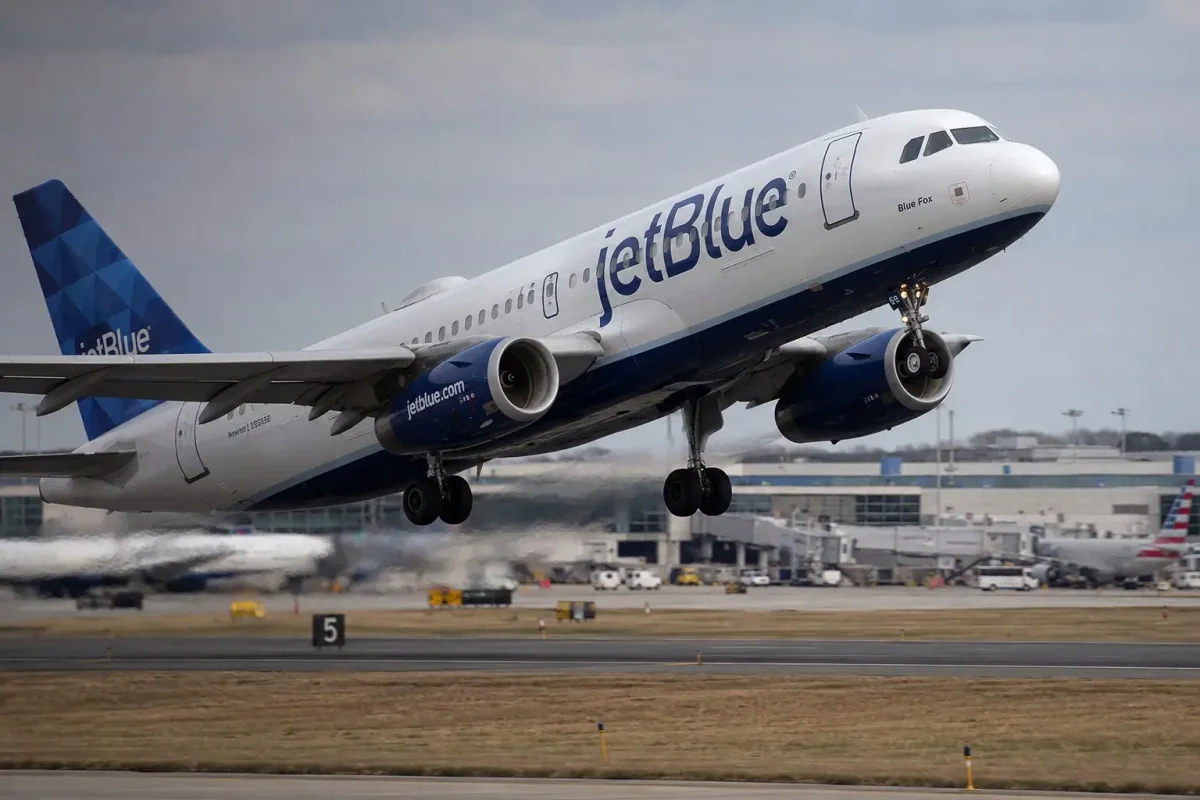
JetBlue Airways Corporation (NASDAQ: JBLU) saw its shares climb 9.4% to $5.94 in afternoon trading on Tuesday, as the carrier reinstated its full-year outlook and unveiled an ambitious profit goal for 2028. The rally came despite a wider-than-expected quarterly loss, as investors focused on the airline's pricing power and cost management strategies.
Strong Revenue Performance
In the second quarter, JetBlue's unit revenue surged 10.9%, with average ticket prices rising 8.6%. The company successfully offset nearly 50% of its increased fuel expenses, surpassing its earlier forecast of 30% to 40%. Revenue per available seat mile (RASM) grew 10.9%, driven by strength across all segments. Premium cabin RASM climbed roughly 13%, main-cabin RASM rose 11%, and loyalty revenue advanced 13%. The number of new premium-card accounts jumped nearly 40%, signaling strong demand for the airline's premium offerings.
Fuel Cost Sensitivity
The 2028 earnings per share target of at least $1 is based on an assumption of $3 per gallon jet fuel, a significant drop from the current 2026 forecast of $3.49 per gallon. An initial sensitivity analysis reveals that a 49-cent per-gallon gap would translate to approximately $400 million in pretax savings, or roughly $1.06 per share based on second-quarter weighted shares. JetBlue consumed 408 million gallons of fuel in the first half of the year, underscoring the importance of fuel price trajectory. The airline's fuel costs surged 80.7% year-over-year in the second quarter to $4.23 per gallon, compared to $2.40 in the same period last year.
Analyst Perspective
Raymond James analyst Savanthi Syth described the 2028 target as "ambitious," noting that achieving it would require over $1.3 billion in pretax gains starting in 2026, with only about $400 million expected from lower fuel expenses. JetBlue reported a net loss of $247 million for the quarter, compared to a $74 million loss a year earlier, though adjusted losses were five cents better than analysts' expectations. Operating revenue rose 14.5% to $2.697 billion, beating LSEG estimates.
Strategic Initiatives
The airline is ramping up its fare segmentation strategy, updating its structure to separate onboard services from options like flexibility and refunds. These changes are designed to prepare customers for the launch of BlueFirst, JetBlue's new domestic first-class cabin, which is set to go on sale this fall. Management believes BlueFirst could boost RASM by approximately five points once stabilized, positioning it as the final major earnings contributor under the JetForward plan.
Third-Quarter Outlook
For the third quarter, JetBlue expects RASM growth of 12.5% to 16.5%, with capacity rising 3% to 6% and ex-fuel unit costs increasing 2.5% to 4.5%. The company continues to forecast a full-year operating loss. Chief Financial Officer Ursula Hurley stated that pricing would "provide an offset" if fuel costs remain elevated, though the effectiveness of this strategy will be tested in the coming months.
Financial Position and Risks
As of June 30, JetBlue held $2.17 billion in cash and securities against $8.48 billion in debt. Interest expenses are projected at roughly $590 million for 2026. The airline's 2028 earnings target, currently valued at about 5.9 times expected earnings, depends on sustained demand and lower fuel prices. Softer demand or higher-than-anticipated fuel costs could weigh on recovery. For now, investors are prioritizing revenue growth over immediate profitability, but the challenge remains to maintain double-digit unit revenue growth while managing cost inflation.