Joby Aviation (NYSE:JOBY) extended its post-earnings rally on Friday, with shares signaling a 1.8% advance to $8.38 in premarket trading. The move follows a 5.5% gain during Thursday's regular session, which closed at $8.23. Investors are focusing on the composition of the company's second-quarter revenue, which showed a significant contribution from its recent Blade acquisition.
Revenue Breakdown Highlights Blade's Role
Joby reported quarterly sales of $38.6 million, a 59% increase from the first quarter's $24.2 million. Notably, Blade accounted for $36.2 million, or 93.7% of total revenue. Since Joby's electric air taxi has not yet commenced commercial passenger operations, current revenue is generated through Blade's existing helicopter and fixed-wing reservation network. This arrangement provides Joby with operational infrastructure ahead of aircraft certification.
Financial Performance and Spending
The company's gross profit more than doubled sequentially to $10.3 million, reflecting a gross margin of 26.8%. However, operating losses widened by 12% to $260.9 million, and the adjusted EBITDA loss expanded to $197.0 million. Net loss for the quarter was $245.4 million, or $0.25 per diluted share, compared to a net loss of $110.0 million in the prior quarter and $324.7 million in the year-ago period.
Spending patterns underscore the distance to commercial scale. Research and development expenses were five times quarterly revenue, while operating losses were 6.8 times revenue. Cash outflow exceeded sales by 5.2 times, highlighting the capital-intensive nature of developing eVTOL aircraft.
Liquidity and Runway
Joby ended the quarter with $2.264 billion in liquidity. Management projects cash consumption between $385 million and $415 million for the second half of 2026. Based on an annualized static spending scenario, this translates to an estimated liquidity duration of 2.73 to 2.94 years. The balance sheet strength provides a substantial buffer for continued investment in certification and manufacturing scale-up.
Certification Progress and Upcoming Milestones
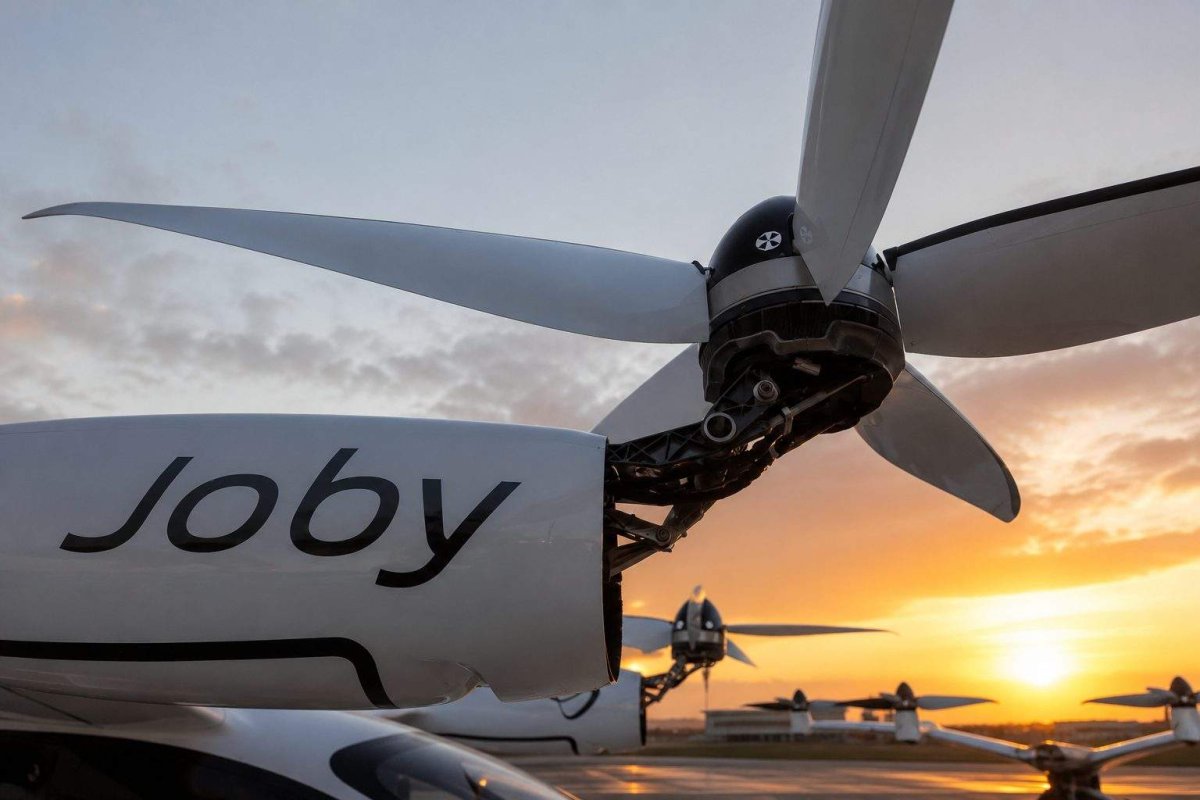
During the quarter, Joby achieved its highest level of advancement in the fifth phase of the FAA certification process, the final step before type certification. The company now operates five aircraft and has 12 more under construction. In September, Joby plans to conduct demonstration flights in Texas as part of the FAA's eIPP program, following a 45,000-square-foot lease at Fort Worth Alliance Airport. The company reaffirmed its goal of carrying first passengers in 2026.
Market Position and Analyst Sentiment
Joby's market capitalization stands at approximately $8.0 billion, roughly double that of its closest publicly traded rival, Archer Aviation (NYSE:ACHR), which closed Thursday at $5.23 with a market value around $4.0 billion. The premium reflects Joby's larger liquidity buffer, established passenger network, and more developed testing fleet, but it also increases the cost of any certification delays.
Analyst sentiment remains cautiously optimistic. H.C. Wainwright maintained its $18 price target, implying 118.7% upside from Thursday's close. Needham reduced its target to $15 from $18 but retained a Buy rating. The consensus of nine analysts is a 'Reduce' rating with an average price target of $13.81, suggesting a potential 67.8% gain. However, the split among Buy (2), Hold (4), and Sell (3) ratings indicates uncertainty about the pace of certification milestones relative to valuation.
Risks and Outlook
Key risks include FAA timing, potential cash burn exceeding guidance as manufacturing scales, seasonal fluctuations in Blade's revenue (typically lower in Q1 and Q4), and the possibility of needing additional financing if certification takes longer than expected. While Joby has ample liquidity to support further investment, the company has yet to demonstrate the economics of commercial aircraft operations. Currently, the stock is positioned as a well-financed certification trade, with investors betting on future milestones rather than present earnings.