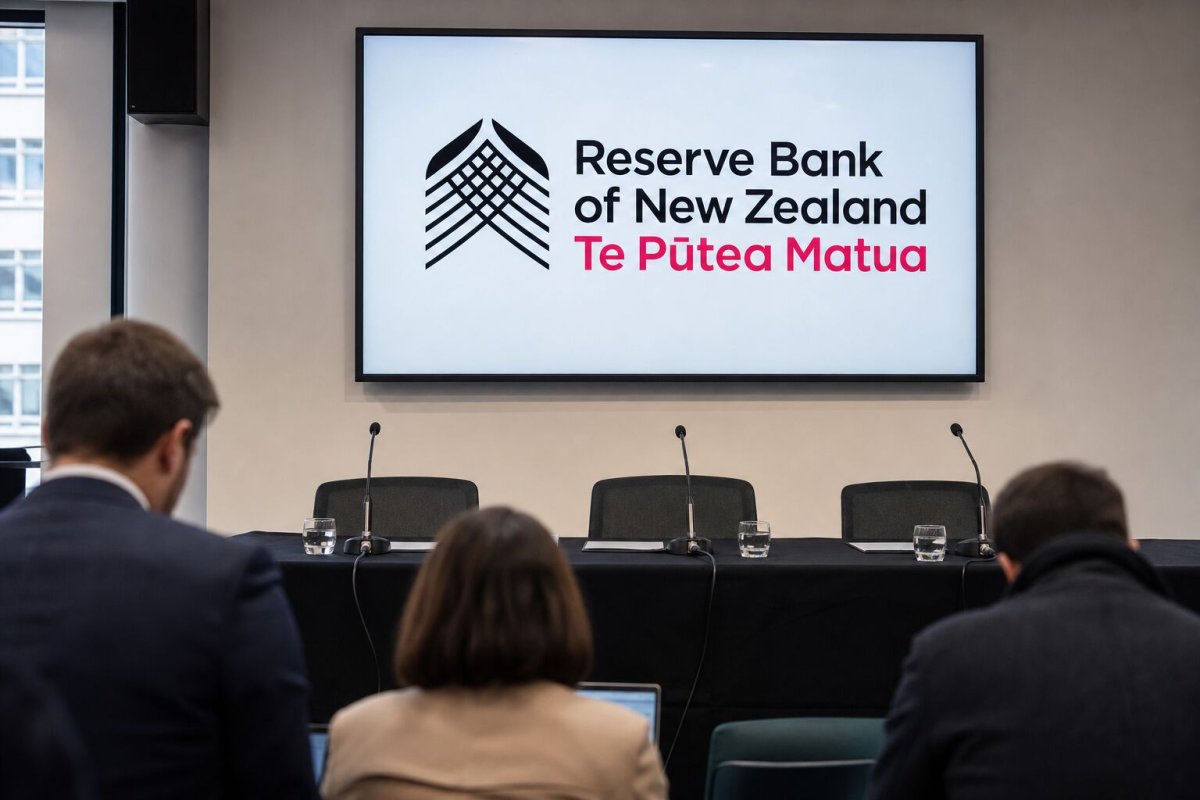
The New Zealand dollar weakened sharply on Thursday after the Reserve Bank of New Zealand (RBNZ) delivered a widely anticipated 25-basis-point rate hike but signaled a less aggressive tightening path than traders had priced in. The kiwi fell 0.9% against the U.S. dollar to $0.5844, reversing earlier gains as the central bank's projected peak for the official cash rate (OCR) came in below market expectations.
The RBNZ raised the OCR to 2.75% in a unanimous decision, marking the second consecutive increase. However, the bank's own projections show the rate reaching just 2.81% by December and 3.15% by the end of 2027. That trajectory falls well short of the approximately 3.5% peak that traders had anticipated, according to Reuters data. The discrepancy prompted a selloff in the kiwi, which had been trading at $0.5896 just before the announcement.
Westpac Banking Corporation strategist Imre Speizer described the move as "a slightly dovish hike," noting that the bank's projections imply no further action in October, with the next likely increase coming in December. "The market was positioned for a more aggressive cycle, so the repricing was inevitable," Speizer said in a note to clients.
Market Reaction and Bond Yields
New Zealand's cash markets were closed at the time of the announcement, but the currency remained active in offshore trading. Two-year swap rates fell by three basis points to 3.7001% following the statement, reflecting reduced expectations for near-term tightening. Longer-term government bond yields, however, touched their highest levels in five months, tracking a global selloff in fixed income driven by renewed geopolitical tensions and rising oil prices.
The RBNZ's decision comes against a backdrop of elevated inflation. Headline CPI rose to 4.1% in the June quarter, fueled largely by higher fuel costs. Excluding vehicle fuels, inflation stood at 2.9%, within the central bank's 1%–3% target range. The bank noted that domestic financial conditions had already tightened ahead of the meeting, with higher wholesale rates pushing up mortgage and business loan costs, while the pass-through to deposit rates remained relatively constrained.
Policy Divergence and Risks
Four members of the RBNZ's monetary policy committee assessed inflation risks as tilted to the upside relative to the central projection, while two viewed them as balanced. All members agreed that subdued economic activity remained a key downside risk. Governor Anna Breman stressed that no decisions had been finalized and that the bank would review the impact of the two previous hikes before committing to further moves. This leaves the October 28 meeting as a possible but not guaranteed action date.
The softer kiwi provides some support for export revenues in local currency terms but also raises the cost of imports, potentially adding to inflationary pressures. Borrowers are already facing higher refinancing rates as the OCR approaches its expected peak, and the housing market remains under pressure from elevated borrowing costs.
Looking ahead, the next CPI release is scheduled for October 22, followed by the RBNZ's policy meeting six days later. Analysts will be watching for any signs that the bank may need to accelerate its tightening cycle if oil prices continue to climb or if inflation proves stickier than expected. Conversely, a sharper slowdown in employment or consumption could prompt an earlier end to the hiking cycle.
International bond market selloffs could also obscure signals from New Zealand's fixed-income market, complicating the central bank's communication efforts. For now, the kiwi's trajectory will hinge on how investors interpret the RBNZ's steady approach against a backdrop of global uncertainty.
