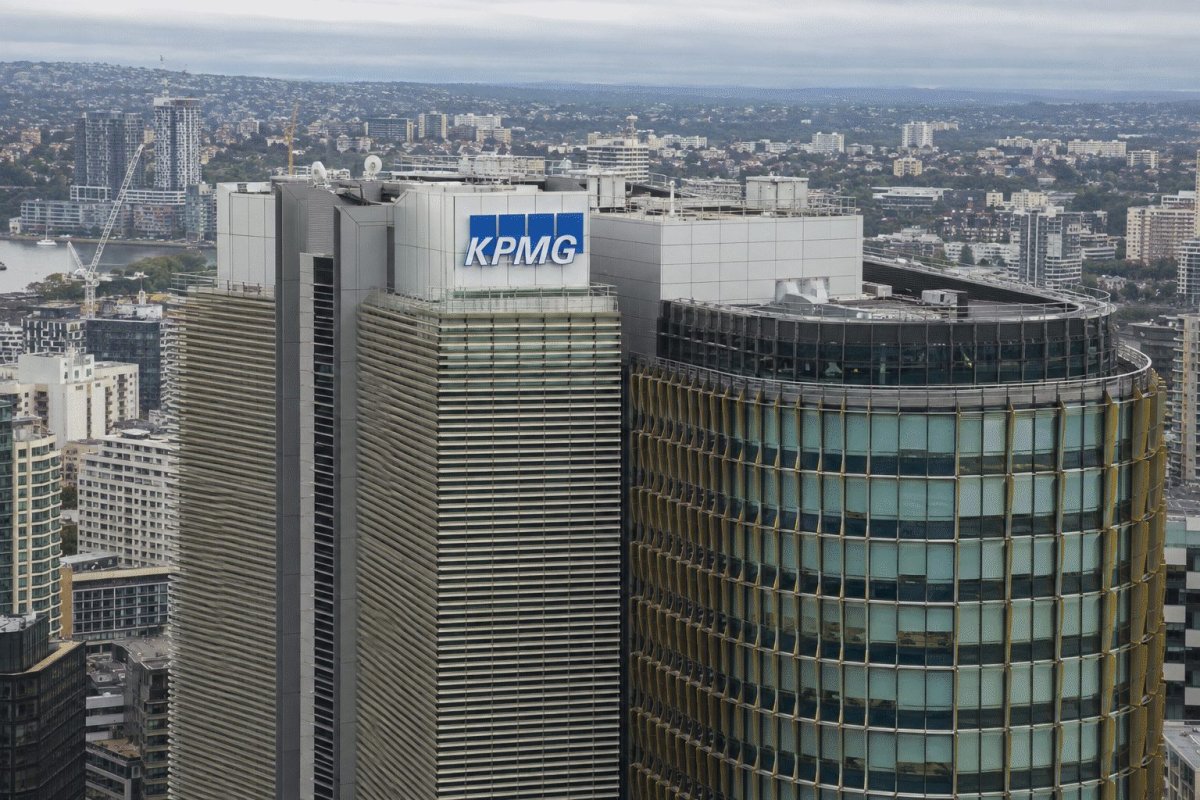
KPMG Australia is undergoing a significant restructuring as it grapples with a sharp downturn in its consulting division. The firm announced plans to lay off approximately 5% of its workforce, which equates to 27 partners and around 360 staff members. The cuts come after consulting revenue plummeted by 16.9%, a stark contrast to the firm's overall revenue decline of just 1%.
The company's total revenue for fiscal year 2026 stood at A$2.257 billion, down from the previous year. Consulting revenue specifically brought in A$632 million, a decrease of nearly A$117 million compared to the prior fiscal year. This drop underscores the challenges facing the consulting sector, particularly as government clients have scaled back spending on advisory services.
Trust Issues Compound Demand Weakness
While soft demand has been a factor, the decline has been exacerbated by a client-data scandal that has eroded trust in the firm. Allegations have surfaced regarding the use of confidential material from Lendlease Group (ASX:LLC) during bidding processes that involved Westpac Banking Corporation (ASX:WBC) and Dexus (ASX:DXS). These governance issues have led to the suspension of new federal-government work bids until September 30 and the departure of several senior executives.
Chief Executive John Sams acknowledged the difficult environment, stating, "We expect difficult market conditions to continue in FY27 and beyond." He also pointed to reduced client spending and AI-driven shifts in service delivery as contributing factors to the ongoing challenges.
Divisional Performance Shows Contrast
Despite the consulting decline, KPMG Australia's other divisions demonstrated resilience. Audit and assurance revenue grew by 11.0%, tax and legal services rose 10.9%, mid-market and private services increased 6.4%, and deal advisory and infrastructure grew 3.0%. These gains helped offset a significant portion of the consulting losses, but the overall impact remained negative.
The consulting division now accounts for roughly 28% of KPMG Australia's total revenue, making its performance critical to the firm's overall health. The workforce reduction is concentrated in consulting and business services, reflecting the strategic realignment.
Market Context and Peer Comparison
In the broader market, listed consulting peers have shown mixed performance. Accenture (NYSE:ACN) rose 0.82% to $186.81 in Monday trading, while IBM (NYSE:IBM) fell 1.53% to $232.08. Cognizant (NASDAQ:CTSH) was up 0.05% at $61.90, and EPAM Systems (NYSE:EPAM) gained 1.37% to $111.86.
Accenture's most recent quarterly results provide a comparative benchmark. The company reported total revenue growth of 3% in local currency, with consulting revenue up 1% and managed services expanding 5%. However, Accenture's bookings declined by 2% to $19.3 billion, indicating that even the largest players are facing cautious client spending on discretionary projects.
Analyst Sentiment and Valuation
Wall Street remains divided on Accenture's prospects. The average target price stands at $179.11, which is 4.1% below Monday's closing level. In August, analysts issued 14 positive ratings and 13 holds. Notable ratings include a Buy from Wells Fargo's Jason Kupferberg with a $194 target, and a Buy from Goldman Sachs' James Schneider with a $230 target.
Accenture's valuation reflects prudence, trading at 12.9 times projected earnings with a dividend yield of 3.49%. Over the past 52 weeks, its share price has ranged from $118.15 to $291.09, indicating significant volatility.
Implications for Investors
For investors, the 17% drop in KPMG Australia's consulting revenue carries more weight than the headline staff reduction. It signals soft discretionary demand in the consulting sector, which could have read-across implications for listed peers. However, KPMG's unique governance issues may have intensified the strain beyond what is typical for the industry.
As a private partnership, KPMG Australia's disclosures are limited, but the data provided offers a clear picture of the challenges facing the consulting industry. The AI-driven transformation of service delivery and reduced government spending are likely to persist, making it a challenging environment for consulting firms in the near term.