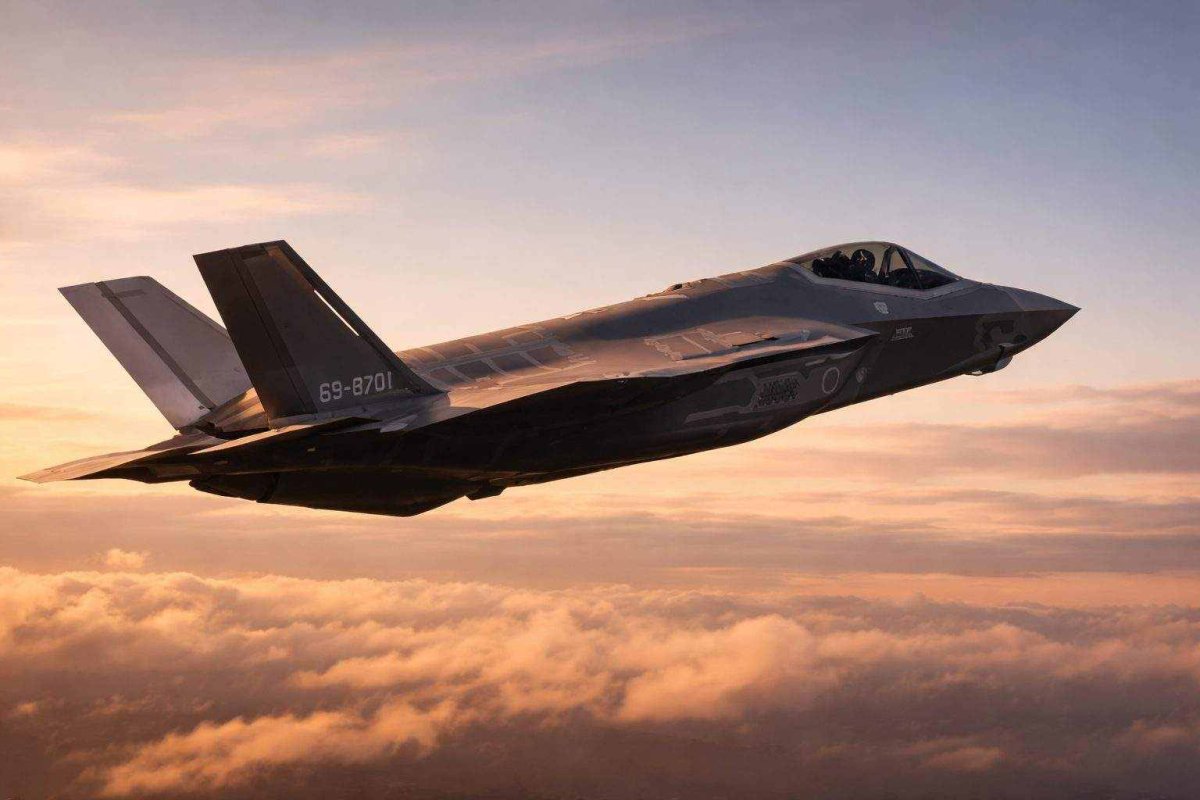
Lockheed Martin has clarified that it is not conducting direct negotiations with the Indian government concerning the potential sale of its F-35 stealth fighter aircraft. The defense contractor emphasized that any official approach for the advanced jet must proceed through established U.S. and Indian diplomatic and defense channels under the Foreign Military Sales (FMS) framework, the standard government-to-government route for sensitive arms exports. This statement aims to temper recent speculation that high-level defense contacts had accelerated progress toward an agreement.
Diplomatic Context and Policy Stance
The clarification arrives amid intensified senior-level dialogues between the United States and India covering defense, trade, and technology cooperation. Indian Foreign Secretary Vikram Misri was in Washington from April 8 to 10, 2026. Official summaries from his meetings underscored collaboration on defense-industrial partnerships, technology sharing, and supply chain resilience but made no mention of a potential F-35 transaction.
On a policy level, the door for such a transfer remains theoretically ajar. A joint statement from U.S. President Donald Trump and Indian Prime Minister Narendra Modi in February 2025 indicated Washington would re-evaluate its policy regarding the release of fifth-generation fighter technology to New Delhi. Furthermore, a March 2026 Pentagon readout following a visit by Under Secretary Elbridge Colby noted both nations were advancing a new defense cooperation framework signed the previous year.
India's Cautious Posture and Competing Priorities
Indian authorities have maintained a reserved position. The country's foreign ministry stated in February 2025 that no formal acquisition process for a fifth-generation fighter had been launched. An August 2025 parliamentary reply reiterated that no formal discussions had been conducted concerning an F-35 release to India.
India is concurrently pursuing other substantial military modernization plans. In February 2026, New Delhi approved a comprehensive 3.6 trillion rupee (approximately $40 billion) military upgrade package. This initiative includes the procurement of additional Dassault Rafale multirole fighters and Boeing P-8I maritime patrol aircraft. Separately, a long-running competition for 114 new fighter jets continues, with contenders including Lockheed Martin's F-21, Boeing's F/A-18, Dassault's Rafale, Saab's Gripen, the Eurofighter Typhoon, and a platform from Russia's United Aircraft Corporation.
Strategic and Industrial Implications
The distinction is significant for Lockheed Martin. The F-35 program is the company's largest, accounting for roughly one-third of its total revenue. Lockheed delivered a record 191 F-35 jets in 2025, and the White House's fiscal 2027 defense budget request included funding for 85 more, highlighting the aircraft's centrality to the firm's financial health and production planning.
India's fighter procurement decisions are influenced by a complex mix of factors beyond mere performance. Technology transfer and strategic autonomy are paramount considerations. Analysts note that historical defense partners, like Russia, have been more willing to share sensitive technology—a contrast that makes U.S.-controlled platforms, which come with stringent usage and modification restrictions, a more challenging proposition for New Delhi's defense establishment.
Addressing a Capability Gap
The need for modern combat aircraft in India is acute. Defense experts, such as Jawaharlal Nehru University's Laxman Behera, have stated there is "no doubt" the Indian Air Force faces a deficiency in operational fighter squadrons. This shortfall is viewed with increasing urgency as China fields more advanced aircraft and Pakistan continues to receive technological and material support from Beijing. This context explains why even procedural updates regarding a platform like the F-35 attract significant attention.
For the foreseeable future, however, the F-35 remains in a state of diplomatic possibility but commercial remoteness. Until the Indian government submits a formal Letter of Request through the FMS system and bilateral talks move beyond general defense-industrial cooperation, the stealth fighter will remain outside Lockheed Martin's immediate business pipeline for the Indian market. The current situation underscores the intricate interplay of geopolitics, technology sovereignty, and defense economics that defines major international arms deals.