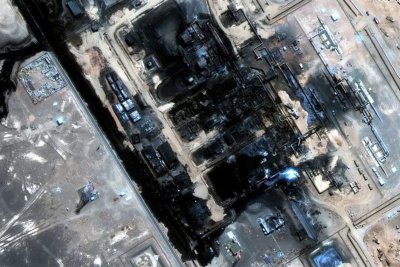
Global financial markets experienced a severe downturn on Wednesday, March 19, 2026, as a combination of geopolitical escalation and renewed inflation concerns triggered a broad-based risk-off sentiment. The selloff accelerated following attacks on energy infrastructure in the Persian Gulf and firm guidance from U.S. monetary policymakers.
U.S. Markets Lead the Decline
The trading session opened with significant losses on Wall Street. The S&P 500 index dropped 1.36%, while the Dow Jones Industrial Average fell to its lowest level in nearly four months. The catalyst was twofold: stronger-than-expected U.S. producer price index data, which indicated persistent underlying inflation pressures, and explicit warnings from Federal Reserve Chair Jerome Powell. Powell stated that elevated energy costs would likely sustain inflationary forces and signaled the central bank would not consider interest rate cuts until a clear disinflationary trend is established. Consequently, the 10-year U.S. Treasury yield climbed to 4.25%. The Federal Open Market Committee held its benchmark rate steady in the 3.50%-3.75% range.
Asia and India Follow Suit
The negative momentum swiftly carried over into Asian trading hours on Thursday. Japan's Nikkei 225 index plunged 2.5%, even as the Bank of Japan held its policy rate unchanged while citing geopolitical risks. Markets in South Korea, Hong Kong, Shanghai, Australia, and Taiwan all closed notably lower. The primary driver was a surge in Brent crude oil futures, which breached $111 per barrel due to supply disruption fears stemming from the Middle East conflict.
In India, the selloff was particularly acute. The BSE Sensex plummeted by approximately 1,700 points to 75,010.66, and the Nifty 50 index declined 2.23% to 23,248.60. The nation's heavy reliance on imported oil amplified fears of worsening inflation and potential rupee depreciation. Banking stocks were among the hardest hit, with HDFC Bank falling nearly 5% amid news of its chairman's resignation. The aviation sector also suffered due to soaring fuel costs.
Geopolitical Flashpoint and Oil Volatility
The immediate trigger for the market panic was a significant escalation in Middle East hostilities. Reports confirmed that Iran had targeted critical energy infrastructure in Gulf states, raising immediate concerns about the stability of global oil supplies. The price of Brent crude oil surged above $111 per barrel, with intraday peaks reported near $112. Analysts warned that a prolonged conflict could lead to sustained energy market instability, further feeding into global inflationary trends and threatening economic growth.
Corporate and Sector Movements
Amid the broad market decline, individual stocks showed varied performance. Minto Apartment Real Estate Investment Trust (MI.UN) saw its stock edge down 0.1% to C$17.43 on the Toronto Stock Exchange, albeit on lower-than-average volume. Analyst sentiment remained cautious despite some target price increases.
In Tokyo, shares of Sony Financial Group (8729.T) declined 1.93% to JPY 147.20, underperforming its sector. Conversely, France's Immersion SA (ALIMR.PA) saw a notable pre-market jump of 11.54% on the Euronext exchange, indicating selective bullish interest.
Market Outlook and Implications
The confluence of events presents a challenging outlook for investors. The Federal Reserve's commitment to a higher-for-longer interest rate stance, combined with a potential new wave of energy-driven inflation, complicates the path for central banks worldwide. Market volatility, as measured by indices like the VIX, is expected to remain elevated in the near term. Experts caution that the situation remains fluid, with financial markets highly sensitive to further geopolitical developments and incoming economic data. The resilience of the global economy will be tested if oil prices remain at these elevated levels, potentially dampening consumer spending and corporate profit margins.