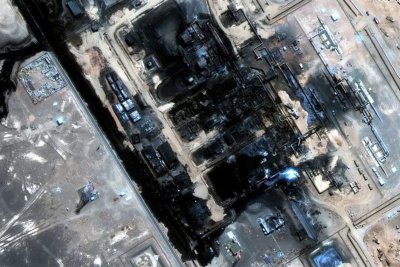
U.S. stock indices declined at the opening bell on Thursday, March 19, 2026, as a sharp escalation in Middle East tensions triggered a surge in global oil prices and renewed concerns over persistent inflation. The Dow Jones Industrial Average dropped 90.3 points, the S&P 500 index fell 0.63%, and the technology-heavy Nasdaq Composite slid 1.27%.
Energy Shock Reverberates Through Markets
The immediate catalyst was a series of Iranian strikes on energy sites across the Persian Gulf, including Qatar's critical Ras Laffan liquefied natural gas (LNG) export hub. Reports indicated extensive damage at the facility, which is a cornerstone of global LNG supply. In response, the global benchmark Brent crude oil price spiked to $119.13 per barrel, while U.S. benchmark West Texas Intermediate (WTI) crude briefly touched $100.02 before settling around $96.39. The price jump reflects fears of prolonged supply disruptions, with analysts warning repair timelines could stretch into months or years rather than weeks.
This geopolitical flare-up arrived just one day after the Federal Reserve's latest policy meeting, where officials explicitly cited the Iran conflict as a major uncertainty clouding the economic outlook. While the Fed held its benchmark policy rate steady in a range of 3.50% to 3.75%, it subsequently revised its inflation projection for 2026 upward to 2.7% from a previous forecast of 2.4%. Chair Jerome Powell acknowledged that higher energy costs would "push up overall inflation" in the near term, though he dismissed comparisons to 1970s-style stagflation, asserting the U.S. economy is not close to such a scenario.
Investor Sentiment and Rate Expectations Shift
The market's fragile sentiment was evident, building on a 1.4% decline for the S&P 500 on Wednesday that marked its weakest close since late 2025. The new energy price shock is forcing a rapid recalibration of interest rate expectations. Futures markets now price in only about 14 basis points of rate cuts by December 2026, a dramatic reduction from the expectation of two quarter-point cuts prevalent in late February.
Major Wall Street institutions are aligning behind a delayed easing timeline. Morgan Stanley, Goldman Sachs, and Barclays have all pushed back their forecast for the Fed's first rate cut to September 2026, abandoning previous calls for a June move. The shift is weighing heavily on rate-sensitive sectors. The Russell 2000 index of small-cap companies, often a leading indicator for higher borrowing costs, has fallen 10% from its all-time intraday high.
"The market is trapped amidst a whole lot of reasons to be nervous," said Mark Spindel, Chief Investment Officer at Potomac River Capital. The concern is that pricier crude will quickly translate into higher costs for fuel, transportation, and manufacturing, undermining progress on inflation just as investors had been anticipating monetary policy relief.
Global Ripple Effects and Potential Responses
The turmoil extended beyond U.S. borders. European equity markets tumbled, and European natural gas prices soared by as much as 28%. Both the European Central Bank and the Bank of England cited the risk of another energy-driven inflation surge as a key reason for holding their own interest rates unchanged.
In search of a pressure valve, U.S. Treasury Secretary Scott Bessent suggested Washington could consider lifting sanctions on approximately 140 million barrels of Iranian oil currently held on idled tankers, a move that could help dampen the fuel price spike. However, the ongoing threat to shipping through the Strait of Hormuz—a chokepoint for about one-fifth of the world's seaborne oil and LNG—continues to pose a severe risk to global supply chains.
Charu Chanana, Chief Investment Strategist at Saxo Bank, described the situation as a "turning point," noting the conflict is now directly disrupting "the plumbing of the global energy system." The combined pressure from geopolitical risk and its inflationary consequences has created a challenging environment for central banks and investors alike, with near-term volatility likely to persist.