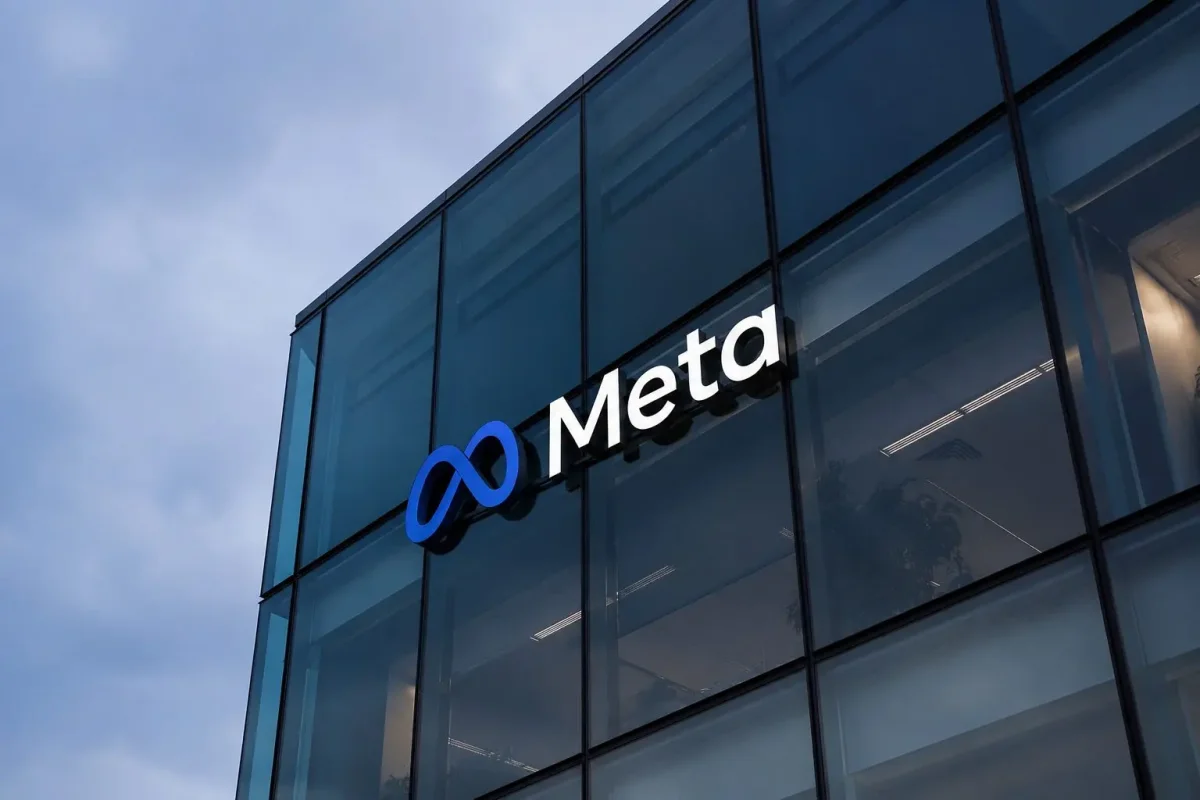
Meta Platforms Inc. saw its stock climb approximately 4.2% in late trading on Wednesday, following the introduction of a new AI-powered business agent designed for its messaging ecosystem. The move has been interpreted by market participants as a signal that the company's massive artificial intelligence investments could soon translate into fresh revenue streams. Shares advanced $25.17 to settle at $622.80, lifting Meta's market capitalization to roughly $1.60 trillion.
The rally stood out against a broader market that edged lower. The SPDR S&P 500 ETF dipped 0.6%, while the Invesco QQQ Trust, which tracks the Nasdaq 100, slipped 0.1%.
AI Agent Targets Enterprise Customers
At the Conversations conference in London, Meta demonstrated its new Business Agent, a tool that can handle customer inquiries, recommend products, schedule appointments, qualify leads, and close sales. The agent is being rolled out globally across WhatsApp, Messenger, and Instagram, building on earlier versions already used by over 1 million businesses on the first two platforms.
Meta's head of product, Naomi Gleit, told Reuters that the company is targeting enterprise clients with this offering. The product will initially be free, with paid subscription tiers expected to launch later this year. Meta is also developing a larger integration platform that will connect with Shopify, Zendesk, Shopee, and other partners.
In recorded remarks at the event, CEO Mark Zuckerberg stated that the new agents would “eventually help you run your whole business,” according to The Wall Street Journal. For larger enterprises using WhatsApp, pricing will shift to a usage-based model rather than a fixed fee, the Journal reported.
Massive Capex Raises Stakes
The product launch comes as Meta significantly ramps up its spending on artificial intelligence. In April, the company raised its 2026 capital expenditure guidance to a range of $125 billion to $145 billion, up from the previous $115 billion to $135 billion. These funds are primarily allocated to data centers and server infrastructure.
Meta's first-quarter revenue rose 33% year-over-year to $56.31 billion, fueled by increased ad impressions and higher average ad prices. However, the company faces growing pressure in the enterprise AI space from rivals such as OpenAI, Anthropic, and Alphabet’s Google. Meta’s key differentiator is the daily reach of its messaging apps among consumers.
Market Skepticism Persists
Despite Wednesday's gains, Meta shares remain down roughly 10% year-to-date and trade about 25% below their 2025 high. This reflects lingering investor skepticism about the returns from the company's massive AI infrastructure spending. Morgan Stanley analyst Brian Nowak remains bullish, rating Meta among his top U.S. internet picks with a price target of $775, according to Investor’s Business Daily.
The company also faces regulatory and security headwinds. On the same day as the product launch, Meta lost a court battle to block the European Union’s “gatekeeper” designation for Messenger under the Digital Markets Act. Additionally, Reuters reported that Meta is investigating an incident in which hackers exploited an AI support feature to compromise high-profile Instagram accounts.
Revenue Still Relies on Advertising
For now, Meta’s financial engine remains advertising. The company’s Family of Apps segment generated $55.91 billion of the $56.31 billion in first-quarter revenue. Reality Labs, the division focused on virtual and augmented reality, reported an operating loss of $4.03 billion.
Wednesday’s rally ultimately hinges on whether the new business agents, AI subscriptions, and other initiatives can evolve into consistent, scalable revenue streams before capital expenditures climb even higher.