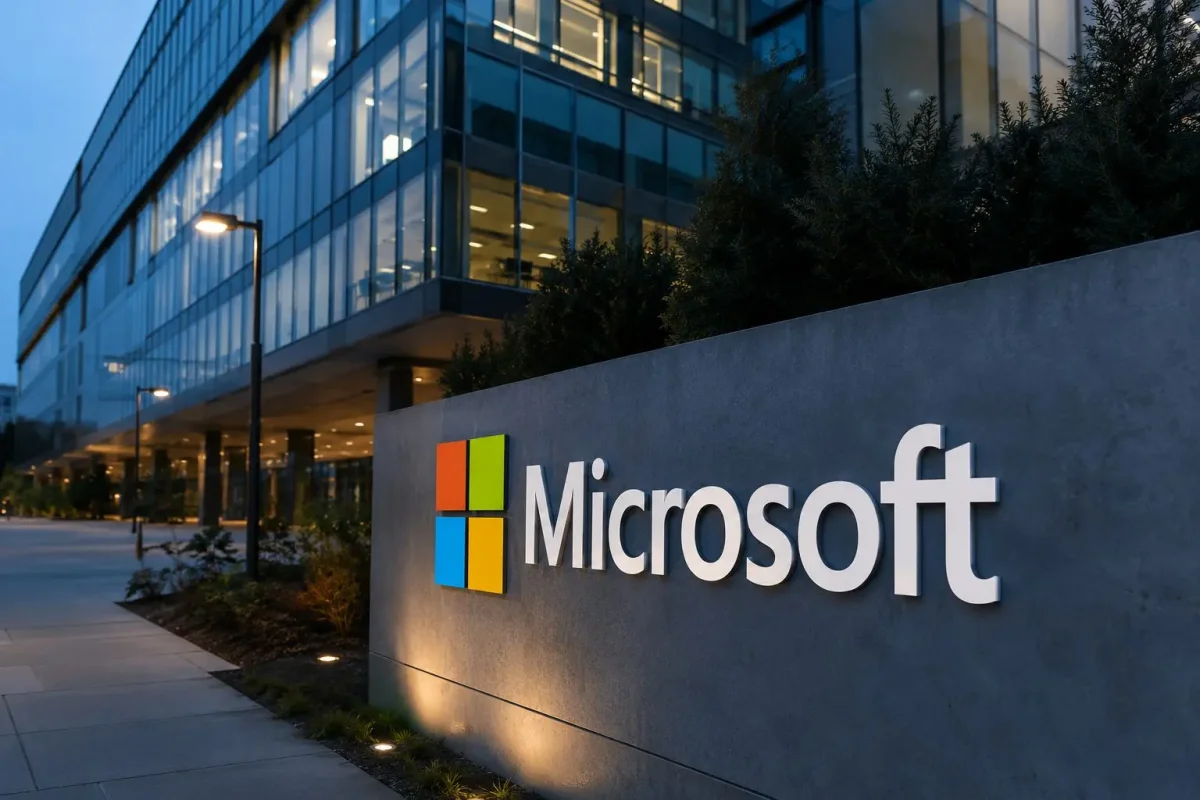
U.S. stock markets remained closed on Friday, July 3, 2026, in observance of the Independence Day holiday, leaving Thursday's close as the last available price for Microsoft Corporation (NASDAQ:MSFT). The tech giant ended the regular session at $390.49, with after-hours trading showing a slight uptick to $390.80.
Shares gained 4.70% over the past five days but have struggled over longer periods, declining 6.28% in the past month, 19.26% year-to-date, and 21.72% over the last twelve months. The stock remains 11.8% above its 52-week low of $349.20 but sits 29.7% below the high of $555.45.
Frontier Company Launch Highlights AI Spending Debate
Microsoft's recent announcement of the Frontier Company, a $2.5 billion initiative, has refocused investor attention on the company's massive capital expenditures in artificial intelligence. This investment, while substantial, represents only 7.8% of the $31.9 billion Microsoft spent on capital expenditures in the third quarter alone.
Judson Althoff, CEO of Microsoft Commercial Business, acknowledged a key lesson from the company's earlier Copilot rollout. “We made a mistake by binding it to OpenAI models only,” he told Reuters. The new unit aims to help customers leverage both Microsoft and third-party AI models, with customers retaining ownership of their AI outputs.
Investor Concerns Over Capex and Margins
Microsoft's capital spending has become a central focus for Wall Street. The company reported third-quarter capital expenditures of $31.9 billion, with approximately two-thirds allocated to short-term assets like GPUs and CPUs. Free cash flow came in at $15.8 billion, while shareholder returns through dividends and buybacks totaled $10.2 billion. Looking ahead, Microsoft expects calendar 2026 capital expenditures to reach approximately $190 billion.
Despite strong revenue growth—fiscal Q3 revenue rose 18% to $82.9 billion, with Azure and cloud services jumping 40%—investors are questioning whether AI spending will sustain margins. CFO Amy Hood noted on the April earnings call that gross margin fell to 68%, down from the prior year, with Microsoft Cloud gross margin expected to decline to approximately 64% in the fourth quarter.
Market Context and Analyst Views
Patrick Moorhead, CEO at Moor Insights & Strategy, told Reuters that large enterprises worry models from OpenAI and Anthropic could eventually allow frontier labs to compete directly with them, particularly in coding and legal applications. For Microsoft, promoting model diversity is about maintaining enterprise trust as much as driving new sales.
Brad Bernstein at UBS Private Wealth Management noted that tech firms’ big AI budgets are fueling “unprecedented” earnings for a broad range of companies. Last week, Reuters reported that five firms—including Microsoft, Alphabet (NASDAQ:GOOGL), and Amazon (NASDAQ:AMZN)—are expected to spend roughly $730 billion on capital expenditures this year, according to JPMorgan.
As markets reopen Sunday evening with Dow Jones futures, Microsoft’s near-term trajectory will be shaped less by daily stock moves and more by how Wall Street interprets the company’s latest message about Frontier and its AI strategy.