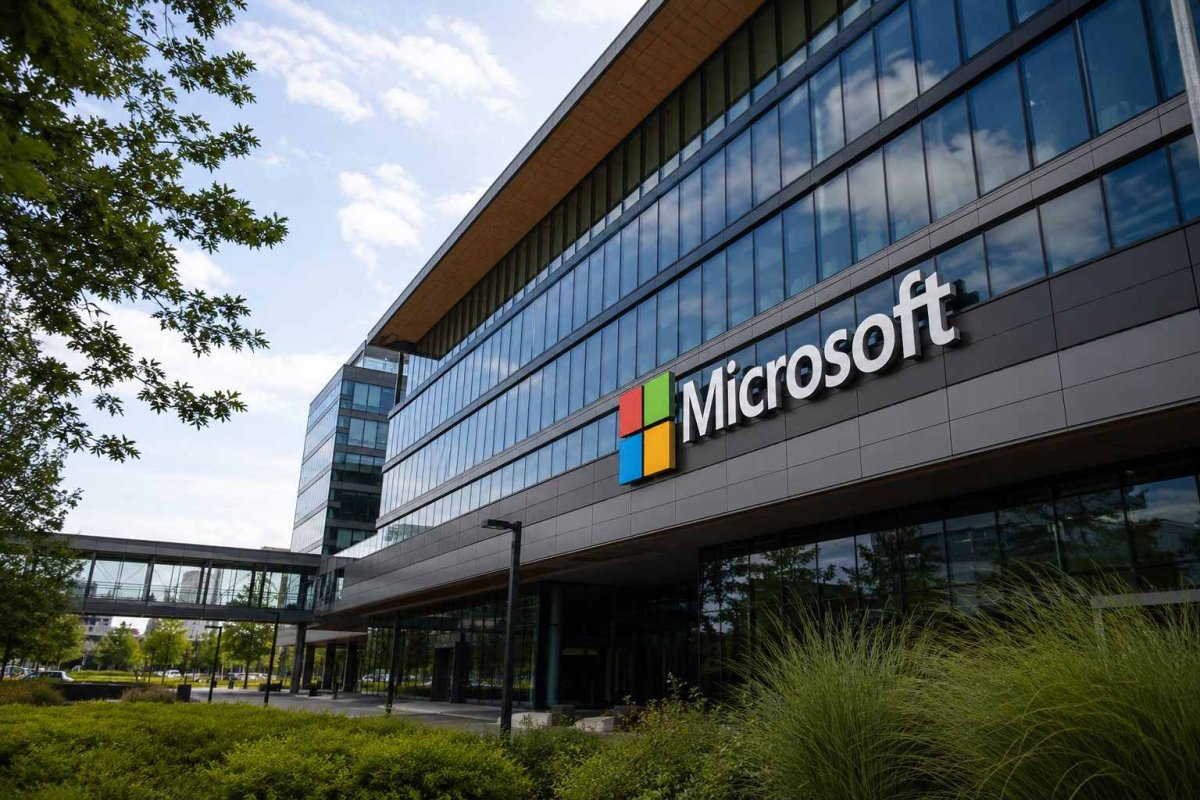
Microsoft Corporation (NASDAQ:MSFT) shares rebounded sharply in premarket trading on Monday, climbing 5.7% to $372.97 and adding approximately $149 billion to its market capitalization. The move comes as investors reassess the technology giant's aggressive artificial intelligence investment strategy, which has raised concerns about near-term profitability.
The premarket surge follows a challenging period for the stock, which remains well below its all-time high. The key question for investors is whether the company's substantial capital expenditures on AI infrastructure will ultimately translate into sustainable cash returns. In its fiscal third quarter, Microsoft's capital spending reached $31.9 billion, roughly double its free cash flow of $15.8 billion.
Microsoft's cloud business continues to show robust growth, with Microsoft Cloud revenue rising 29% to $54.5 billion and Azure and other cloud services revenue jumping 40%. The company's commercial remaining performance obligation surged 99% to $627 billion, indicating strong future demand. Chief Executive Officer Satya Nadella highlighted that the AI business has surpassed an annual revenue run rate of $37 billion, a 123% year-over-year increase.
Despite these impressive figures, some analysts remain cautious about the margin implications of the company's spending. Stifel analyst Brad Reback lowered his price target on Microsoft to $400, citing expectations for fiscal 2027 gross margins near 63%, below the consensus estimate of 66.5%. The analyst pointed to higher depreciation from AI data centers and ongoing capital expenditure as key factors pressuring margins.
Wedbush analyst Dan Ives described the current market environment as an "air pocket stage," noting that investors are becoming less patient with the hefty AI spending by hyperscalers. Ives suggested that both Microsoft and Meta Platforms Inc. (NASDAQ:META) are being treated like "bear market names that cannot be owned."
Chief Financial Officer Amy Hood told analysts that the gross margin percentage declined year-over-year due to increased spending on AI infrastructure and higher usage of AI products. She noted that about two-thirds of the fiscal third-quarter capital expenditures were for short-lived assets, primarily graphics processing units (GPUs) and central processing units (CPUs).
Despite the near-term headwinds, Microsoft's valuation remains relatively attractive compared to its mega-cap peers. The stock trades at a price-to-earnings ratio of 22.2, lower than Apple Inc. (NASDAQ:AAPL) at 34.4, NVIDIA Corporation (NASDAQ:NVDA) at 29.3, and Alphabet Inc. (NASDAQ:GOOGL) at 25.7. However, Microsoft's market capitalization of $2.78 trillion still lags behind those companies by over $1 trillion.
Broader market conditions provided support for the rebound, with S&P 500 futures rising 0.7% and Nasdaq futures climbing 1.0% following news that the U.S. and Iran agreed to stop attacks and restart talks. Brent crude oil traded around $72.20 per barrel, down 22% for the month.
Microsoft shares currently trade 32.9% below their record high of $555.45 and 6.8% above their 52-week low of $349.20. The stock represents significant weightings in major ETFs, including 4.52% of the Invesco QQQ Trust (NASDAQ:QQQ), 5.13% of the Vanguard S&P 500 ETF (NYSEARCA:VOO), and 9.87% of the Vanguard Information Technology ETF (NYSEARCA:VGT).