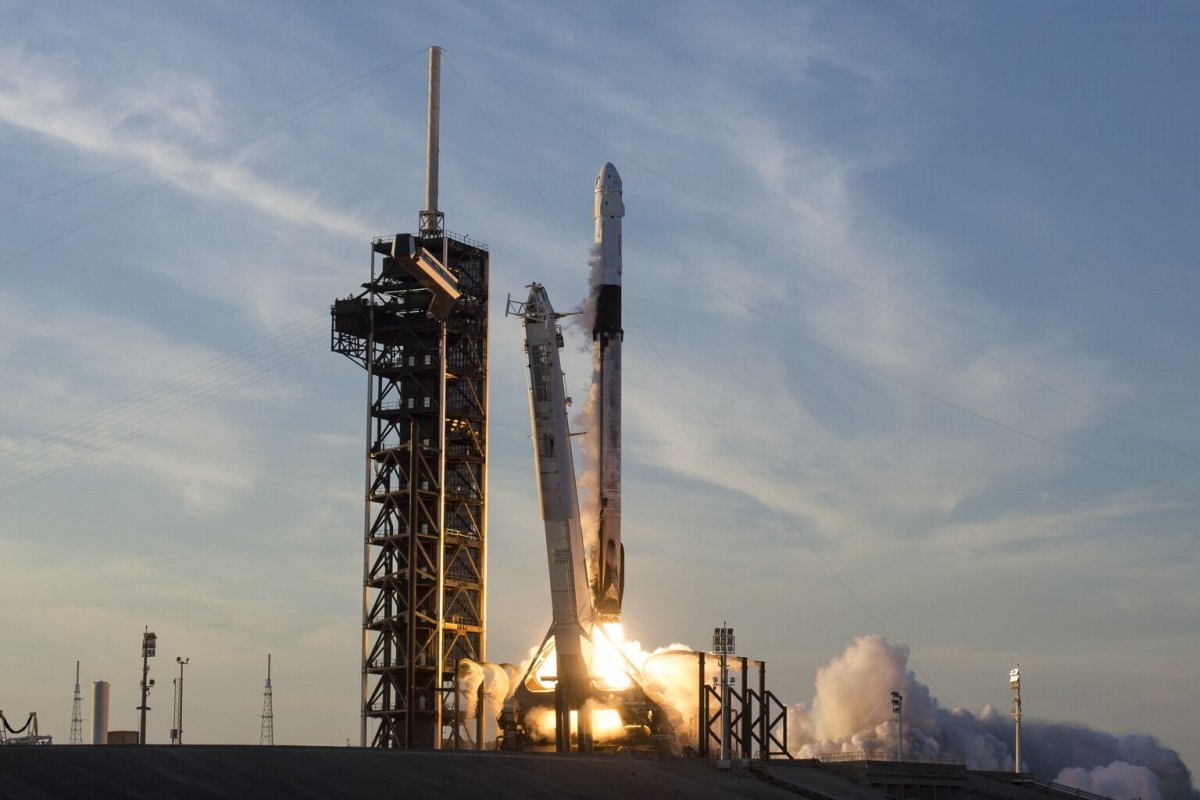
NASA has expanded its partnership with SpaceX, awarding the company three additional crewed missions valued at $946 million. The firm-fixed-price contract modification covers Crew-15 through Crew-17, including launch, orbital operations, return, and recovery services, as well as cargo transport and the Dragon capsule's role as a lifeboat while docked at the International Space Station.
Contract Details and Financial Impact
The new award brings the total value of NASA's crew contract with SpaceX to $5.92 billion, with assigned missions now totaling 17. Per-mission pricing averages $315.3 million, representing a 9.8% increase over the comparable five-flight package NASA ordered in 2022. Compared with the February 2022 agreement, which priced flights at $258.7 million each, the latest per-mission cost is 21.9% higher.
While the contract strengthens SpaceX's backlog through 2030, its immediate financial weight is modest. The $946 million award equals 12.1% of the company's consolidated revenue for the second quarter of 2026, which totaled $7.8 billion. More notably, it is nearly equivalent to the entire $962 million in revenue generated by SpaceX's space segment during that quarter, though that segment reported an operating loss of $542 million.
Market Reaction
Despite the positive news, SpaceX shares (NASDAQ:SPCX) closed Friday at $152.71, down $2.10 or 1.36%. Trading volume reached 335.2 million shares, approximately 3.46 times the three-month average. This unusually heavy activity suggests that investors may have already priced in the contract award or are reacting to other factors, making it difficult to isolate the market's response to the NASA announcement.
The company's market capitalization stood at roughly $2.013 trillion as of Friday's close. The contract award represents just 0.047% of that valuation, underscoring the challenge of justifying such a lofty market cap.
Historical Context and Analyst Views
NASA's crew award progression shows a clear upward trend in per-mission costs. The February 2022 package for Crew-7 through Crew-9 totaled $776 million, or $258.7 million per flight. The August 2022 award for Crew-10 through Crew-14 came to $1.436 billion, at $287.3 million per mission. The latest award continues this escalation, reflecting rising costs and expanded service scope.
Analyst recommendations for SpaceX stock vary widely. Morgan Stanley recently issued a Buy rating with a $300 price target, while MoffettNathanson holds a Hold with a $142 target. Bernstein and Goldman Sachs both maintain Buy ratings, with targets of $248 and $220, respectively. The average target across 36 analysts is $222.42, with a range of $140 to $450.
Operational and Risk Considerations
Investors should note that the $946 million will not be recognized as immediate revenue. NASA has set readiness dates for 2027 and 2028, with contract performance extending through 2030. The award reflects NASA's confidence in SpaceX's certified capacity, but it also carries execution risks. A Dragon oxidizer leak earlier this year delayed Crew-13, highlighting the potential for technical setbacks that could pressure the loss-making space segment.
NASA now targets early October for the Crew-13 launch, following replacement of the leaking valve. Successful execution of upcoming missions will be critical to maintaining schedule confidence and investor sentiment.
In the broader context, this contract reinforces SpaceX's central role in U.S. human spaceflight and extends its operational visibility beyond the current station schedule. However, the company's valuation remains a subject of intense debate, with bulls pointing to strategic advantages and bears questioning the sustainability of its financial performance.
